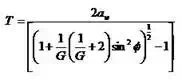

The tooth tip of the pinion will then undercut the tooth on the wheel at the root and damages part of the involute profile. This effect is known as interference, and occurs when the teeth are being cut and weakens the tooth at its root.
In general, the phenomenon, when the tip of tooth undercuts the root on its mating gear is known as interference.

Wheel
| Undercut | Pinion |
Similarly, if the radius of the addendum circles of the wheel increases beyond O2M, then the tip of tooth on wheel will cause interference with the tooth on pinion. The points M and N are called interference points. The interference may only be prevented, if the point of contact between the two teeth is always on the involute profiles and if the addendum circles of the two mating gears cut the common tangent to the base circles at the points of tangency.
1. Height of the teeth may be reduced.
2. Under cut of the radial flank of the pinion.
3. Centre distance may be increased. It leads to increase in pressure angle.
Minimum number of teeth on the pinion avoid Interference ‘t’

Minimum number of teeth on the wheel avoid Interference ‘T’