

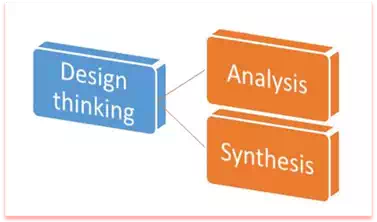
Analysis and synthesis, thus, form the two fundamental tasks to be done in design thinking. Design thinking process starts with reductionism, where the problem statement is broken down into smaller fragments. Each fragment is brainstormed over by the team of thinkers, and the different smaller solutions are then put together to form a coherent final solution. Let us take a look at an example.
Case Study
Problem Statement − Suppose the problem statement at hand is to contain the attrition that happens in companies worldwide. High quality employees leave the organization, mainly after the appraisal cycle. As a result, an average company loses its valuable human resources and suffers from an overhead of transferring the knowledge to a new employee. This takes time and additional human resource in the form of a trainer, which adds to the company’s costs. Devise a plan to contain attrition in the company.
Analysis − Now, let’s break down the problem statement into various constituent parts. Following are the subparts of the same problem statement, broken down to elementary levels.
