Pavement Engineering 5 min read
Rigid Pavement Response
Rigid pavements respond to loading in a variety of ways that affect performance (both initial and long-term). The three principal…
Discover thoughtful articles, guides and ideas about this topic.
← Explore all topics Rigid pavements respond to loading in a variety of ways that affect performance (both initial and long-term). The three principal…
The primary purpose of a road drainage system is to remove the water from the road and its surroundings. The…

Indroduction Highway is the lifeline of the national economy, is the image of regional development, defense and stable basis, and…
Many factors such as number of vehicles, speed, climatic conditions and other factors affect are to be considered for the…

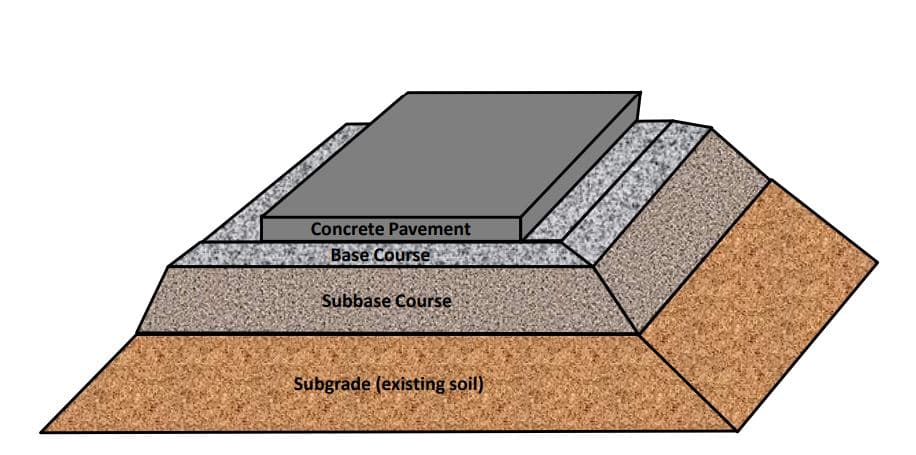
As the name implies, rigid pavements are rigid i.e, they do not flex much under loading like flexible pavements. They…

Considerable length of rural roads has been constructed under a host of rural development programmes, especially Community Development Programmes for…

The composition and structure of flexible pavement consists of surface course, binder course, base course, subbase course, frost protection course,…
A true flexible pavement yields “elastically” to traffic loading. It is constructed with a bituminous-treated surface or a relatively thin…

Indian roads congress(IRC) has specified the design procedures for flexible pavements based on CBR values. The Pavement designs given in…

Flexible pavement design by CBR method is used to determine the total thickness of pavement. Generally there are two methods to…
Flexible pavements are so named because the total pavement structure deflects, or flexes, under loading. A flexible pavement structure is…

The Resilient Modulus (MR) is a measure of subgrade material stiffness. A material’s resilient modulus is actually an estimate of its modulus of elasticity (E). While…