
Cast iron, an alloy of iron that contains 2 to 4 percent carbon, along with varying amounts of silicon and manganese and traces of impurities such as sulfur and phosphorus. It is made by reducing iron ore in a blast furnace. The liquid iron is cast, or poured and hardened, into crude ingots called pigs, and the pigs are subsequently remelted along with scrap and alloying elements in cupola furnaces and recast into molds for producing a variety of products.
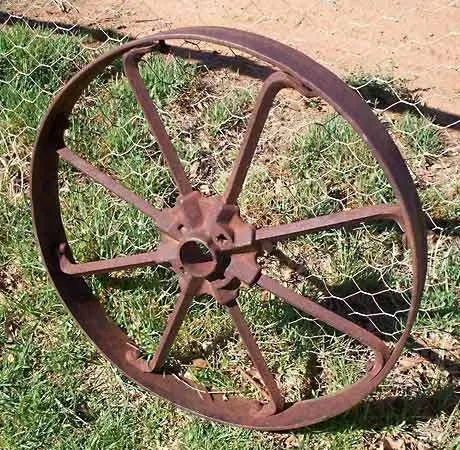
cast ironCast-iron wagon wheel.
The Chinese produced cast iron as early as the 6th century BC, and it was produced sporadically in Europe by the 14th century. It was introduced into England about 1500; the first ironworks in America were established on the James River, Virginia, in 1619. During the 18th and 19th centuries, cast iron was a cheaper engineering material than wrought iron because it did not require intensive refining and working with hammers, but it was more brittle and inferior in tensile strength. Nevertheless, its load-bearing strength made it the first important structural metal, and it was used in some of the earliest skyscrapers. In the 20th century, steel replaced cast iron in construction, but cast iron continues to have many industrial applications.
Most cast iron is either so-called gray iron or white iron, the colours shown by fracture. Gray iron contains more silicon and is less hard and more machinable than is white iron. Both are brittle, but a malleable cast iron produced by a prolonged heat treatment was developed in France in the 18th century, and a cast iron that is ductile as cast was invented in the United States and Britain in 1948. Such ductile irons now constitute a major family of metals that are widely used for gears, dies, automobile crankshafts, and many other machine parts.

