After defining the business needs, the current state (e.g. current business processes, business functions, features of a current system and services/products offered and events that the system must respond to) must be identified to understand how people, processes and technology, structure and architecture are supporting the business by seeking input from IT staff and other related stakeholders including business owners.
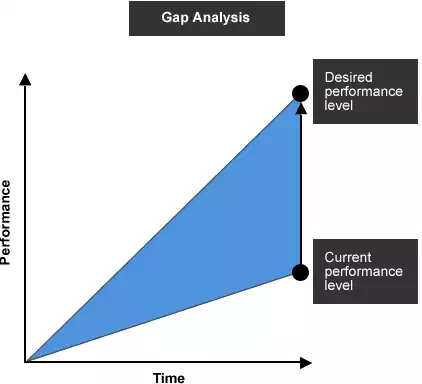
A gap analysis is then performed to assess, if there is any gap that prevents from achieving business needs by comparing the identified current state with the desired outcomes.
If there is no gap (i.e. the current state is adequate to meet the business needs and desired outcomes), it will probably not be necessary to launch the IT project. Otherwise, the problems/issues required to be addressed in order to bridge the gap should be identified.
Techniques such as SWOT (Strengths, Weaknesses, Opportunities and Threats) Analysis and document analysis can be used.