The International Monetary Market (IMM) was formed in December 1971 and was established in May 1972. The roots of IMM can be linked to the finish of Bretton Woods via the 1971 Smithsonian Agreement and then, Nixon’s abolition of US dollar’s convertibility to gold.
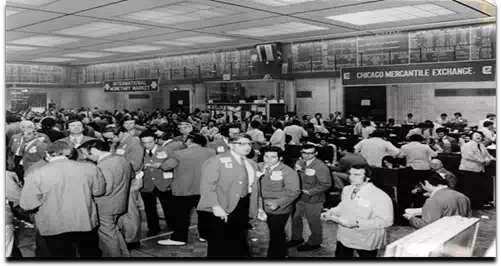
The IMM was formed as a separate entity of the Chicago Mercantile Exchange (CME). By the end of 2009, IMM was the second biggest futures exchange in terms of currency volume in the world. The major purpose of the IMM is to trade currency futures. It is comparatively a new product which was earlier studied by the academics as a tool to operate a freely-traded exchange market to initiate trade among the nations.
The first futures transactions included trades of currencies against the US dollar, such as the British Pound, Swiss Franc, German Deutschmark, Canadian Dollar, Japanese Yen, and the French Franc. The Australian Dollar, the Euro, emerging market currencies such as the Russian Ruble, Brazilian Real, Turkish Lira, Hungarian Forint, Polish Zloty, Mexican Peso, and South African Rand were later introduced as well.