Do You Need a Demat Account for ETFs?
A beginner-friendly Sensecentral guide with examples, checklist tables, FAQs, useful resources, and practical ETF investing points.
Introduction
Do You Need a Demat Account for ETFs? is an essential ETF topic for beginners who want a simple, low-cost, and transparent investing route. ETFs are popular because they combine features of mutual funds and stocks: pooled exposure on one side and exchange trading on the other.
This article breaks down the concept with examples, tables, checklists, FAQs, and practical warnings so you can understand not only what ETFs are, but also how to use them responsibly.
In this article, we will keep the explanation practical. You will learn the meaning of the concept, how it works, what numbers to check, where beginners go wrong, and how to use ETF information without getting overwhelmed. The goal is not to push any specific fund. The goal is to help you become a more confident investor.
Quick Answer
In India, exchange-traded ETFs are generally held in a demat account because ETF units trade on stock exchanges like shares. Some fund houses may offer non-exchange routes for specific cases, but a demat plus trading account is the normal beginner route for buying and selling ETFs.
Why This Topic Matters
ETFs are often marketed as simple products, and in many ways they are simpler than selecting individual stocks. But the buying experience is closer to stocks, while the portfolio structure is closer to funds. That hybrid nature creates questions that beginners should answer before investing.
The most important point is that an ETF is not good merely because it is called an ETF. A broad Nifty or Sensex ETF, a Bank ETF, a Gold ETF, a debt ETF, and an international ETF can behave very differently. Each product has a different benchmark, different risk, different liquidity profile, and different role in a portfolio.
Understanding do you need a demat account for etfs? helps you avoid three common mistakes: buying only because returns look attractive, ignoring trading costs, and treating all ETFs as equally safe. A more informed investor checks the facts first and then decides calmly.
How It Works in Simple Terms
An ETF collects money from investors and creates units that represent ownership in a basket of assets. Those assets may be shares in an index, government securities, corporate bonds, gold, international securities, or a sector-specific basket. ETF units are listed on an exchange, so investors can buy or sell them during market hours through a broker.
The value of an ETF is linked to the value of its underlying assets. If the underlying index rises, the ETF should generally rise. If the index falls, the ETF should generally fall. The word “generally” matters because actual investor returns can differ due to expenses, tracking error, tracking difference, cash positions, taxes, premiums/discounts, and trading costs.
Primary Market and Secondary Market
Retail investors usually trade ETF units in the secondary market through the exchange. Large institutions and authorised participants can create or redeem ETF units in the primary market, which helps keep supply and demand balanced. This mechanism is one reason ETFs can often trade close to their fair value, although deviations can still happen.
What Beginners Should Check Before Taking Action
1. Underlying Exposure
Read what the ETF tracks. A Nifty 50 ETF, Bank ETF, Gold ETF, and Debt ETF are not substitutes for each other. The underlying exposure decides the risk.
2. Expense Ratio
Lower costs can help long-term returns, but do not compare cost in isolation. Check whether the ETF also tracks well and trades efficiently.
3. Liquidity and Spread
Look at trading volume, bid-ask spread, and whether the ETF usually trades close to fair value. Use limit orders when possible.
4. Tracking Quality
Compare tracking error and tracking difference. A good ETF should follow its benchmark closely over time after costs.
Comparison Table / Checklist
| Factor | Meaning | Beginner Action |
|---|---|---|
| Underlying asset | What the ETF owns or tracks | Understand the index, commodity, bond basket, or sector. |
| Expense ratio | Annual fund cost | Compare similar ETFs before investing. |
| Liquidity | How easily units trade | Check volume and bid-ask spread. |
| Tracking quality | How close returns are to benchmark | Check tracking error and tracking difference. |
| Risk level | Market, sector, currency, rate, or gold price risk | Invest only when it matches your goal. |
Costs, Risks, and Practical Warnings
ETF investors should think in terms of total cost, not just expense ratio. Total cost can include the fund’s expense ratio, brokerage, exchange charges, bid-ask spread, securities transaction tax where applicable, taxes on gains, and the impact of buying at a premium or selling at a discount.
Risk also depends on the ETF category. Equity ETFs carry stock market risk. Sector ETFs carry concentration risk. Gold ETFs carry commodity price risk. International ETFs can carry currency and foreign market risk. Debt ETFs carry interest-rate risk, credit risk, and liquidity risk. Smart beta ETFs may behave differently from traditional market-cap indices.
A beginner-friendly rule is simple: never invest in an ETF until you can explain in one sentence what it owns, why it belongs in your portfolio, and what can make it fall in value.
Beginner Example
Imagine a beginner comparing two ETFs tracking a similar index. The first ETF looks cheaper because the expense ratio is lower. The second ETF has better liquidity, a narrower bid-ask spread, and a smaller tracking difference. The better choice is not always the lowest-cost option; it is the product that gives clean exposure with reasonable total cost and manageable risk.
This example shows why ETF selection should not be rushed. A product can look attractive on a chart but still be unsuitable for your goal. The right ETF is the one that gives the exposure you want at a reasonable cost, with enough liquidity, acceptable tracking quality, and a role that fits your asset allocation.
Common Mistakes to Avoid
- Buying only because the ETF has recently gone up: Recent performance can reverse quickly.
- Ignoring the bid-ask spread: A wide spread can reduce returns even before the investment begins.
- Confusing ETF price with cheap valuation: A low unit price does not mean the ETF is undervalued.
- Overusing sector ETFs: Sector funds can be useful, but too much concentration increases risk.
- Not checking the benchmark: Two ETFs with similar names may track different indices.
- Using market orders in illiquid ETFs: Limit orders give better control over execution price.
Simple Action Plan for Beginners
- Write your investment goal and time horizon.
- Choose the asset class you need: equity, debt, gold, international, or sector exposure.
- Shortlist ETFs tracking the same or similar benchmark.
- Compare expense ratio, AUM, tracking error, tracking difference, liquidity, and bid-ask spread.
- Read the latest scheme documents and fund house disclosures.
- Use a limit order and avoid trading during highly volatile moments.
- Review the ETF periodically, but do not overreact to daily price movement.
Useful Resources for Investors and Online Creators
Learning investing is powerful, but building practical digital skills can also improve your income potential. Below are useful resources from Sensecentral and partner platforms.
Explore Our Powerful Digital Products
Browse high-value bundles for website creators, developers, designers, startups, content creators, and digital product sellers. These resources can help you build websites, launch content projects, create digital products, and improve your workflow.
Explore Our Powerful Digital Products
Try Teachable
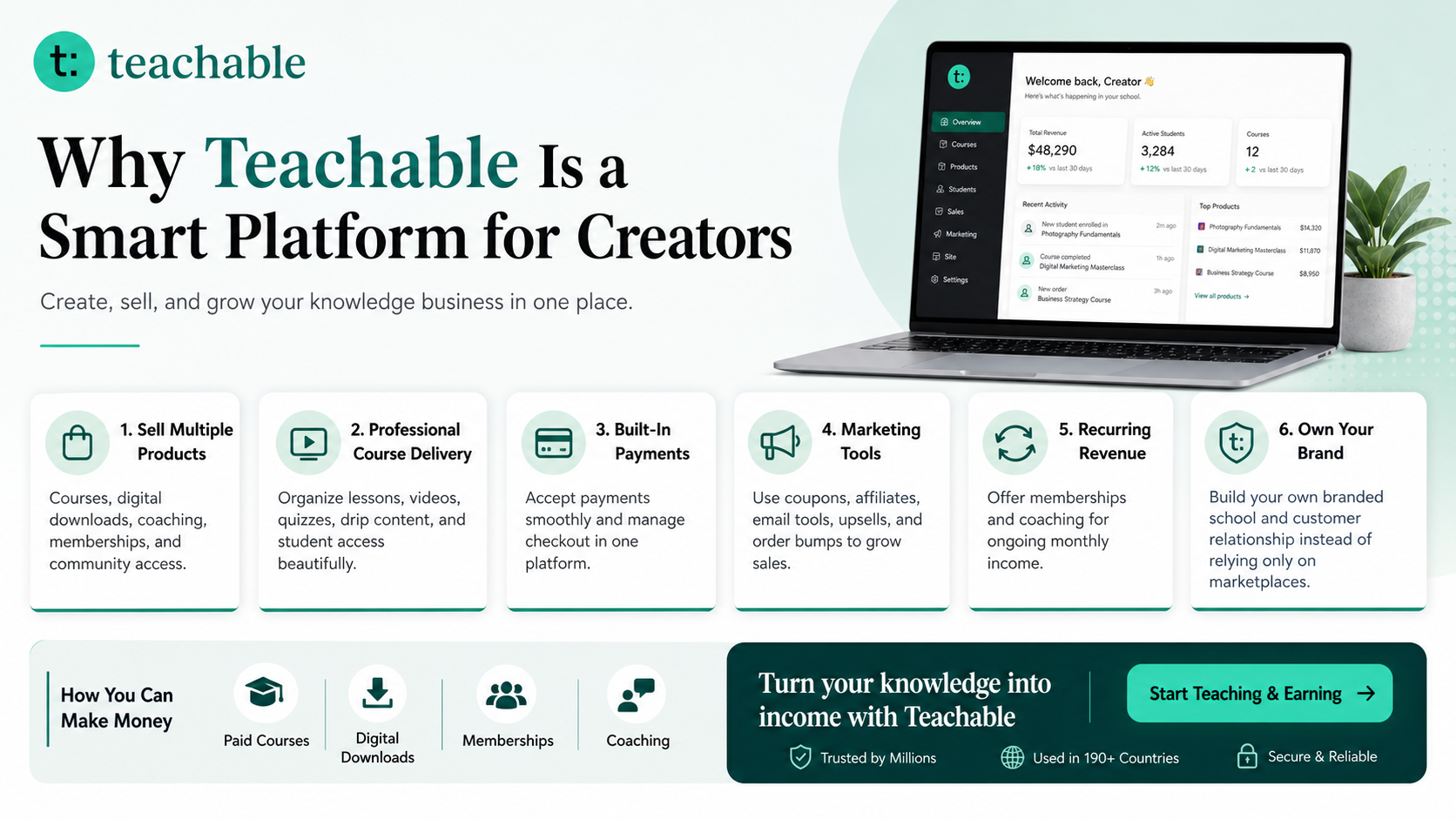
Teachable is an online platform that lets creators build, market, and sell courses, digital downloads, coaching, and memberships. It helps educators and entrepreneurs turn their knowledge into a branded digital business without needing complex coding.
Further reading: How to Make Money with Teachable: A Complete Creator’s Guide
How to Create a Course with Teachable
Zee Sharp Productivity Tools Hub
Zee Sharp is a growing suite of free online tools for productivity, development, and creativity. No sign-up. No watermarks. Just tools. It can be useful when you need quick calculators, text tools, developer utilities, or creative helpers while building your online business.
Further Reading on Sensecentral
FAQs
Is do you need a demat account for etfs? suitable for beginners?
It can be suitable for beginners if the investor understands the underlying asset, risk level, expense ratio, liquidity, and investment horizon. Beginners should avoid buying any ETF only because it is popular or recently performed well.
Can ETFs lose money?
Yes. ETFs can lose money because their value depends on the underlying index, stocks, bonds, commodities, currency movements, interest rates, or sector performance. Diversification reduces some risks but does not remove market risk.
Should I check only past returns before investing?
No. Past returns are only one part of analysis. You should also check benchmark, expense ratio, tracking error, tracking difference, AUM, liquidity, bid-ask spread, tax rules, and whether the ETF fits your asset allocation.
Is a low expense ratio enough to choose an ETF?
A low expense ratio is useful, but it is not enough. Poor liquidity, wide bid-ask spread, high tracking difference, or unsuitable underlying exposure can reduce the benefit of a low cost.
How many ETFs should a beginner own?
Many beginners can start with one or two broad-market ETFs rather than buying many overlapping products. Add sector, gold, debt, or international ETFs only when they serve a clear portfolio purpose.
Key Takeaways
- Do You Need a Demat Account for ETFs? should be understood in the context of your investment goal, not as a standalone trend.
- ETFs trade on exchanges, so market price, bid-ask spread, and liquidity matter along with NAV and benchmark returns.
- Expense ratio is important, but tracking difference and execution cost can also affect real returns.
- Broad-market ETFs can be beginner-friendly, while sector, smart beta, international, debt, and gold ETFs need more careful evaluation.
- Always read scheme documents, verify latest data, and consider professional advice before investing.
Suggested Keywords / Tags
do you need a demat account for etfs, ETFs, exchange traded funds, ETF investing, ETF guide, passive investing, stock market basics, investing for beginners, ETF India, index investing
References and Further Reading
- SEBI Investor Education: Understanding Exchange Traded Funds
- SEBI Investor Education: Understanding Tracking Error
- NSE India: Exchange Traded Funds Market Data
- NSE India: Tracking Error
- AMFI: Expense Ratio
- AMFI: Net Asset Value
- Teachable Official Website
Disclaimer: This article is for educational purposes only and is not investment advice. ETF suitability, taxation, and regulations can change. Always verify details from the fund house, exchange, SEBI/AMFI disclosures, and a qualified financial advisor before investing.