
How to Build Your First Stock Portfolio With ₹5,000
How to Build Your First Stock Portfolio With ₹5,000 is a beginner-friendly guide from SenseCentral for readers who want to understand stock investing without hype, shortcuts, or confusing jargon. This post explains the concept in a practical Indian investor context, but the principles are useful for anyone learning long-term equity investing.
Stocks can build wealth over time, but they can also create losses when investors buy without a process. The purpose of this guide is to help you slow down, study the right signals, avoid emotional decisions, and use a simple checklist before taking action. It is educational content, not personal financial advice.
Quick Answer
The best way to approach build Your First Stock Portfolio With ₹5,000 is to keep the process simple, written, and repeatable. Start with small money or a paper portfolio, use reliable information sources, check fundamentals, control risk, and avoid copying random opinions without understanding the business.
Why a Small First Portfolio Is a Smart Learning Tool
A first portfolio is not about becoming rich overnight. It is a controlled learning environment. When you start with a small amount, every order, dividend, price movement, and annual report teaches you how the market behaves without putting your savings under unnecessary pressure. The goal is to learn position sizing, diversification, patience, and review discipline. For a beginner, build Your First Stock Portfolio With ₹5,000 should be treated like a practical classroom where mistakes remain affordable and lessons become permanent.
For a SenseCentral reader, the real benefit of learning build Your First Stock Portfolio With ₹5,000 is not just knowing a definition. It is learning how to convert information into better behaviour. A beginner should ask: What does this mean for risk? What does it mean for time horizon? Does it change the business quality, or only the market mood? Can I explain my action in one written paragraph?
Step-by-Step Framework to Build It
Begin with a written goal: learning, long-term wealth creation, or a specific financial target. Next, decide how much loss you can emotionally tolerate without selling in panic. Then split the money into a core portion and a learning portion. The core can be a broad index fund, ETF, or a very large stable company, while the learning portion can be one or two businesses you understand. Avoid buying five or ten random stocks because a small portfolio becomes difficult to track when it is over-diversified. Add money monthly only after reviewing why you bought each holding.
A simple three-question test
- Business question: Do I understand how the company earns money?
- Risk question: What can go wrong, and how much can I lose?
- Behaviour question: Am I acting from analysis or emotion?
Suggested Allocation Logic
A beginner allocation should reward simplicity. You need enough exposure to experience real market movement, but not so much concentration that one mistake destroys confidence. Think in terms of buckets: core stability, learning stock, and cash reserve. The cash reserve is not wasted money; it protects you from panic decisions and gives you flexibility to buy gradually. A small portfolio grows best when you keep costs low, avoid frequent trading, and focus on building a repeatable process.
Beginner Framework for How to Build Your First Stock Portfolio With ₹5,000
The safest way to use this topic is to build a repeatable framework. A framework protects you from reacting to every headline and every social media opinion. Start by defining the exact decision you need to make. Are you trying to select a stock, review an existing holding, understand a market move, or learn a financial metric? Once the decision is clear, collect information from reliable sources such as exchange filings, annual reports, official investor education pages, and your own written notes.
Next, separate facts from interpretation. A fact may be that revenue grew, debt reduced, a dividend was declared, or the stock fell 10 percent. Interpretation is what investors think those facts mean. Beginners often confuse the two. If a stock falls, it does not automatically mean the company is bad. If a stock rises, it does not automatically mean the company is strong. The framework should force you to check business performance, valuation, cash flow, debt, governance, and your portfolio allocation before making a decision.
Finally, write down your conclusion before you act. This may sound slow, but it is powerful. A one-paragraph investment note can reveal whether you truly understand the idea. If you cannot explain why you are buying, holding, or avoiding something in plain language, you are probably not ready to act. Over time, these notes become your personal investing textbook.
Sample ₹5,000 Starter Allocation
The table below gives a practical structure you can adapt while studying build Your First Stock Portfolio With ₹5,000. It is not a fixed recommendation; it is a thinking aid.
| Part | Amount | Why it helps |
|---|---|---|
| Core index exposure | ₹3,000 | Broad market exposure keeps the first portfolio simple. |
| One strong large-cap stock | ₹1,000 | Learn how a single business moves with results and news. |
| Cash reserve for next month | ₹1,000 | Avoids forced buying and gives room to average gradually. |
How to Apply This in Real Stock Research
1. Start with the business model
Before looking at charts or ratios, identify what the company sells, who buys it, how often customers return, and what gives the company an advantage. A business with understandable revenue sources is easier to track. If you cannot understand how money is made, the stock is probably too advanced for your current stage.
2. Check financial strength
Look at sales, profit, operating cash flow, debt, and return ratios over several years. One good quarter can be misleading. A strong company usually shows consistency across multiple periods, or at least a clear explanation when performance weakens. Beginners should avoid companies where the story is exciting but the numbers are confusing.
3. Understand valuation
A good company can still be a poor investment if bought at an unreasonable price. Valuation does not need to be perfect, but you should know whether the market is pricing the company for perfection. Compare valuation with growth, profitability, risk, and industry quality. Avoid buying only because the price has fallen or because the stock is trending.
4. Review governance and disclosures
Read corporate announcements, auditor notes, management commentary, and related party transaction details. Clean communication builds trust. Vague explanations, frequent auditor resignations, aggressive related party deals, or sudden changes in accounting practices deserve extra caution.
Common Mistakes Beginners Should Avoid
- Using one signal as a complete strategy: How to Build Your First Stock Portfolio With ₹5,000 should be part of a broader checklist, not the only reason for a trade.
- Ignoring position size: Even a good idea can hurt if you invest too much too early.
- Reacting to social media: Online opinions can be useful for discovery, but they are not a substitute for filings and your own research.
- Forgetting risk: Ask what can go wrong before you ask how much you can make.
- Not reviewing: Every holding should have a review date, especially after quarterly results or major corporate announcements.
Beginner Checklist Before You Act
- Can I explain build Your First Stock Portfolio With ₹5,000 in simple words?
- Have I checked official company or exchange information?
- Have I compared the number or event with past years?
- Do I understand the risks, not only the possible returns?
- Is this decision aligned with my time horizon and portfolio size?
- Have I avoided borrowing money or using emergency funds for stock investing?
- Have I written a short reason for my decision?
Useful Resources for SenseCentral Readers
Explore Our Powerful Digital Products: Browse high-value bundles for website creators, developers, designers, startups, content creators, and digital product sellers. These resources can help you build websites, create visuals, organize content, and launch digital projects faster.
Explore Our Powerful Digital Products
Zee Sharp: A growing suite of free online tools for productivity, development, and creativity. No sign-up. No watermarks. Just tools.
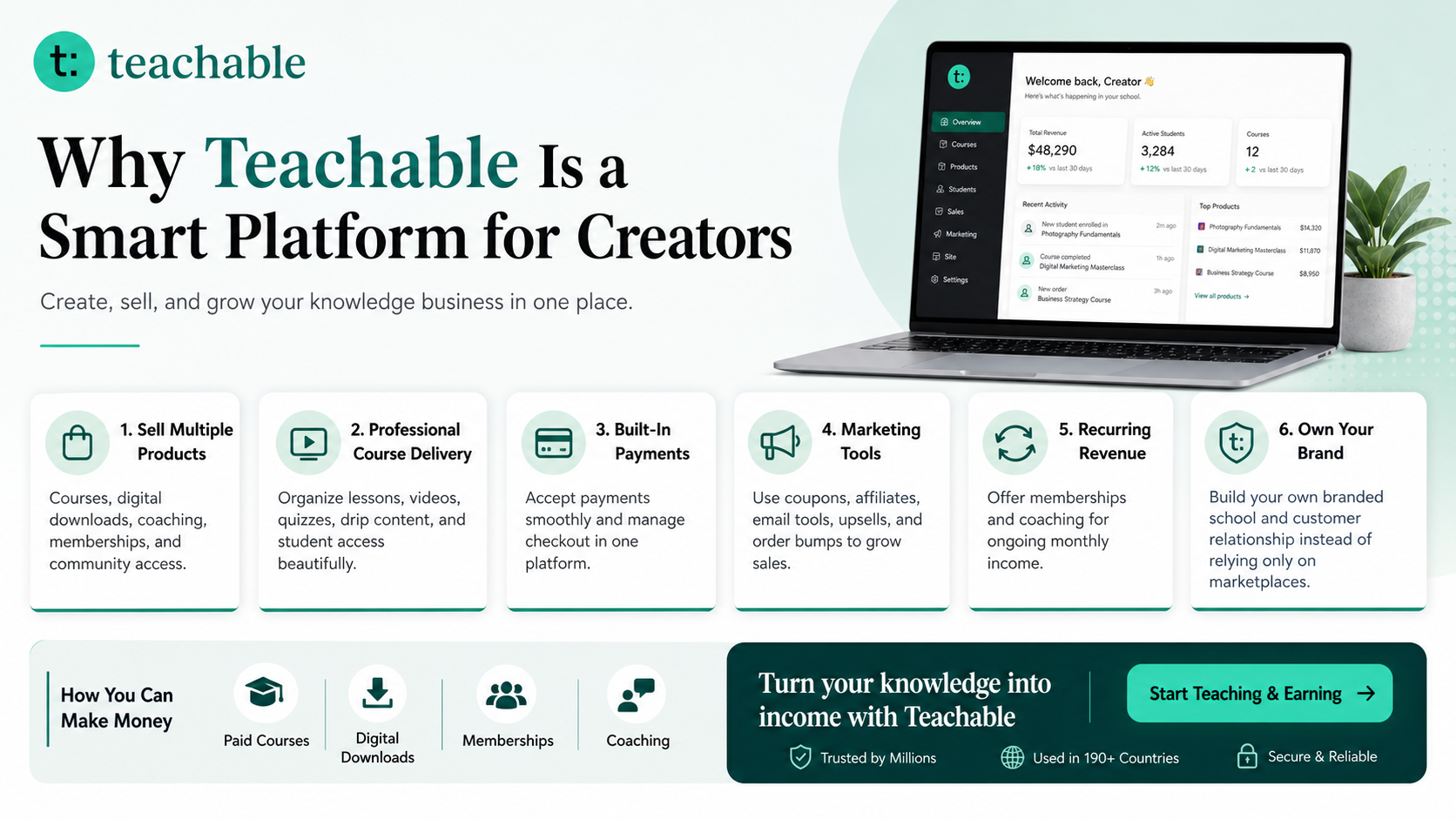
Recommended Creator Tool: Teachable
Teachable is an online platform that lets creators build, market, and sell courses, digital downloads, coaching, and memberships. It helps educators and entrepreneurs turn their knowledge into a branded digital business without needing complex coding.
Learn more: How to Make Money with Teachable: A Complete Creator’s Guide
Further Reading on SenseCentral
Continue learning with these related beginner-friendly guides:
- How to Start Stock Investing Without Feeling Confused
- What Beginners Should Know Before Buying Their First Stock
- How to Build a Stock Portfolio From Scratch
- How to Create a Long-Term Stock Watchlist
- How to Use Screener Tools for Stock Research
- How to Read a Company Annual Report Step by Step
- How to Decide When to Sell a Stock
- How to Make Money with Teachable: A Complete Creator’s Guide
Useful External Links
FAQs
Can I really start with a small portfolio?
Yes. Small portfolios are useful for learning order placement, position sizing, diversification, dividends, and volatility without risking a large amount.
Should I buy or sell a stock only because of this?
No. A single concept, ratio, market move, or announcement is not enough. Combine it with business quality, valuation, cash flow, debt, governance, and your financial goals.
How many stocks should a small beginner portfolio have?
Usually one broad core holding plus one or two learning stocks is enough. Too many small positions become difficult to track and do not teach deep analysis.
What is the biggest beginner mistake?
The biggest mistake is acting before understanding. Many investors buy because of excitement and sell because of fear, without checking whether the actual business has changed.
Where can I learn more safely?
Use official investor education resources, company annual reports, stock exchange filings, and beginner-friendly SenseCentral guides before moving to advanced strategies.
Key Takeaways
- How to Build Your First Stock Portfolio With ₹5,000 should be understood through a simple, written investing process.
- Beginners should use official sources, annual reports, and exchange filings instead of relying only on tips.
- Risk control, position sizing, and emotional discipline matter as much as stock selection.
- One ratio, event, or market move is never enough to make a complete investment decision.
- Keep learning gradually and review your decisions after results, announcements, and market changes.
References
- SEBI Investor Education Reading Material
- NSE Getting Started for First-Time Investors
- NSE Investor Educational Material
- NSE Financial Markets: A Beginner's Module
- BSE India Market Information
Last updated: June 13, 2026. This guide is for educational publishing on SenseCentral.