ETF Investing Guide
ETF Myths That Create False Confidence
A practical, beginner-friendly Sensecentral guide with clear rules, comparison tables, checklists, FAQs, references, and useful digital resources.
ETFs are often introduced to beginners as a clean and low-cost way to participate in markets. That introduction is useful, but it is only the beginning. The real challenge is not just selecting an ETF. It is learning how to hold it, how to add to it, how to review it, and how to avoid turning a simple product into a complicated emotional decision. This Sensecentral guide on ETF Myths That Create False Confidence is designed to help beginners slow down, think clearly, and build a repeatable process.
- Table of Contents
- Key Takeaways
- Why This Topic Matters
- Beginner Decision Framework
- Myth vs Reality Framework
- Helpful Tables and Checklists
- How to Apply This Guide Without Overthinking
- Useful Tools and Creator Resources
- Explore Our Powerful Digital Products
- Zee Sharp: Free Productivity Tools Hub
- Turn Your Knowledge Into a Digital Product Business With Teachable
- FAQs
- Is etf myths that create false confidence important for beginners?
- Are ETFs risk-free?
- Should I buy an ETF only because it is low cost?
- Can I sell an ETF whenever I want?
- How often should beginners review ETF holdings?
- What is the safest first ETF approach?
- Internal Links and Further Reading on Sensecentral
- References
- Final Thoughts
The biggest advantage of an ETF is that it can provide transparent exposure to an index, asset class, sector, factor, commodity, or theme. The biggest danger is assuming that transparency means safety. Markets can rise sharply, fall suddenly, or move sideways for long periods. During each phase, beginners face different temptations: buying too much in a bull market, selling too early after a small profit, abandoning the plan after a loss, or collecting too many similar ETFs. A strong process reduces these mistakes.
Key Takeaways
- ETF Myths That Create False Confidence is mainly about process, patience, and avoiding emotional decisions.
- Beginners should understand ETF price, NAV, iNAV, tracking error, expense ratio, liquidity, and bid-ask spread before investing.
- ETFs can be useful low-cost tools, but they do not remove market risk, tax impact, or behavioral mistakes.
- Use written rules for buying, adding, rebalancing, and selling instead of reacting to market excitement or fear.
- Keep broad index ETFs as the foundation before experimenting with themes, sectors, smart beta, or narrow exposures.
Why This Topic Matters
For many new investors, ETFs look simple because they trade like stocks and often track familiar indexes. But simplicity on the surface does not mean the decision is automatically easy. The investor still needs to know what the ETF owns, how it trades, how costs appear, and how it behaves during market stress. The topic of ETF Myths That Create False Confidence matters because beginners often make ETF mistakes at the exact moments when emotions are high: bull markets, sudden corrections, news events, and social media hype.
A good ETF strategy is not built by predicting tomorrow’s market. It is built by connecting each ETF to a clear role. A broad equity ETF may be used for long-term growth. A gold ETF may be used as a diversifier. A debt ETF may be considered for more stability depending on risk and tax rules. An international ETF may add currency and country exposure. When you know the purpose, you can judge the ETF by whether it still serves that purpose rather than by one week of price movement.
Beginner Decision Framework
Use a three-layer framework before taking action. First, check personal readiness: emergency fund, debt pressure, time horizon, and risk comfort. Second, check product clarity: index, holdings, cost, liquidity, tracking difference, and taxes. Third, check behavioral control: written rules, review schedule, and maximum allocation. If any layer is weak, slow down.
Layer 1: Personal readiness
Never buy an ETF with money required for near-term essentials. Equity ETFs can fall sharply, and even diversified products can remain below purchase price for extended periods. If your goal is short-term, understand whether a market-linked ETF is suitable at all.
Layer 2: Product clarity
Read the ETF factsheet. Understand whether the fund tracks a broad index, sector index, commodity, bond index, global index, or strategy index. If you cannot explain it simply, it may not be beginner-friendly yet.
Layer 3: Behavioral control
Decide in advance how you will handle gains, losses, and rebalancing. A beginner who has no rule during a bull market may overbuy. A beginner who has no rule during a correction may panic-sell. The framework protects you from both extremes.
Myth vs Reality Framework
ETFs are useful, but they are not magical. Beginners often hear that ETFs are low-cost, diversified, passive, and simple. These statements may be true in many cases, but they are incomplete. A low-cost ETF can still fall sharply if the underlying index falls. A diversified ETF can still be concentrated in a few sectors or countries. A passive ETF can still trade at a premium or discount during volatile market hours. A simple ETF can still be misused if the investor buys too much too fast or sells during fear.
| Misconception | Reality | Better Beginner Rule |
|---|---|---|
| ETFs are always safe | They carry market and product risks | Know what the ETF owns |
| Low cost guarantees returns | Cost helps, but market return matters more | Compare total ownership cost |
| Diversification removes risk | It reduces some risks, not all risks | Match allocation to goal duration |
Helpful Tables and Checklists
| Decision Area | Good Beginner Practice | Common Mistake |
|---|---|---|
| ETF Selection | Prefer clear, broad, understandable funds | Buying every trendy theme |
| Order Placement | Use limit orders and check spread | Using market orders in illiquid ETFs |
| Portfolio Role | Define core or satellite purpose | Holding random ETFs with overlap |
| Review | Check allocation and factsheets periodically | Reacting to daily price movement |
ETF Pre-Investment Checklist
- I understand the index or asset the ETF tracks.
- I know whether this is a core holding or a small satellite position.
- I checked the expense ratio, tracking error, AUM, trading spread, and latest factsheet.
- I know the tax and transaction cost impact before buying or selling.
- I have written a reason for buying and a rule for reviewing.
How to Apply This Guide Without Overthinking
Beginners often delay investing because they want a perfect answer. Perfection is not required. What you need is a sensible starting framework, a small first step, and a review routine. Write down your current understanding, your reason for acting, and your maximum risk limit. Then compare your plan with your real cash flow and goals. If the plan is too complex to explain to a family member, simplify it. If it depends on a perfect market forecast, redesign it. If it ignores tax, charges, or liquidity, study more before acting.
Another useful rule is to separate learning from investing. You can spend time reading factsheets, watching educational videos, comparing fund documents, and building spreadsheets before investing meaningful money. This removes pressure. When you finally invest, begin with an amount that teaches you the process without threatening your financial safety. Over time, your confidence should come from repeated good decisions, not from one lucky market move.
Useful Tools and Creator Resources
Explore Our Powerful Digital Products
Browse these high-value bundles for website creators, developers, designers, startups, content creators, and digital product sellers. If you create blogs, templates, digital assets, courses, printable resources, or online stores, curated digital products can save time and improve execution.
Zee Sharp: Free Productivity Tools Hub
Zee Sharp is a growing suite of free online tools for productivity, development, and creativity. No sign-up. No watermarks. Just tools. Use it when you need quick utilities while researching, planning, writing, calculating, or organizing your online work.
Turn Your Knowledge Into a Digital Product Business With Teachable
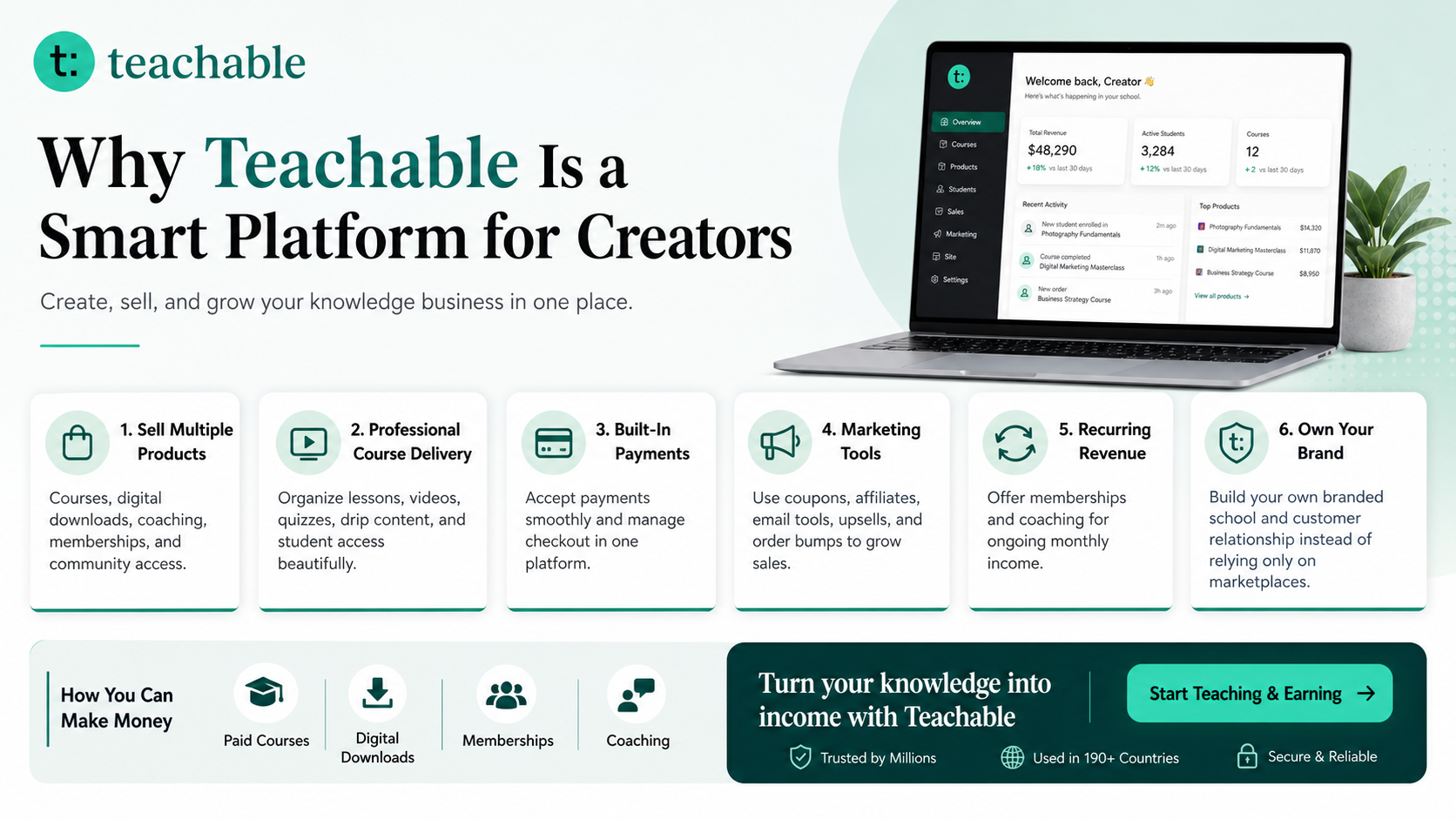
Teachable is an online platform that lets creators build, market, and sell courses, digital downloads, coaching, and memberships. It helps educators and entrepreneurs turn their knowledge into a branded digital business without needing complex coding.
How to Make Money with Teachable: A Complete Creator’s Guide
Affiliate disclosure: Some links may be affiliate links. Sensecentral may earn a commission if you purchase through them, at no extra cost to you.
FAQs
Is etf myths that create false confidence important for beginners?
Yes. ETF beginners should learn how emotions, costs, liquidity, and portfolio rules affect real returns. The product can be simple, but the investor’s behavior still decides many outcomes.
Are ETFs risk-free?
No. ETFs are market-linked. They can fall with the underlying index or asset. They may also have tracking error, liquidity concerns, tax impact, and behavioral risk.
Should I buy an ETF only because it is low cost?
No. Low cost is helpful, but you must also check the index, holdings, tracking quality, liquidity, spread, tax treatment, and whether the ETF fits your goal.
Can I sell an ETF whenever I want?
ETFs trade on exchanges during market hours, but practical exit depends on liquidity, bid-ask spread, tax impact, and your investment plan.
How often should beginners review ETF holdings?
A monthly or quarterly review is usually enough for long-term investors. Daily checking often creates unnecessary emotional decisions.
What is the safest first ETF approach?
Many beginners prefer starting with broad, diversified, transparent ETFs and small allocations before exploring thematic or complex products.
Internal Links and Further Reading on Sensecentral
- Related guide: ETF Risks Beginners Should Accept Before Investing
- Next guide: ETF Misconceptions About Safety
- Also read: How to Start SIP After Career Change
- How to Make Money with Teachable: A Complete Creator’s Guide
- Visit Sensecentral for more product reviews, comparisons, and beginner-friendly guides
References
- SEBI Investor Education Reading Material
- NSE Exchange Traded Funds Information
- AMFI Mutual Fund Knowledge Center
- Teachable Official Website
Reference links are included for investor education and further reading. Always verify latest rules, tax treatment, scheme documents, and platform terms before making financial or business decisions.
Final Thoughts
ETF Myths That Create False Confidence is ultimately about building the right relationship with ETFs. ETFs can simplify investing, but they cannot replace patience, research, risk awareness, and self-control. Do not rush just because markets are rising. Do not quit just because markets are falling. Build a written rulebook, use simple products first, track the right metrics, and review your portfolio calmly. When your decisions are guided by rules instead of noise, ETF investing becomes easier to sustain for the long term.