How to Plan Your First 100 Etsy Listings

A profitable Etsy shop is rarely built from random uploads. It is built from a clear sequence of small decisions: who the buyer is, what problem the product solves, which formats are easiest to deliver, how many listings you can maintain, and how each product supports the next one. When a beginner plans inventory before designing, the shop becomes easier to manage and the listings start to feel like a collection instead of scattered experiments.
This guide explains How to Plan Your First 100 Etsy Listings in a practical way for printable sellers, Canva template creators, planner designers, digital workbook makers, and shop owners who want a repeatable system. You will learn how to think about demand, buyer intent, product quality, listing assets, timing, and measurable improvement without overcomplicating the process.
Affiliate disclosure: This article contains affiliate and promotional links. SenseCentral may earn a commission when you use some links, at no extra cost to you. The advice below is educational and does not guarantee earnings; use it as a planning framework and test it with your own shop data.
Why How to Plan Your First 100 Etsy Listings Matters
Etsy digital product selling is a long-term skill. It includes product research, offer design, keyword selection, listing visuals, customer education, pricing, and continuous improvement. The best sellers build systems that make each new listing easier than the last. Instead of treating every product as a separate gamble, they create repeatable workflows for idea validation, product packaging, image creation, and performance review.
For SenseCentral readers who compare tools, templates, and digital resources, the practical question is simple: what process gives you the highest chance of creating products that buyers understand and want? The answer is rarely a secret trick. It is usually a clear buyer, a useful product, accurate keywords, strong presentation, and consistent follow-up. That is why this guide focuses on decisions you can actually apply.
Step-by-Step Framework
1. Start with one clear buyer
Choose a buyer group before choosing product types. A shop for teachers, wedding planners, real estate agents, homeschool parents, or small business owners will be easier to brand than a shop that sells unrelated files. A focused buyer also makes keyword research easier because the same phrases, problems, and seasonal needs appear across multiple products.
2. Create a small product ladder
Plan products in levels: entry products, core products, bundles, and premium collections. Entry products bring shoppers in, core products prove your style, bundles increase order value, and premium collections make the shop look complete. This ladder helps you avoid designing ten products that compete with each other.
3. Balance evergreen and seasonal listings
Evergreen listings can sell throughout the year, while seasonal listings create predictable spikes. A healthy beginner plan usually includes mostly evergreen products with a smaller set of seasonal experiments. This protects your shop from depending on one holiday or one trend.
4. Batch the work
Separate research, design, mockups, description writing, and publishing into batches. Batching keeps quality consistent and helps you launch collections faster than designing one isolated listing at a time.
Decision Table
Use this table as a quick reference when you are planning, creating, updating, or reviewing a digital product listing. You can copy the same logic into a spreadsheet and add your own notes as your shop grows.
| Planning factor | Question to ask | Recommended action |
|---|---|---|
| Product fit | Does it solve a clear buyer problem? | Keep if it matches your niche and can lead to related listings. |
| Creation time | Can you finish it without delaying the whole plan? | Prioritize simple products first, then build larger bundles. |
| Keyword clarity | Can buyers describe it in search words? | Avoid products that need too much explanation at the beginner stage. |
| Upgrade path | Can it become a bundle or collection? | Design with future variations in mind. |
| Support risk | Will buyers need lots of help? | Add instructions, FAQs, and file format graphics. |
| Seasonality | Is demand tied to a date? | Publish seasonal products early and keep evergreen backups. |
Examples, Mistakes, and Quality Checks
Use examples to keep the idea practical. For How to Plan Your First 100 Etsy Listings, think in terms of what the buyer sees, understands, and does next. Good Etsy systems are not built from theory alone; they are built from repeatable assets that make each listing easier to discover, evaluate, and purchase.
- Printable planner pages: connect the visual, keyword, or offer to a specific buyer outcome rather than a vague feature.
- Canva social media templates: connect the visual, keyword, or offer to a specific buyer outcome rather than a vague feature.
- Small business checklists: connect the visual, keyword, or offer to a specific buyer outcome rather than a vague feature.
- Wedding planning worksheets: connect the visual, keyword, or offer to a specific buyer outcome rather than a vague feature.
- Budget trackers: connect the visual, keyword, or offer to a specific buyer outcome rather than a vague feature.
Common mistake: The biggest mistake is creating products only because they are easy to design. Easy creation is useful, but the product still needs a buyer, a keyword path, and a reason to exist beside your other listings.
Quality check: A strong product plan includes a clear niche, a realistic creation schedule, a mix of simple and premium products, a method for updating listings, and a plan for turning winners into collections.
Before publishing or changing a listing, preview it like a buyer. Ask whether the first image is clear, whether the title sounds human, whether the description explains the files, whether the price feels aligned with value, and whether a cautious buyer has enough information to purchase without sending a message.
How to Think Like a Product Planner
When planning Etsy digital products, the goal is not to predict one perfect bestseller. The goal is to build a testing system. A beginner who creates ten unrelated products has ten separate problems to solve. A beginner who creates ten related products has one audience, one brand direction, and ten chances to learn what that audience values. This is why product planning should begin with a buyer map. List the buyer’s daily tasks, seasonal deadlines, frustrations, software comfort level, budget, and preferred format. From that map, you can create a product list that feels useful instead of random.
A strong product plan also protects your time. Every listing needs a title, tags, description, mockups, instructions, file packaging, and customer support. If you create products that are too complex too early, you may spend all your time fixing files instead of building the shop. Start with products that are easy to deliver cleanly, then use customer questions and shop data to decide which products deserve expansion.
For example, a shop targeting busy teachers might begin with editable classroom signs, weekly lesson planner pages, parent communication templates, student reward charts, and printable labels. Those products are different, but they speak to the same buyer. Later, the seller can bundle them into a classroom organization kit. This is how a plan turns small listings into a larger product ecosystem.
Useful Resources for Digital Product Sellers
Explore Our Powerful Digital Products Bundle: Browse these high-value bundles for website creators, developers, designers, startups, content creators, and digital product sellers. Use this resource when you need templates, creative assets, and ready-made starting points for faster product creation.
Build a Knowledge Product Business with Teachable
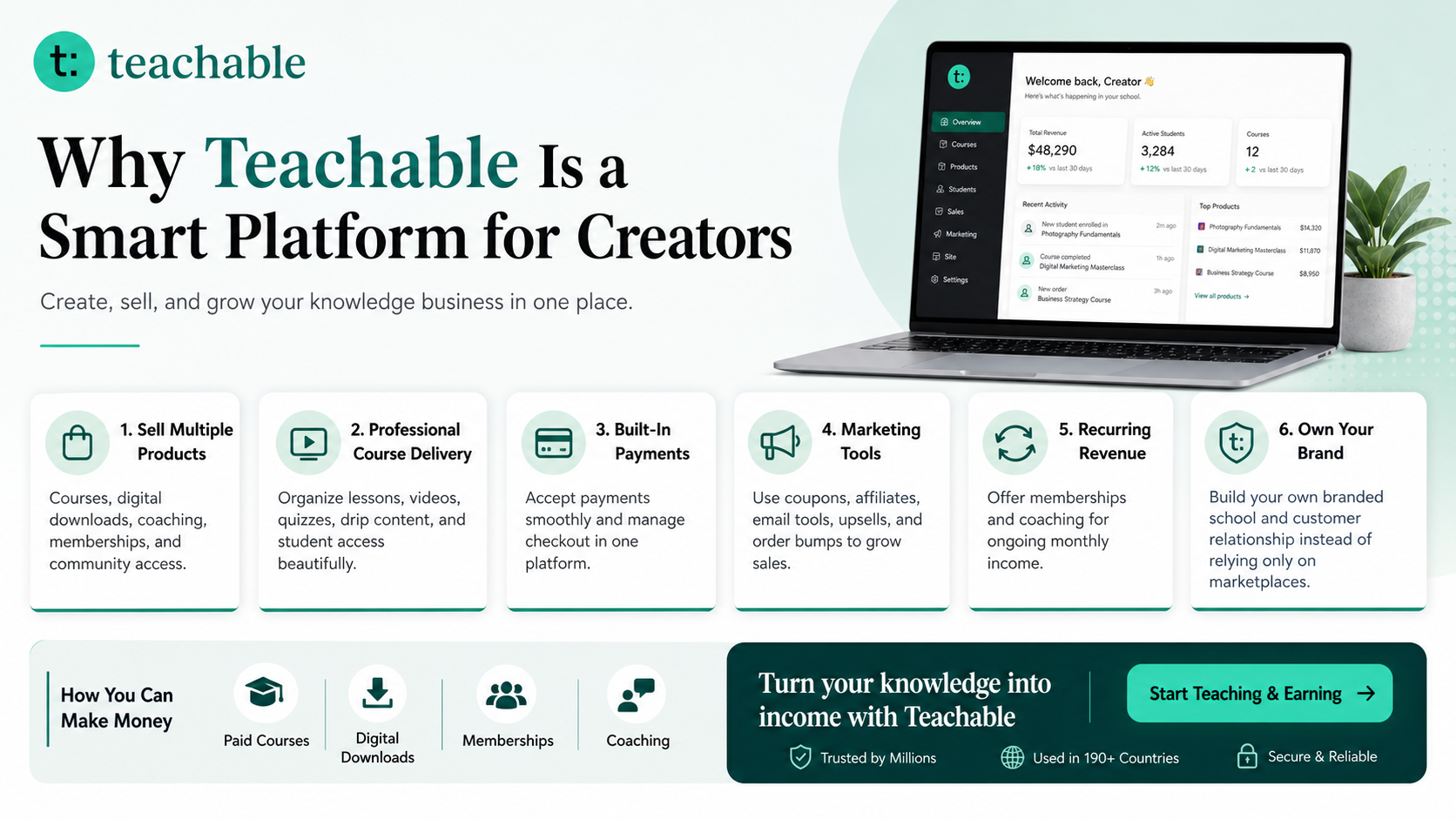
Teachable is an online platform that lets creators build, market, and sell courses, digital downloads, coaching, and memberships. It helps educators and entrepreneurs turn their knowledge into a branded digital business without needing complex coding.
Learn more: How to Make Money with Teachable: A Complete Creator’s Guide
Free Productivity Tools from Zee Sharp
Zee Sharp is a growing suite of free online tools for productivity, development, and creativity. No sign-up. No watermarks. Just tools. It can help digital sellers resize images, prepare documents, convert files, and speed up everyday admin work.
90-Minute Implementation Checklist
You can use this quick workflow to take action today. It is intentionally simple because beginners often delay progress by building overly complex systems. A small, repeatable checklist is better than a perfect plan that never gets used.
| Time | Action | Output |
|---|---|---|
| 15 minutes | Clarify the buyer and product outcome | One-sentence promise for the listing or plan |
| 20 minutes | Collect keywords, examples, and buyer questions | A small research note or spreadsheet row |
| 25 minutes | Create or improve the main asset | Draft product, graphic, mockup, table, or listing copy |
| 15 minutes | Add trust details | File formats, instructions, disclaimers, FAQs, and support notes |
| 10 minutes | Check mobile readability | Thumbnail, title, and first image are easy to understand |
| 5 minutes | Record the change | Date, action taken, and what you expect to improve |
FAQs
Is how to plan your first 100 etsy listings important for a new Etsy shop?
Yes. Beginners often lose time by creating without a system. A clear process helps you choose better products, write clearer listings, measure results, and improve without guessing.
How long should I test a digital product before changing it?
Give the listing enough time to collect meaningful views and impressions, especially if the product is seasonal. If there is no traffic, test keywords and thumbnails first. If there is traffic but no sales, improve the offer, photos, benefits, and trust details.
What should every digital download listing include?
Include what the buyer receives, file formats, sizes, software requirements, download instructions, usage limits, refund-related disclaimers, and clear images showing the product. This reduces confusion and support messages.
Should I focus on more listings or better listings?
Both matter, but quality should lead. A shop with fewer clear, well-positioned listings can outperform a large shop full of confusing products. Build enough listings to test demand, then improve winners.
Can I use Canva for Etsy digital products?
Many sellers use Canva to design templates, mockups, instructions, and promotional graphics. Always follow Canva’s current licensing rules and make sure the final product is created, packaged, and delivered in a way buyers can use.
How do I reduce refund requests for digital files?
Make the digital-only nature obvious. Add file format graphics, instructions, FAQs, software requirements, and honest mockups. The clearer the buyer expectation, the lower the chance of disappointment.
Key Takeaways
- Plan products around one buyer, not random ideas.
- Use a product ladder: entry, core, bundle, and premium collection.
- Batch research, design, mockups, and publishing to stay consistent.
- Track results so future products are based on evidence.
Further Reading
From SenseCentral
- How to Build a 6-Month Etsy Product Plan
- How to Build a 12-Month Etsy Product Plan
- How to Know When to Create a Bundle
- How to Make Money with Teachable: A Complete Creator’s Guide
Useful External Links
- Etsy Help: How to manage digital listings
- Etsy Help: SEO for shop and listing pages
- Etsy Seller Handbook
- Teachable: Sell digital downloads and digital products
References
- Etsy Help Center, “How to Manage Your Digital Listings.”
- Etsy Help Center, “Search Engine Optimization (SEO) for Shop and Listing Pages.”
- Etsy Help Center, “How to Download a Digital Item.”
- Etsy Seller Handbook, seller education and marketplace guidance.
- Teachable, “How to Create and Sell Digital Downloads.”