Sensecentral Digital Product Guide
How to Create a Template Business Planner
A complete, Etsy-focused guide to planning, designing, packaging, and promoting a Template Business Planner that feels useful, premium, and easy for buyers to understand.
A strong printable or digital workbook is not just a stack of pretty pages. The best products solve a specific problem, guide the buyer from confusion to clarity, and make the next action obvious. That is why this guide on How to Create a Template Business Planner focuses on product strategy as much as design. Whether you sell on Etsy, promote through a blog, bundle products on your own store, or use a course platform, the goal is the same: create a resource that buyers understand quickly and return to repeatedly.
The Template Business Planner can work as a standalone Etsy download, a Canva-editable template, a bonus inside a digital product bundle, a lead magnet, a printable worksheet pack, or a companion workbook for a paid course. It fits especially well for Etsy sellers, Canva template creators, digital download makers, bloggers, designers, and online business owners building repeatable product workflows. When the product is built with a clear promise, buyers do not have to guess what it does. They can look at the listing images, read the description, and immediately know whether it matches their current challenge.
For Sensecentral readers, the practical opportunity is simple: productized planning tools are attractive because they are reusable, visual, and easy to demonstrate through mockups. You can create one core system, turn it into multiple variations, and then expand it into a product family. A beginner may start with a 12-page printable. A more advanced seller may create a 60-page workbook with editable Canva links, US Letter and A4 sizes, fillable PDF versions, bonus checklists, and a short usage guide.
Why Create a Template Business Planner?
The main reason to create a Template Business Planner is that buyers are looking for a practical shortcut. They do not want another vague article or a blank notebook. They want a structured product that helps them manage unfinished ideas, messy files, weak product descriptions, inconsistent mockups, unclear product benefits, and launches that depend too much on memory. A good planner reduces decision fatigue because every page has a defined purpose. It tells the buyer what to capture, what to ignore, what to review, and what to do next.
Another advantage is that this topic can be designed at different complexity levels. You can make a beginner-friendly version with simple checkboxes and prompts, or a premium version with dashboards, review pages, examples, trackers, and bonus cards. This gives you room for a basic product, a deluxe bundle, and a seasonal or niche variation. For example, possible product names include: Digital Product Launch Planner, Canva Template Product Tracker, Mockup and Description Workbook, File Quality Control System.
| Product Format | Best Use | Watch Out For |
|---|---|---|
| Idea planner | Captures product opportunities | Needs validation pages to become useful |
| Creation tracker | Supports finishing products | Can become too task-heavy |
| Testing workbook | Improves quality and buyer experience | Requires clear checklists |
| Portfolio planner | Great for long-term sellers | More useful after several products exist |
Ideal Buyer and Use Case
Before opening Canva, Google Docs, Figma, Affinity Publisher, or any design tool, write a buyer scenario. This keeps the product focused. The ideal buyer for a Template Business Planner is usually not searching for decoration only. They are searching for relief, clarity, structure, and a repeatable way to handle a recurring task. Your product should make them feel, “This was made for my exact situation.”
Start with one sentence: “This workbook helps [buyer] do [specific result] without [common frustration].” For this topic, a strong promise could be: “This Template Business Planner helps Etsy sellers, Canva template creators, digital download makers, bloggers, designers, and online business owners building repeatable product workflows create a simple, repeatable system for handling unfinished ideas, messy files, weak product descriptions, inconsistent mockups, unclear product benefits, and launches that depend too much on memory.” This sentence can guide your page list, listing images, product description, and SEO keywords.
Buyer Goal
The buyer wants a faster, calmer, and more organized way to make progress. They value templates because templates remove the blank-page problem.
Buyer Objection
The buyer may worry that the product is too complicated, too generic, or not worth printing. Your preview images should answer these concerns.
Buyer Success Moment
The buyer should be able to complete the first page within ten minutes and feel immediate clarity. That first win is important for reviews.
Pages to Include in the Template Business Planner
The page list is the heart of the product. It should be broad enough to feel valuable but focused enough to avoid overwhelm. Many Etsy sellers make the mistake of adding pages only to increase the page count. A better approach is to create a logical journey. The buyer should begin with orientation, move into planning or reflection, then use tracking pages, and finally finish with a review or reset page.
| Page or Section | Purpose | Design Tip |
|---|---|---|
| Product Idea Tracker | Use this page to guide one clear action inside the Template Business Planner. | Keep the layout printable, low-clutter, and easy to repeat weekly or monthly. |
| Offer Outline | Use this page to guide one clear action inside the Template Business Planner. | Keep the layout printable, low-clutter, and easy to repeat weekly or monthly. |
| Mockup Checklist | Use this page to guide one clear action inside the Template Business Planner. | Keep the layout printable, low-clutter, and easy to repeat weekly or monthly. |
| Description Worksheet | Use this page to guide one clear action inside the Template Business Planner. | Keep the layout printable, low-clutter, and easy to repeat weekly or monthly. |
| Benefit Mapping Page | Use this page to guide one clear action inside the Template Business Planner. | Keep the layout printable, low-clutter, and easy to repeat weekly or monthly. |
| File Naming Tracker | Use this page to guide one clear action inside the Template Business Planner. | Keep the layout printable, low-clutter, and easy to repeat weekly or monthly. |
| Testing Log | Use this page to guide one clear action inside the Template Business Planner. | Keep the layout printable, low-clutter, and easy to repeat weekly or monthly. |
| Update History | Use this page to guide one clear action inside the Template Business Planner. | Keep the layout printable, low-clutter, and easy to repeat weekly or monthly. |
Recommended Product Structure
A practical structure is to divide the workbook into four parts: start, organize, act, and review. The start section explains how to use the product. The organize section captures inputs, ideas, tasks, thoughts, leads, or goals. The act section turns those inputs into a schedule, checklist, decision, or next step. The review section helps the buyer measure what changed and decide what to repeat.
For a premium version, add a one-page instruction guide, an example completed page, a printing guide, and a file guide. These pages reduce customer questions and make the product feel more professional. You can also include a “start here” page with three suggested workflows: quick use, weekly use, and full system use. This helps both casual buyers and serious buyers get value.
Layout, Design Style, and Printable Format
The design style should match the emotional promise of the product. For this title, a strategic, organized, creator-friendly, and sales-aware style will usually work better than a crowded layout. Use generous margins, readable fonts, clear headings, and consistent spacing. If the buyer needs to write, leave enough blank space. If the buyer needs to track, use simple rows and checkboxes. If the buyer needs to compare, use tables and scoring boxes.
Recommended Sizes and File Types
- US Letter PDF: useful for buyers in the United States and for standard printable listings.
- A4 PDF: useful for international buyers and a simple way to increase perceived value.
- Canva editable template: valuable for buyers who want to customize headings, colors, or branding.
- Fillable PDF: useful for buyers who prefer typing instead of printing.
- PNG preview images: useful for listing images, Pinterest pins, and blog promotion.
Keep visual hierarchy consistent. Use one heading style, one subheading style, one body text style, and one accent style. Avoid using too many fonts because the product will look less premium. If you create a Canva version, group elements properly, lock background objects where useful, and name pages clearly. Buyers appreciate files that are easy to edit without breaking the design.
Step-by-Step Workflow to Create the Product
Step 1: Define the Promise
Write the promise before designing the pages. A good promise is specific, outcome-based, and believable. Instead of “This is a printable planner,” say “This planner helps you organize your week, protect focus time, and review what actually got done.” A clear promise will make your title, description, mockups, and SEO stronger.
Step 2: Build the Page Map
List every page before you design. Put the pages in order and ask whether each page has a job. If a page does not support the buyer journey, remove it or turn it into a bonus. This is how you avoid bloated products that look big but feel confusing.
Step 3: Design a Reusable Master Layout
Create one master header, footer, page number style, and section divider. Then duplicate layouts instead of rebuilding each page from scratch. This saves time and gives the product a polished look. A consistent master layout also helps when you create future product variations.
Step 4: Add Examples and Micro-Instructions
Short instructions improve product usability. Add one sentence at the top of each page explaining how to use it. For complex pages, include a tiny example, a checkbox legend, or a “best used for” note. Buyers should not need to contact you to understand basic usage.
Step 5: Export, Test, and Package
Export the product in all promised formats and test each file. Print a few pages in black and white. Check margins. Open the Canva link from a different account if possible. Confirm that download instructions are clear. Then package everything into a clean ZIP file with a PDF instruction sheet.
| Quality Check | What to Review | Why It Matters |
|---|---|---|
| Product Completion Rate | Track this as a simple note, checkbox, score, or monthly review field. | It helps buyers see whether the planner is actually improving their workflow. |
| Listing Conversion Notes | Track this as a simple note, checkbox, score, or monthly review field. | It helps buyers see whether the planner is actually improving their workflow. |
| Buyer Questions | Track this as a simple note, checkbox, score, or monthly review field. | It helps buyers see whether the planner is actually improving their workflow. |
| Revision Count | Track this as a simple note, checkbox, score, or monthly review field. | It helps buyers see whether the planner is actually improving their workflow. |
| File Quality Checks | Track this as a simple note, checkbox, score, or monthly review field. | It helps buyers see whether the planner is actually improving their workflow. |
Etsy Listing, Pricing, and Promotion Strategy
Your Etsy listing should make the value obvious in the first few seconds. Use listing images to show the cover, inside pages, page count, file types, printable sizes, and how the buyer can use the product. One image should explain the problem. One image should show the solution. One image should show what is included. One image should answer printing or editing questions.
Pricing depends on depth, niche, design quality, and file formats. A simple worksheet pack may be priced lower. A complete workbook with multiple sizes, editable Canva access, examples, and bonus trackers can justify a higher price. You can also create a bundle strategy: sell the Template Business Planner alone, then include it inside a larger productivity, business, brand, or digital product creation bundle.
Listing Image Ideas
- Cover mockup with a short transformation phrase.
- Inside page collage showing 6 to 10 pages.
- “What’s included” checklist with file formats and sizes.
- Before-and-after scenario showing messy input becoming organized output.
- Printing and Canva editing instruction preview.
- Bonus page preview to increase perceived value.
Promotion can happen through Pinterest pins, blog posts, email newsletters, short videos, and product comparison articles. Since Sensecentral already focuses on reviews and product comparisons, you can create companion posts comparing different planner types, reviewing productivity tools, or explaining how buyers can choose the right printable for their situation.
Useful Resources for Creating and Selling This Product
Use the resources below to speed up creation, packaging, selling, and promotion. Some links are affiliate or sponsored links, which means Sensecentral may earn a commission if you purchase through them, at no extra cost to you.
Useful Resource: Explore Our Powerful Digital Products Bundle
Browse high-value bundles for website creators, developers, designers, startups, content creators, and digital product sellers. This is a helpful shortcut if you want ready-made assets, templates, design resources, and creative files to speed up your own online business workflow.
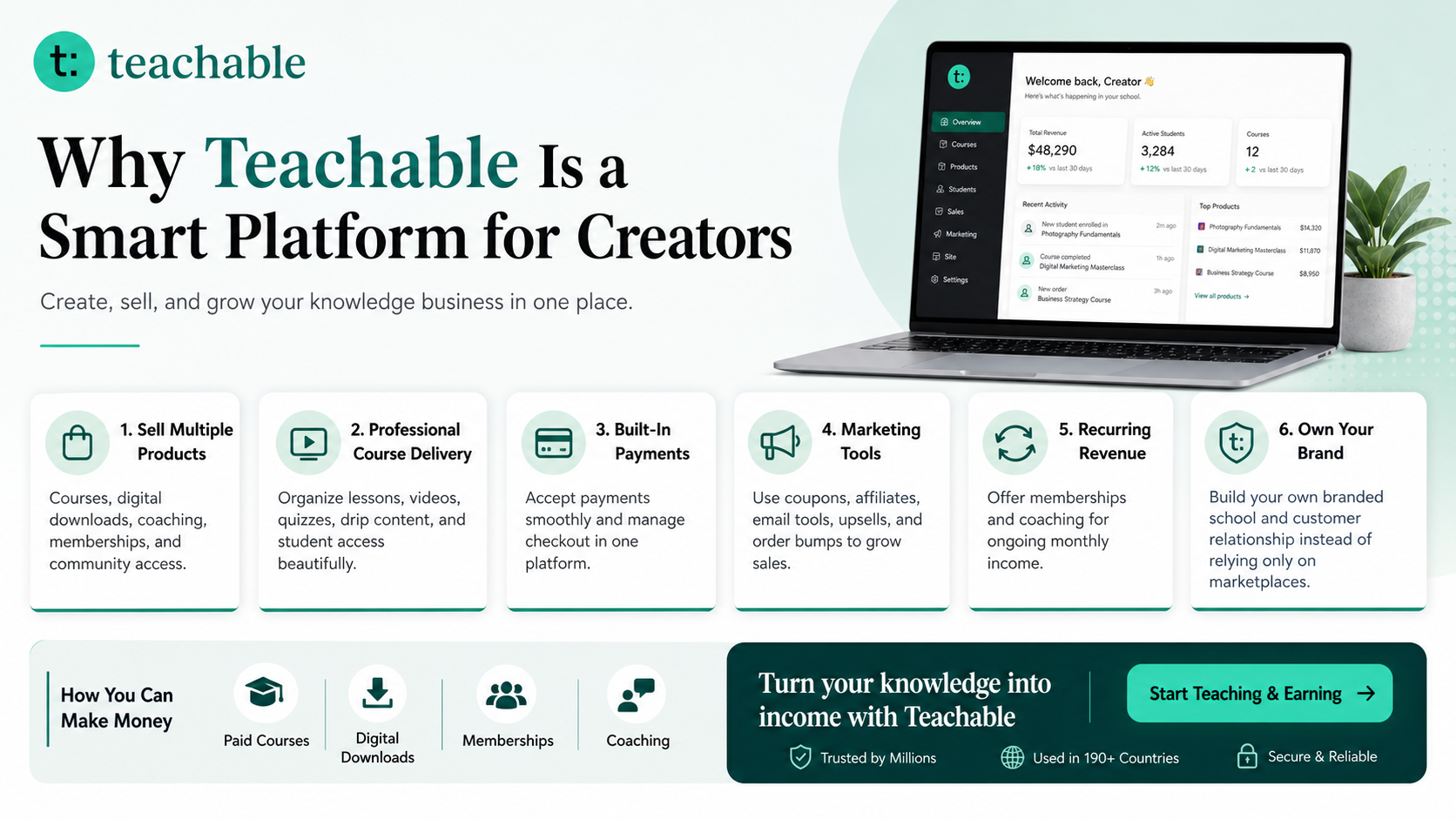
Creator Platform Pick: Build and Sell with Teachable
Teachable is an online platform that lets creators build, market, and sell courses, digital downloads, coaching, and memberships. It helps educators and entrepreneurs turn their knowledge into a branded digital business without needing complex coding.
Learn more: How to Make Money with Teachable: A Complete Creator’s Guide
Free Productivity Tools Hub: Zee Sharp
Zee Sharp is a growing suite of free online tools for productivity, development, and creativity. No sign-up. No watermarks. Just tools. Use it while planning layouts, naming sections, cleaning text, organizing ideas, or preparing product assets.
Further Reading on Sensecentral
FAQs About Creating a Template Business Planner
How many pages should a Template Business Planner include?
A beginner product can start with 10 to 20 well-designed pages. A premium workbook may include 40 to 80 pages, especially if it offers multiple sizes, examples, trackers, and bonus worksheets. Quality matters more than page count.
Should I make it printable, editable, or both?
Both is usually better if you can support it. Printable PDFs are simple for buyers, while editable Canva templates add flexibility. If you include Canva access, add a short instruction PDF so buyers know how to copy and edit the design.
Can I sell this kind of planner on Etsy?
Yes, printable planners, journals, worksheets, and templates can be sold as digital downloads when they follow marketplace rules and are created by you. Always check Etsy’s current seller and digital listing policies before publishing.
What should I include in the Etsy product description?
Explain who the product is for, what problem it solves, what pages are included, what file types the buyer receives, how to download or edit it, and what the purchase does not include. Clear descriptions reduce refund requests and buyer confusion.
How do I make the product look premium?
Use consistent spacing, readable fonts, strong mockups, thoughtful section dividers, and a clean file package. Include examples, usage instructions, and multiple sizes. Premium products feel easy to use, not just visually attractive.
Can I turn this into a course or digital download bundle?
Yes. You can sell the planner as a downloadable resource, include it as a bonus in a mini-course, or bundle it with related templates. Platforms like Teachable can help creators package digital downloads, coaching, memberships, and courses together.
Key Takeaways
- A successful Template Business Planner starts with a specific buyer problem, not only a pretty design.
- Use a clear page journey: start, organize, act, and review.
- Include US Letter, A4, and optional Canva-editable versions to increase value.
- Listing images should explain the product, show the pages, and reduce buyer questions.
- Affiliate resources, bundles, and free tool hubs can make the post more useful while supporting monetization.
References and Useful External Reading
- Etsy Seller Handbook — useful for understanding shop branding, customer experience, and selling strategy.
- Etsy Help: How to Manage Your Digital Listings — helpful for instant download and made-to-order digital product listing basics.
- Canva Help: Using Canva to Create Products for Sale — important guidance for creators using Canva designs commercially.
- Teachable Digital Downloads — useful for creators who want to sell templates, guides, and downloadable resources.
- WordPress Importer Plugin — useful when importing WordPress XML export files.
Suggested Keywords and Tags
Suggested categories: Digital Product Business, Etsy Seller Tools, Product Creation Planners