Etsy SEO Ideas for Canva Pinterest Templates
Last updated for Sensecentral readers on June 27, 2026.
- Table of Contents
- Why Canva Pinterest Templates Matters for Etsy Sellers
- Buyer Intent and Keyword Map
- Step-by-Step Framework for Canva Pinterest Templates
- 1. Define the Exact Buyer
- 2. Define the Buyer’s Trigger Moment
- 3. Build a Keyword Cluster
- 4. Match Photos to Questions
- 5. Add a Clear Post-Purchase Path
- Sample Listing Title Ideas
- Comparison Table: Better Ways to Apply This Idea
- Implementation Plan: From Idea to Published Etsy Listing
- Day 1: Research and Organize
- Day 2: Improve the Offer
- Day 3: Rewrite the Listing
- Day 4: Test the Buyer Experience
- Day 5: Track and Review
- Recommended Resource: Explore Our Powerful Digital Products Bundle
- Useful Creator Tool: Teachable for Courses, Downloads, Coaching, and Memberships
- Free Productivity Resource: Zee Sharp Tools Hub
- How to Turn This Post Into Your Own Shop Workflow
- Key Takeaways
- Suggested Keyword Tags for This Post
- FAQs
- How often should I update an Etsy listing?
- Should I repeat the same keyword in every Etsy tag?
- What is the best way to reduce questions from digital product buyers?
- Can I promote bundles inside individual Etsy listings?
- How do I know which product idea to expand next?
- Internal Links and Further Reading from Sensecentral
- References and Useful External Reading
Disclosure: This article includes affiliate and promotional resource links. They are included as practical tools for digital product sellers, creators, and Etsy shop owners.
Selling canva pinterest templates on Etsy is not only about making a beautiful digital product. Buyers also need to find it quickly, understand it in seconds, and feel confident that the download solves their exact problem. That is where Etsy SEO becomes a practical product design skill, not just a keyword exercise.
This guide is written for digital product sellers, printable shop owners, Canva template creators, and niche bundle builders who want a repeatable way to research, organize, and apply keywords. You will find title ideas, tag patterns, description angles, listing photo suggestions, buyer intent examples, and a simple review workflow that helps you improve listings without rewriting everything from scratch.
The goal is simple: connect the words shoppers use with the outcome your product provides. For canva pinterest templates, buyers often search with problem words, room words, audience words, format words, occasion words, and speed words. A strong Etsy listing balances all of those signals while staying readable for real humans.
Why Canva Pinterest Templates Matters for Etsy Sellers
For canva pinterest templates, SEO should describe the buyer’s situation, the product format, and the outcome. A shopper might not search for your exact creative name. They may search for a printable checklist, editable binder, quick-start workbook, or ready-made template that solves a practical problem. Your job is to bridge that language gap.
Etsy shoppers usually scan quickly. They look at the thumbnail, title, price, first few description lines, reviews, and delivery expectations. If those elements do not answer their questions, they may favorite the listing and leave, message you for basic details, or buy the wrong thing and become disappointed. A strong listing system lowers friction before it reaches your inbox.
For digital products, clarity is even more important because there is no physical package. The product value lives in the preview, instructions, files, examples, and promise. Buyers want to know whether they can print it, edit it, use it on mobile, open it in Canva, share it with clients, or customize it for their own business. Your listing should make these answers obvious.
The Simple Rule
Every page, photo, keyword, and FAQ should answer one of three questions: What is this? Who is it for? and How do I use it after purchase? When those answers are consistent, your shop feels more trustworthy and your product becomes easier to buy.
Buyer Intent and Keyword Map
Before changing a title or creating a new product, map buyer intent. This helps you avoid vague keywords and find phrases that match real purchase situations. Use the table below as a starting point for canva pinterest templates.
| Intent Type | Keyword / Listing Angle | Photo or Description Support |
|---|---|---|
| Format | pinterest pin templates, canva pin template | vertical pin preview |
| Use | blog pin templates, product pin templates | use-case collage |
| Niche | etsy pinterest templates, teacher pin graphics | niche covers |
| Volume | 100 pinterest templates bundle | bundle count badge |
Keyword Placement Checklist
- Use the strongest phrase near the beginning of the title while keeping the title readable.
- Use all available Etsy tags with natural multi-word phrases instead of repeating one-word tags.
- Include format words such as printable, PDF, Canva template, digital download, editable, workbook, planner, or bundle when accurate.
- Add buyer outcome words in your image text, first description paragraph, and FAQs.
- Use categories and attributes carefully because they give Etsy more context about the product.
Do not stuff the same phrase everywhere. A buyer-friendly listing uses a clear primary keyword, several related long-tail phrases, and proof in the images. The result should feel natural, not robotic.
Step-by-Step Framework for Canva Pinterest Templates
1. Define the Exact Buyer
Write one sentence that describes the person who needs this product. Avoid broad labels like “everyone” or “small business owners” unless the product truly fits. A stronger buyer sentence might say, “This is for a new Etsy seller who needs a fast way to create clean product instructions,” or “This is for a teacher who wants printable classroom organization pages before the school year begins.”
2. Define the Buyer’s Trigger Moment
A trigger moment is the event that makes someone search today. It could be a wedding date, school year, messy home office, product launch, seasonal sale, client onboarding, or the need to publish a listing quickly. Trigger moments make your copy sharper because they explain urgency.
3. Build a Keyword Cluster
Create a cluster with one primary phrase, three supporting phrases, three audience phrases, three format phrases, and three problem phrases. For example, a listing can combine “editable Canva template,” “small business brand kit,” “brand board template,” “instant download,” and “DIY branding guide.” This gives you more ways to match buyer searches without creating a confusing title.
4. Match Photos to Questions
Every listing photo should answer a buyer question. Use one image for the final result, one for contents, one for size or format, one for instructions, one for compatibility, one for before-and-after value, and one for FAQs. This is especially helpful for digital products because buyers cannot touch the item before purchase.
5. Add a Clear Post-Purchase Path
Explain exactly what happens after purchase. Tell buyers where to download the file, what software they need, whether they can edit it, whether it is for personal or commercial use, and how to contact you if something does not work. A smooth post-purchase path builds confidence and reduces avoidable messages.
Sample Listing Title Ideas
- Canva Pinterest Templates: Printable Template for Busy Buyers
- Editable Canva Pinterest Templates Kit | Instant Download
- Canva Pinterest Templates Bundle for Organized Digital Product Sellers
- Simple Canva Pinterest Templates System with Instructions
- Canva Pinterest Templates Template Pack | PDF + Canva Style Guide
Comparison Table: Better Ways to Apply This Idea
Use this comparison table to decide which angle belongs in your next listing, refresh, bundle, or product update.
| SEO Element | Why It Helps | Best Use | Example |
|---|---|---|---|
| Broad keyword | High volume but competitive | Use once in title, not everywhere | printable planner |
| Long-tail keyword | Clear buyer intent | Use in tags, description, and image text | weekly cleaning checklist printable |
| Audience keyword | Helps niche positioning | Use when the product is clearly made for that buyer | teacher binder printable |
| Outcome keyword | Sells the transformation | Use in first image and opening description | organize home paperwork |
| Format keyword | Reduces wrong expectations | Use in title, tags, and FAQ | editable Canva template |
Implementation Plan: From Idea to Published Etsy Listing
Day 1: Research and Organize
Collect 20 to 30 keyword ideas from Etsy search suggestions, buyer questions, reviews, competitor listing language, Pinterest searches, and your own customer messages. Group them by buyer problem, product format, audience, style, and urgency. Do not copy competitors. Use market language to understand how buyers describe what they want.
Day 2: Improve the Offer
Review the product itself. Can you add a quick-start page, a print guide, a Canva editing note, a checklist, a sample filled page, or a bonus format? Strong SEO can bring visitors, but product clarity and value help convert them. If the product is confusing, fix the product before rewriting the listing.
Day 3: Rewrite the Listing
Rewrite the title, first description paragraph, 13 tags, image captions, and FAQs as one connected system. The title should attract the right buyer. The photos should prove the value. The description should remove doubt. The FAQs should handle objections. The tags should cover search variations.
Day 4: Test the Buyer Experience
Open the listing on mobile and scan it like a busy shopper. Can you understand the product in five seconds? Can you see what is included without reading the full description? Can you tell whether it is editable, printable, digital, or bundled? If not, update the first image and the top of the description.
Day 5: Track and Review
Give changes enough time to gather data. Track impressions, visits, favorites, conversion rate, messages, refund reasons, and review phrases. Do not change everything every day. Instead, record what changed and review performance monthly. Etsy growth becomes easier when you can connect each improvement to a result.
Recommended Resource: Explore Our Powerful Digital Products Bundle
Browse these high-value bundles for website creators, developers, designers, startups, content creators, and digital product sellers. Use them as inspiration for layout systems, lead magnets, printable packs, templates, checklists, and product bundles that can support your Etsy or creator business.
Useful Creator Tool: Teachable for Courses, Downloads, Coaching, and Memberships
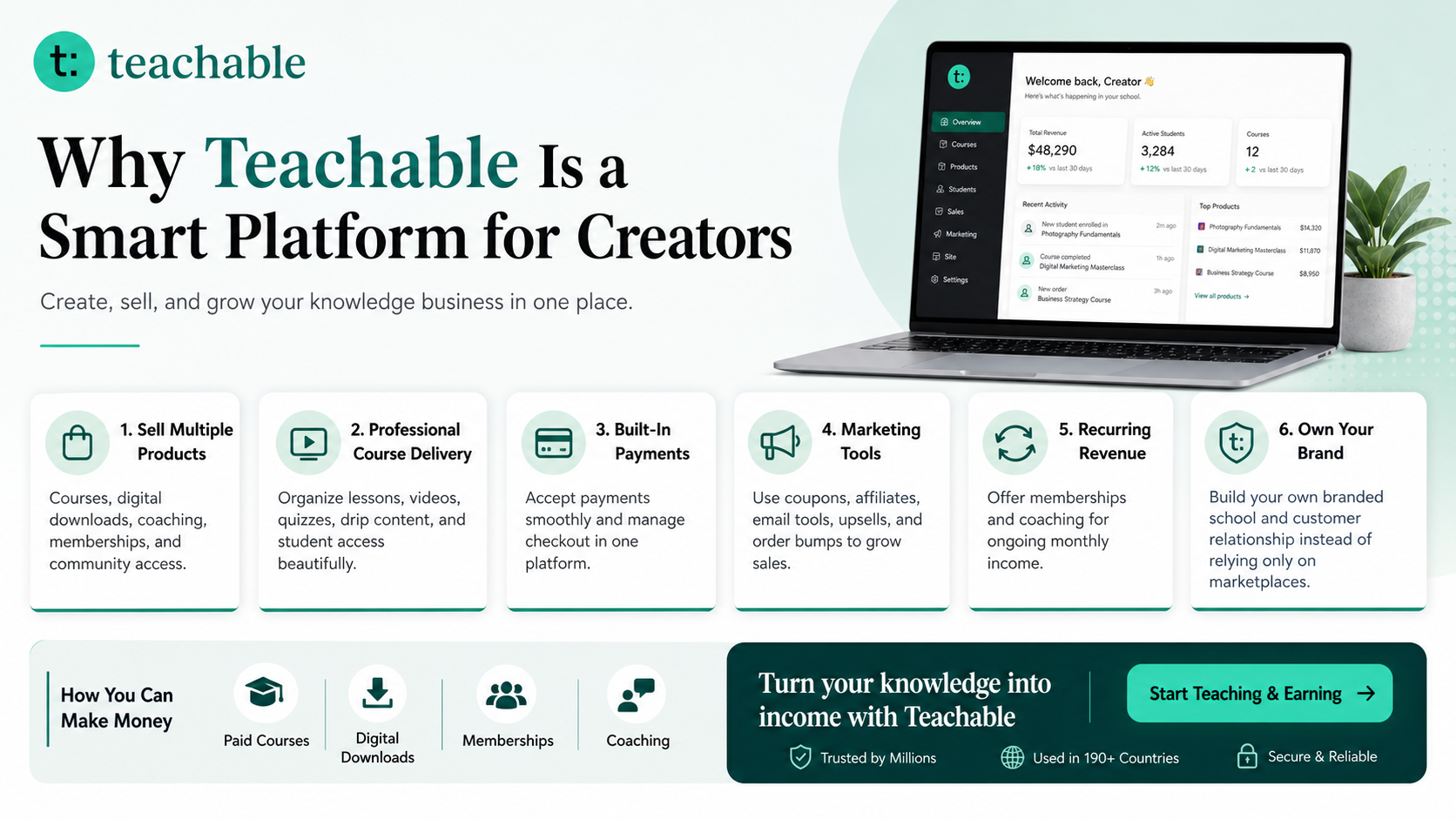
Affiliate disclosure: This section includes an affiliate referral link. Teachable is an online platform that lets creators build, market, and sell courses, digital downloads, coaching, and memberships. It helps educators and entrepreneurs turn their knowledge into a branded digital business without needing complex coding.
How to Make Money with Teachable: A Complete Creator’s Guide
Free Productivity Resource: Zee Sharp Tools Hub
Zee Sharp is a growing suite of free online tools for productivity, development, and creativity. No sign-up. No watermarks. Just tools. It can help Etsy sellers plan keyword lists, clean copy, outline product checklists, manage launch notes, and speed up everyday digital product workflows.
How to Turn This Post Into Your Own Shop Workflow
Use this guide as a repeatable workflow, not just a one-time reading exercise. Create a simple document with four sections: keyword ideas, listing improvements, product improvements, and customer questions. Every time you get a message, review, favorite spike, refund request, or seasonal traffic change, add a note to the document.
At the end of each month, choose the three highest-impact updates. One update might be a better first image. Another might be a download guide. Another might be a new bundle using existing pages. This prevents overwhelm and helps you improve your shop with steady, measurable actions.
Mini Audit Questions
- Does the first image tell buyers what the product is?
- Does the first paragraph include the product format and buyer outcome?
- Are all files named clearly enough for a first-time digital buyer?
- Do your tags include long-tail phrases instead of only broad words?
- Can a mobile shopper understand the listing without zooming?
- Does the FAQ answer the top three buyer objections?
Key Takeaways
- Clarity beats cleverness: buyers should know what they get, who it is for, and how to use it.
- SEO and product quality work together: keywords bring potential buyers, but photos, descriptions, files, and instructions create confidence.
- Use buyer language: search terms, reviews, questions, and support messages reveal how people describe their problems.
- Build systems: naming rules, tag rotation, refresh calendars, quality checklists, and support libraries help your shop scale.
- Review monthly: track what changed, measure results, and turn winning patterns into product families or bundles.
FAQs
How often should I update an Etsy listing?
Review important listings monthly, but avoid changing everything too frequently. If a listing already converts well, make small improvements such as clearer photos, stronger FAQs, or better instructions. For weak listings, test one main change at a time so you know what helped.
Should I repeat the same keyword in every Etsy tag?
No. It is usually better to use natural multi-word phrases that cover different buyer searches. Repeating the same word in every tag can waste space. Use a mix of product type, audience, outcome, format, style, and use-case phrases.
What is the best way to reduce questions from digital product buyers?
Add visual explanations. Show what is included, file types, editing steps, printing instructions, software requirements, and a quick-start guide. Many buyers scan images before reading the full description, so important details should appear in both places.
Can I promote bundles inside individual Etsy listings?
Yes, but do it naturally. Explain who should buy the single product and who should choose the bundle. A comparison image or FAQ can help buyers choose without feeling pushed.
How do I know which product idea to expand next?
Look at favorites, cart adds, conversion rate, buyer messages, reviews, and refund reasons. A product that gets attention but creates confusion may need better education. A product that sells and receives positive reviews may be ready for a related bundle or niche version.