Onshore production is economically viable from a few dozen barrels of oil a day and upward. Oil and gas is produced from several million wells worldwide. In particular, a gas gathering network can become very large, with production from thousands of wells, several hundred kilometers/miles apart, feeding through a gathering network into a processing plant. This picture shows a well, equipped with a sucker rod pump (donkey pump) often associated with onshore oil production. However, as we shall see later, there are many other ways of extracting oil from a non free-flowing well. For the smallest reservoirs, oil is simply collected in a holding tank and picked up at regular intervals by tanker truck or railcar to be processed at a refinery.
Onshore wells in oil-rich areas are also high capacity wells producing thousands of barrels per day, connected to a 1,000,000 barrel or more per day GOSP. Product is sent from the plant by pipeline or tankers. The production may come from many different license owners, so metering of individual well-streams into the gathering network are important tasks.
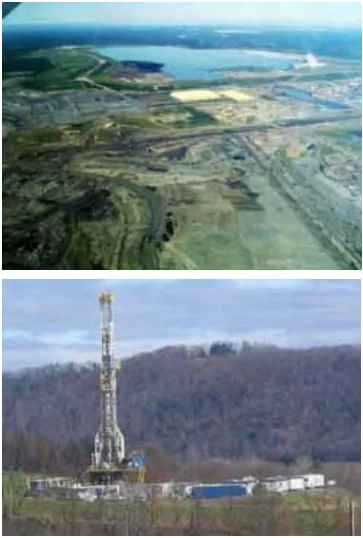
Unconventional plays target very heavy crude and tar sands that became economically extractable with higher prices and new technology. Heavy crude may need heating and diluents to be extracted. Tar sands have lost their volatile compounds and are strip-mined or can be extracted with steam. It must be further processed to separate bitumen from the sand. Since about 2007, drilling technology and fracturing of the reservoir have allowed shale gas and liquids to be produced in increasing volumes. This allows the US in particular to reduce dependence on hydrocarbon imports. Canada, China, Argentina, Russia, Mexico and Australia also rank among the top unconventional plays. These unconventional reserves may contain more 2-3 times the hydrocarbons found in conventional reservoirs. These pictures show the Syncrude Mildred plant at Athabasca, Canada Photo: GDFL Jamitzky/Wikimedia and the Marcellus Shale in Pennsylvania.