Introduction
ZigBee® and Bluetooth® are wireless communication protocols, which have a suite of specifications for devices to follow so they can transfer information over the air. A newer Bluetooth protocol, Bluetooth Low Energy (BLE) or Bluetooth Smart, was introduced as a low power protocol and the original Bluetooth is now referred to as Bluetooth Classic.
The older technologies, ZigBee and Bluetooth Classic, were introduced in the 1990s. From the beginning, Bluetooth Classic was intended to replace RS232 wired connections like those used to connect keyboards to PCs. It can handle data, voice and text, allowing earpieces, headsets, and keyboards to communicate with PC and mobiles wirelessly. Zigbee was intended for home and building automation, a way to control devices without having to rely on power lines. It was designed for low power operation and is not a rechargeable technology as it operates off a button cell battery for years. A device needs to offer a battery life of at least two years to pass ZigBee certification.
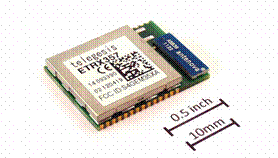
A ZigBee module
Bluetooth Smart, the most recent protocol of the group, was originally a Nokia developed protocol for low power communication that was merged with the Bluetooth standard in 2006. It handles short bursts of data, like when a sensor is queried and responds with data. Bluetooth Smart is not compatible with Bluetooth Classic; it doesn’t handle voice. When a device is labeled Bluetooth Smart Ready it means both standards, Bluetooth Classic and Bluetooth Smart, are included in the device.
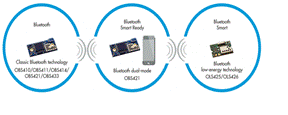
The evolution of Bluetooth
Certifications and Compliance
The ZigBee Alliance is an open, non-profit association of approximately 400 members that is responsible for developing the ZigBee standard, as well as for the testing and certifying device compliance. Bluetooth/BLE is governed by the Bluetooth Special Interest Group (SIG), a not-for-profit, non-stock corporation. TheSIG owns the Bluetooth® trademarks and oversees development of the Bluetooth standard.
With these standards, a compliant device from any manufacturer is guaranteed to work with any other compliant device. Compliant devices are submitted for testing and certification and fees are involved, both to join and for certification. Only devices passing certification can display the technology logo.
Topologies and Protocols
The Open System Interconnection Model (OSI Model) standardizes communication systems and protocols into a seven layer model, with the physical layer at the bottom (interfacing to hardware) and applications at the top (interfacing to humans perhaps). A network topology describes the structure of the network and a network protocol describes the structure of a single message. Figure 1. shows an abbreviated OSI Model representation, with the Application Layer at the top, various layers in between and then the physical layer interfacing with the radio transmitter. ZigBee and Bluetooth define their standards a little differently: for ZigBee, the MAC and PHY layers, where the data is formatted, packetized and the signals modulated and sent, are defined by IEEE standard 802.15.4. The upper layers are included in the ZigBee protocol which address network, security and application software and together these are the ZigBee standard. Other protocols can be designed using 802.15.4 that are not ZigBee. The Bluetooth standard specifies the lower layers are well, providing a core specification as well as the higher level specs to have every part of the protocol defined under the Bluetooth specifications.
ZigBee uses a mesh topology and the network grows as devices are discovered and connected. ZigBee will add nodes to a neighbor list for routing information, Bluetooth devices will pair and connect when devices come into range. Routing tables at each ZigBee node contain neighboring nodes, should a node go down, messages will be rerouted automatically. Many nodes can be added, with large networks formed. Bluetooth Classic’s piconet has a maximum of 8 devices, in a master/slave configuration. The master controls timing for the messages. Each node can connect to other piconets, forming a scatternet. Bluetooth Smart can also connect as a scatternet, though current applications focus on device to device communication.
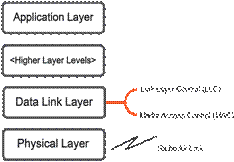
Figure 1. Communication Model
Table 1 lists some characteristics of each protocol. They are similar in that they operate in the 2.4 GHz Industrial, Scientific and Medical (ISM) unlicensed frequency band and are based on the IEEE standard 802.15 for Wireless Personal Area Networks (WPANs). Bluetooth is based on standard 802.15.1 and ZigBee is based on standard 802.15.4 for low rate devices (LR-WPAN). They can automatically form ad hoc networks as devices within range are detected. They only address devices in their own networks and do not currently connect to the internet. They both modulate signals for radio transmission and packetize data.
Table 1. Characteristics of ZigBee, Bluetooth Classic, Bluetooth Smart
| Feature | ZigBee | Bluetooth Classic (BT) | Bluetooth Smart |
| Design Focus | Wireless networking among sensors | Wireless keyboards, mouse, headsets | Wireless sensor and fitness devices |
| IEEE Standard | 802.15.4 | 802.15.1 | 802.15.1 |
| Network Type | Mesh, ZigBee PRO | Piconet, Master/Slave;Scatternet | Scatternet |
| Distance | 75-100m line of sight | 10m (33ft) min | >10m >(33ft) |
| Nodes Connected, max | 65000 | 8 | N/A |
| Operating Band | 2.400 Ghz-2.4835 GHz ISM band16 channels, 5MHz apart,2MHz usedDirect Spread Spectrum | 2.400 Ghz-2.4835 GHz ISM band79 1-MHz channelsFrequency Spread Spectrum | 2.400 Ghz-2.4835 GHz ISM band40 2-MHz channelsFrequency Spread Spectrum |
| Throughput | 0.03Mbps | 1-3Mbps | 0.27Mbps |
| Latency with Connect | 15ms | 100ms – 3sec | 3-6ms |
| Type of Data | Operational instructionsLow data rate | Continuous streamingAll types of data; text, multimediaRelatively high speeds | Burst |
| Voice | No | Yes | No |
| Security | EAP (Extensible Authentication Protocol) | 56/128-bit and application layer user defined | 128-bit AES (Advanced Encryption Standard) with Counter Mode CBC-MAC and application layer user defined |
| Power Consumed(dependent on application) | 30mW | 100 mW | 0.01-0.5W |
| Modulation | Direct Sequence Spread Spectrum | Frequency Hopping Spread Spectrum | Gaussian Frequency Shift Keying |
Profiles
In each protocol, there are defined profiles, which standardize messages for specific applications. The profiles allow consistency, and vendors don’t have to implement different messages for the same purpose.
ZigBee profiles include building automation, RF for consumer electronics (home entertainment), Smart Energy (smart grid/meters), and Health/Medical. Bluetooth Classic has many profiles, including alerts, imaging, vision, audio, find me, and health devices. For example, the Find Me (FMP) profile defines the behavior when a button is pressed on one device to cause an alerting signal on another device. Bluetooth Smart originally only had two profiles: remote display and sensors. As application areas continue to be explored, additional profiles are added.
In general, ZigBee is less complex, with a smaller protocol stack than Bluetooth. ZigBee has quicker, shorter connection times. ZigBee devices spend most of their time in sleep mode and have a duty cycle of less than 1%. They wake up, listen (receive data) to see if the channel is clear, transmit data, then go back to sleep. Batteries can last for years. Bluetooth Classic can be used constantly and has to be recharged daily with heavy usage. Bluetooth Smart devices also spend most of the time in sleep mode, waking up to transfer data.
Summary
ZigBee, Bluetooth Classic and Bluetooth Smart are all communication protocols for transferring data over wireless networks. They are short range technologies that will automatically detect devices within range and set up ad hoc networks with detected devices. Devices only operate within their networks, and currently do not connect to the internet. ZigBee is used primarily in building and home automation control, controlling lights, temperature, equipment. Bluetooth Classic enables wireless connections for PCs and mobiles for headsets, earpieces, keyboards; it handles voice and data, and devices require frequent recharging. Bluetooth Smart offers the range and connections of Bluetooth Classic, but with low power consumption in mind for sensor and fitness devices.