Trending News Explainer (Updated for the latest trial reports)
- What happened: the headline in simple terms
- What is a hydrogen-powered train?
- How hydrogen trains work (step-by-step)
- Why this matters for clean mobility in India
- 1) Decarbonising routes where wires aren’t practical (yet)
- 2) Cleaner air + lower noise in and around stations
- 3) A new industrial chain: hydrogen production, storage, and skills
- 4) Signalling a “multi-technology” clean mobility future
- India’s hydrogen train: what we know so far
- What trials actually test (and why it takes time)
- Performance & reliability
- Energy & refuelling operations
- Safety systems (non-negotiable)
- Standards & approvals
- Hydrogen vs electrification vs battery: what fits where?
- Infrastructure & safety: the real-world checklist
- 1) Hydrogen production
- 2) Storage, compression, and refuelling
- 3) Depot design & emergency response
- 4) Standards culture
- Costs & economics: what must become cheaper
- What to watch next
- FAQs
- 1) Does a hydrogen train emit smoke?
- 2) Is hydrogen safe on a train?
- 3) What’s the difference between hydrogen trains and electric trains?
- 4) Why not electrify everything instead?
- 5) Is hydrogen really “green” in India?
- 6) Will tickets become cheaper because of hydrogen?
- 7) How far can hydrogen trains travel?
- 8) When will passengers ride India’s hydrogen train?
- 9) Will hydrogen trains replace diesel across India?
- 10) Where can I track official updates?
- Key takeaways
- References & external links
India is testing a new kind of train—one that runs on hydrogen instead of diesel, and aims to deliver zero tailpipe CO₂ emissions. If the trials go well, this could become a powerful addition to India’s clean transport toolkit—especially on routes where electrification is difficult, expensive, or slow to deploy.
But what exactly is a hydrogen-powered train? Is it “clean” in the real world (not just on paper)? How will it be refuelled? And does hydrogen make sense for India, a country that is already electrifying rail lines at record pace?
This guide breaks down what’s happening, how hydrogen trains work, what the trials are testing, and what to watch next—without the jargon.
What happened: the headline in simple terms
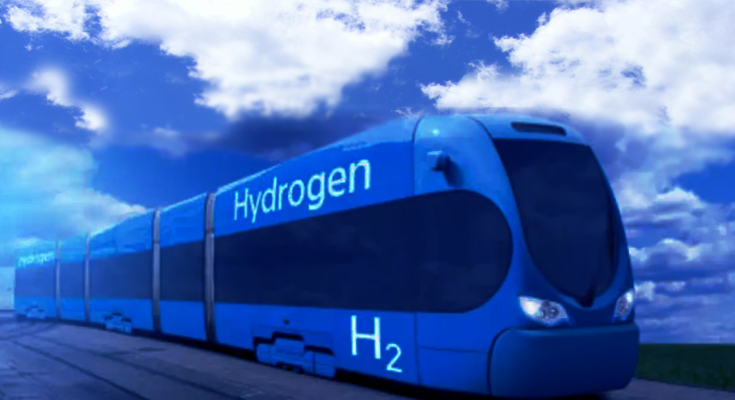
India’s first hydrogen-powered passenger train has entered the trial phase. In a trial, the goal is not marketing—it’s validation: engineers and safety teams measure performance, reliability, refuelling processes, emergency procedures, and compliance with standards before any regular service begins.
News reports indicate trials are being carried out in Haryana, linked to a hydrogen supply plan around the Jind region—where a green hydrogen production facility is planned/being established for railway use. The bigger story is this: India is not just importing a concept. It is trying to build a full hydrogen rail ecosystem—trainset + hydrogen supply + operational procedures—on Indian conditions.
What is a hydrogen-powered train?
A hydrogen-powered train is a train that produces electricity onboard using hydrogen, then uses that electricity to drive traction motors—similar to how an electric train uses electricity, but instead of drawing power from overhead wires, it generates it inside the train.
Two “hydrogen train” types (don’t confuse them)
- Hydrogen fuel-cell electric train (most common globally):
Hydrogen feeds a fuel cell that produces electricity. The only tailpipe emission is typically water vapour. - Hydrogen combustion train (rare):
Hydrogen is burned in a modified engine/turbine. It can still produce NOx unless carefully controlled, and is generally less efficient than fuel cells.
When people say “hydrogen train,” they usually mean fuel-cell electric.
How hydrogen trains work (step-by-step)
Think of a hydrogen fuel-cell train as a clean-energy power plant on wheels.
- Hydrogen storage: Hydrogen is stored in high-pressure tanks (typically on the roof or within dedicated cars).
- Fuel cell reaction: In the fuel cell, hydrogen combines with oxygen from the air to generate electricity.
- Battery buffering: A battery stores extra electricity and supplies bursts of power during acceleration.
- Traction motors: Electricity powers traction motors that turn the wheels (like an EV, but on rails).
- Regenerative braking: When braking, motors can act as generators to recharge the battery.
So is it “zero emission”?
At the train’s tailpipe: yes, it can be “zero CO₂” (water vapour is the main byproduct). But climate impact depends on how the hydrogen is produced:
- Green hydrogen: Made by electrolysis powered by renewables → best-case climate outcome.
- Grey hydrogen: Made from fossil fuels without capturing CO₂ → high emissions upstream.
- Blue hydrogen: Fossil-based with CO₂ capture → lower than grey, but not zero and depends on capture rates and leakage.
That’s why India’s hydrogen train story is tightly linked to green hydrogen plans—not just a new train.
Why this matters for clean mobility in India
1) Decarbonising routes where wires aren’t practical (yet)
Rail electrification is usually the cleanest long-term option. But there are sections and branch lines where electrification can be slow, expensive, or operationally complex. Hydrogen trains are often positioned as a solution for:
- Non-electrified or partially electrified routes
- Regions where building overhead lines is difficult (bridges, tunnels, clearances, heritage zones)
- “Last-mile” rail where traffic volume may not justify full electrification quickly
2) Cleaner air + lower noise in and around stations
Diesel traction contributes to local air pollution near rail corridors, yards, and stations. Fuel-cell trains can reduce local pollutants and are typically quieter than diesel units—improving passenger comfort and urban quality of life.
3) A new industrial chain: hydrogen production, storage, and skills
A hydrogen train isn’t just a vehicle purchase. It creates demand for:
- Electrolysers and renewable electricity
- Compression, storage, and refuelling systems
- Safety engineering and standards compliance
- Operations training (drivers, depot staff, emergency response)
4) Signalling a “multi-technology” clean mobility future
India’s clean mobility isn’t one technology. It’s a stack:
electrification + renewables + batteries + hydrogen + efficiency.
Trials help decide where hydrogen belongs in that stack.
India’s hydrogen train: what we know so far
According to official disclosures and reporting around the pilot, the hydrogen train initiative is being developed to demonstrate hydrogen traction under specifications framed by India’s railway standards body (RDSO), with train manufacturing led within the Indian Railways ecosystem.
Key points often cited in the project brief
- Indigenous trainset development as a pilot demonstration.
- Train configuration described as a longer passenger formation (reported as a 10-coach trainset in official notes).
- High power output (widely cited as 2400 kW in official communication around the trainset).
- Hydrogen supply plan linked to Jind (Haryana), including an electrolysis-based “green hydrogen” production concept.
If you want to explore the organisations involved, here are the official pages:
RDSO (Research Designs & Standards Organisation) and
Integral Coach Factory (ICF).
Also important context: Indian Railways has publicly stated its target of becoming a net zero carbon emitter by 2030 and is expanding renewable energy usage across the network. Hydrogen trials sit inside that broader decarbonisation agenda.
What trials actually test (and why it takes time)
When a new propulsion technology enters rail service, trials have to prove more than “it moves.” Here’s what typically gets validated:
Performance & reliability
- Acceleration and sustained speed under load
- Range under different passenger loads, gradients, and temperatures
- Cold-start and hot-weather performance
- Fuel cell and battery degradation patterns
Energy & refuelling operations
- Refuelling time and depot workflow
- Hydrogen purity management
- Compression, storage, and dispensing stability
- Real-world energy consumption per km
Safety systems (non-negotiable)
- Leak detection and automatic shutoff
- Ventilation and safe exhaust routing
- Crashworthiness + tank protection
- Emergency response procedures and staff training
Standards & approvals
Hydrogen touches multiple safety domains: high-pressure gases, electrical systems, fire safety, and public operations. Globally, hydrogen fuelling station standards such as ISO 19880-1 are part of the broader safety landscape, alongside national rules and railway-specific safety approvals.
In short: trials are slow because rail safety is designed to be slow.
Hydrogen vs electrification vs battery: what fits where?
The biggest question readers ask is: Why hydrogen when rail electrification exists?
The practical answer is that each technology has a “sweet spot.”
| Option | Best for | Main advantages | Main challenges |
|---|---|---|---|
| Overhead electrification | High-traffic corridors, long-term backbone routes | Very efficient, mature technology, strong performance | High upfront infra cost, time to build, clearance constraints |
| Battery-electric trains | Short non-electrified gaps, regional routes with charging options | High efficiency, simpler than hydrogen infra | Range limits, charging planning, battery lifecycle considerations |
| Hydrogen fuel-cell trains | Longer non-electrified routes where electrification is hard | Longer range than batteries, fast refuelling potential | Hydrogen cost, infra build-out, efficiency loss vs direct electric |
| Diesel | Legacy operations (declining role) | Existing infra, flexible | Emissions, fuel cost volatility, pollution, long-term policy pressure |
A reality check: hydrogen isn’t “magic clean” by default
Hydrogen trains can be climate-friendly if hydrogen is produced with low emissions (ideally renewable-powered electrolysis). If hydrogen is fossil-based, much of the climate advantage can vanish upstream.
So why still do hydrogen trials?
- To validate a future option for hard-to-electrify sections
- To build capability in green hydrogen supply chains
- To create a “plug-in” alternative where diesel would otherwise remain
Infrastructure & safety: the real-world checklist
The make-or-break factor for hydrogen trains is not the train—it’s the ecosystem around it.
1) Hydrogen production
India’s green hydrogen strategy aims to scale domestic green hydrogen capacity significantly by 2030. If you want the policy backbone, explore:
National Green Hydrogen Mission (policy document)
and related updates from government communications like
progress highlights under the Mission.
2) Storage, compression, and refuelling
- High-pressure storage must be protected and monitored
- Refuelling equipment must meet strict safety requirements
- Hydrogen purity is essential for fuel cell health
3) Depot design & emergency response
Hydrogen is light and disperses quickly, which can be a safety advantage in open air—but in enclosed spaces, accumulation risk must be engineered out through ventilation, sensors, and procedures.
4) Standards culture
Hydrogen deployment globally is increasingly tied to codes and standards. For a starting point on fuelling station requirements, see:
ISO 19880-1.
Costs & economics: what must become cheaper
For hydrogen trains to scale beyond pilots, three costs must move in the right direction:
1) The cost of green hydrogen
Green hydrogen costs are driven mainly by electricity price, electrolyser costs, and utilisation rate. International analysis often notes that emissions (and costs) depend heavily on the power mix used for electrolysis—see the IEA’s explainer-style work on hydrogen emissions intensity:
IEA: emissions intensity definitions.
2) Infrastructure amortisation
If you build a refuelling station for just one train, cost per km is high. If that station services multiple trainsets daily, economics improve.
3) Maintenance and lifecycle
Fuel cells, compressors, valves, and high-pressure systems need specialised maintenance. Pilots help railways learn real lifecycle costs instead of guessing.
What to watch next
If you’re following this story as trending news, here are the milestones that matter more than headlines:
- Trial results: range, uptime, refuelling time, and safety performance
- Hydrogen supply proof: consistent, affordable, low-emission hydrogen availability
- Regulatory clearance: approvals for passenger operations
- Route logic: where hydrogen is chosen over electrification/battery options
- Scale plan: how many trains, which regions, and what depot model
Watch the global learning curve too
Other countries have piloted or deployed hydrogen trains, and their experiences offer lessons:
- Alstom Coradia iLint (Europe’s early hydrogen passenger services)
- Siemens Mireo Plus H press release
- UK HydroFLEX (hydrogen-ready train development)
- Stadler FLIRT H2 reference
FAQs
1) Does a hydrogen train emit smoke?
A fuel-cell hydrogen train does not burn fuel like diesel. It produces electricity electrochemically, and the byproduct is typically water vapour—so no “diesel smoke” at the tailpipe.
2) Is hydrogen safe on a train?
It can be, with correct engineering: high-strength tanks, leak detection, ventilation, automatic shutoffs, crash protection, and strict refuelling procedures. Rail trials exist largely to validate these systems in real operations.
3) What’s the difference between hydrogen trains and electric trains?
Electric trains take electricity from overhead wires (or third rail). Hydrogen trains carry energy onboard as hydrogen and convert it into electricity using fuel cells (often with batteries).
4) Why not electrify everything instead?
Electrification is usually best long-term, but it requires infrastructure build-out. Hydrogen may be considered for routes where electrification is difficult or not economically justified in the near term.
5) Is hydrogen really “green” in India?
It depends on production. Hydrogen made with renewable electricity via electrolysis can be low-emission. Fossil-based hydrogen is not. That’s why green hydrogen policy and renewable power expansion matter.
6) Will tickets become cheaper because of hydrogen?
Not automatically. Early pilots often cost more. Prices may improve only after hydrogen supply becomes cheaper and infrastructure serves multiple trains.
7) How far can hydrogen trains travel?
Range depends on tank size, train weight, terrain, operating speed, and whether there is battery support. Trials measure real-world range under Indian conditions.
8) When will passengers ride India’s hydrogen train?
After trials, safety approvals, and operational readiness. Timelines can shift based on test results and infrastructure commissioning.
9) Will hydrogen trains replace diesel across India?
Unlikely as a single solution. India’s rail decarbonisation will likely remain a mix of electrification, renewables, efficiency upgrades, and selective use of battery/hydrogen where they fit best.
10) Where can I track official updates?
Look for updates from the Ministry of Railways and official releases from government sources such as PIB, plus technical bodies like RDSO.
Key takeaways
- India’s first hydrogen train trials are a major milestone—but the real test is safety, reliability, and refuelling operations.
- Hydrogen trains are essentially electric trains with onboard power generation using hydrogen fuel cells.
- Tailpipe emissions can be near-zero, but real climate impact depends on hydrogen production (green vs grey).
- Hydrogen may fit best on hard-to-electrify routes, while electrification remains the backbone where feasible.
- Scaling requires affordable green hydrogen, robust standards, depot readiness, and repeatable operations.
References & external links
- PIB (Ministry of Railways): Manufacturing of India’s first hydrogen-powered train-set completed; hydrogen plant at Jind
- PIB: Indian Railways net zero carbon emitter by 2030
- RDSO (Indian Railways) – standards organisation
- Integral Coach Factory (ICF) – Indian Railways production unit
- Deccan Chronicle report: trial run begins (news report)
- Economic Times report: trials timeline & project details (news report)
- H2 View: India hydrogen train trials (industry news)
- National Green Hydrogen Mission (Policy document PDF)
- PIB: Progress under National Green Hydrogen Mission
- IEA: Hydrogen emissions intensity definitions (PDF)
- Alstom: Coradia iLint hydrogen train
- Siemens: Mireo Plus H enters passenger service (press release)
- Porterbrook: HydroFLEX (UK hydrogen-ready train)
- Stadler: FLIRT H2 reference
- ISO 19880-1: Gaseous hydrogen fuelling stations – general requirements
- UN document: Indian Railways and net-zero ambition (PDF)
- OECD: India National Hydrogen Mission case study (PDF)
- Deutsche Bahn: Hydrogen research and deployment context
Disclosure: This is an explainer article. Trial timelines, route selection, and commissioning details may evolve as testing progresses and official updates are issued.