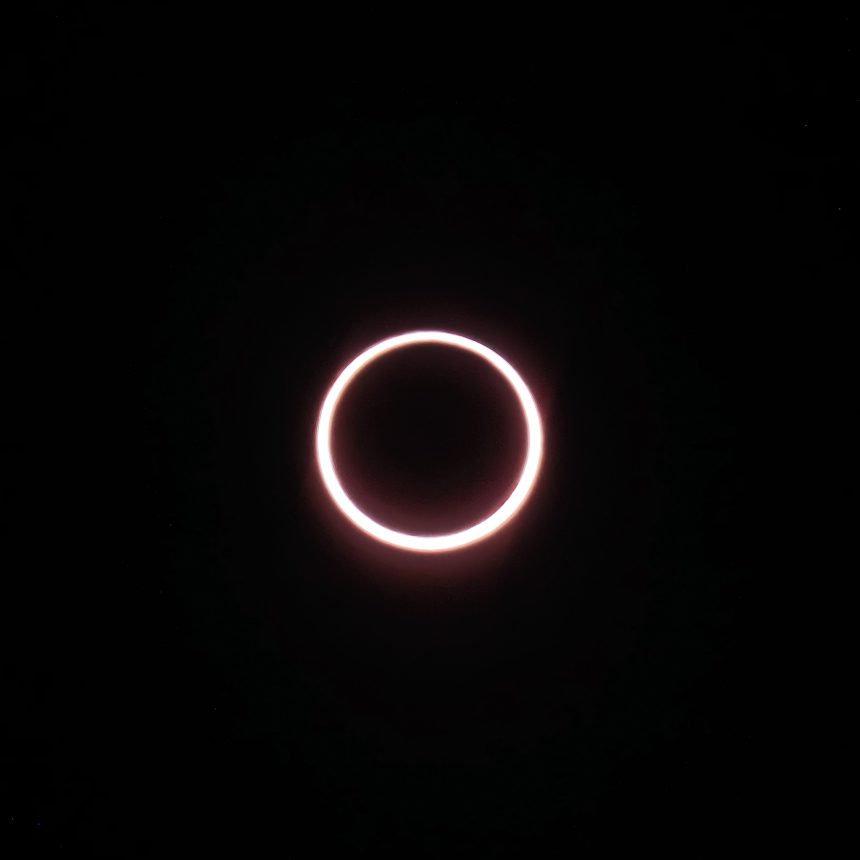
On 17 February 2026, one of the year’s most visually arresting astronomical events unfolded over one of the least populated places on Earth: Antarctica. It was an annular solar eclipse, the kind of eclipse often described as a “ring of fire.” From the Concordia research station, observers saw the Moon pass directly in front of the Sun’s center, leaving only a narrow, glowing ring of sunlight visible around the Moon’s dark disk. According to the European Space Agency, that moment of annularity at Concordia lasted roughly two minutes, even though the broader partial eclipse stretched across about two hours.
- What makes an eclipse annular instead of total?
- Why Antarctica was the main stage
- The exact mechanics behind the event
- Why scientists care about eclipses beyond visual beauty
- Why this particular eclipse resonated so strongly
- What this eclipse says about modern science communication
- Safety and the enduring lesson of annular eclipses
- Final takeaway
Events like this are scientifically valuable precisely because they combine predictable celestial mechanics with rare viewing geometry. NASA’s eclipse data identifies the event as the annular solar eclipse of 17 February 2026 and notes that only observers located inside the narrow central path could see the annular phase. Everywhere else, if the eclipse was visible at all, it appeared only as a partial eclipse. That simple geometry explains why this eclipse felt both global and exclusive at the same time: the event belonged to the orbital dance of the Earth-Moon-Sun system, but the full “ring of fire” view belonged only to a narrow corridor across Antarctica.
What makes an eclipse annular instead of total?
A solar eclipse happens when the Moon passes between Earth and the Sun, aligning closely enough to block some or all of the solar disk for observers on Earth. But not every solar eclipse is total. In a total eclipse, the Moon appears large enough in the sky to cover the Sun completely. In an annular eclipse, the Moon is slightly too small in apparent size to cover the full solar disk. The result is the dramatic bright ring that gives the annular eclipse its nickname.
That apparent-size difference comes from orbital distance. The Moon’s orbit around Earth is not a perfect circle, so its distance changes over time. When the Moon is farther away, its apparent diameter shrinks slightly. On 17 February 2026, the alignment was close enough to create central coverage, but the Moon’s apparent disk was still too small to fully hide the Sun. NASA’s eclipse calculations list the event as an annular eclipse with a magnitude of 0.963, meaning the Moon covered most, but not all, of the Sun’s diameter as seen from the central path.
That distinction is more than a naming detail. In a total eclipse, the Sun’s bright photosphere disappears completely for a brief interval, allowing the corona to stand out with the naked eye. In an annular eclipse, some photosphere remains visible the entire time, so the sky does not darken in the same way and the observation experience is different. Most importantly, eye protection must remain in place throughout the annular phase. There is no safe “naked-eye totality” interval in an annular solar eclipse.
Why Antarctica was the main stage
This eclipse was geographically unusual because the central path crossed an extremely remote part of Antarctica. ESA reports that the Concordia station crew were among the very few people on Earth located inside the corridor where the annular phase could be seen in full. That made the event both scientifically and symbolically striking. A phenomenon generated by celestial alignment at solar-system scale was experienced in its most dramatic form by a tiny group of researchers on one of the planet’s most isolated plateaus.
Concordia is not just remote; it is operationally extreme. ESA notes that the station sits roughly 1,100 kilometers inland at an altitude of 3,200 meters. It is jointly operated by the French and Italian Antarctic research programs and is known for conditions that can become brutally severe during the polar winter. Those environmental facts matter because they help explain why eclipse observations there are logistically unusual and scientifically interesting. The same station is also used as an analogue environment for long-duration human spaceflight research because of its isolation, confinement, and harsh conditions.
In other words, this eclipse was not merely a pretty moment over ice. It occurred over an active research site that already plays a role in understanding how humans adapt to extreme, space-like environments. That creates an unusual overlap: a major celestial event observed at a location already central to scientific work on human resilience.
The exact mechanics behind the event
NASA’s eclipse resources provide the precision that turns a dramatic sky event into a clockwork scientific event. The annular solar eclipse of 17 February 2026 had a clearly defined central path, and NASA’s timing data places the greatest eclipse at 12:13:05.8 UTC. The same source explains that the longest annular duration occurs along the central line of the path and that observers need to be within the central corridor to experience annularity at all.
ESA’s account from Concordia adds the local human perspective. At the station, the Moon passed in front of the Sun’s center and the annular phase peaked at 19:47 local time, which the agency also notes as 12:47 CET in its reporting. The annular interval lasted about two minutes, but the full event from first partial bite to final clearing spanned around two hours. That difference between total event duration and central-phase duration is typical of solar eclipses. The build-up and fade-out can be gradual; the most dramatic alignment is brief.
This contrast is part of what makes eclipses emotionally powerful. The geometry unfolds predictably, but the peak is fleeting. The most memorable moment can last less time than it takes to brew coffee, even though the astronomical setup and the observational preparation can take years.
Why scientists care about eclipses beyond visual beauty
Solar eclipses attract public attention because they are beautiful, but their scientific value extends beyond photography and spectacle. Historically, eclipses have offered chances to study the Sun’s outer atmosphere, refine orbital calculations, test instruments, and observe how changing light affects Earth’s atmosphere and local conditions. Modern solar observatories reduce the need to wait for eclipses to study many solar processes, yet eclipses still provide special observational circumstances.
For an annular eclipse, one of the key scientific values lies in precision timing and geometry. These events test and confirm the accuracy of our orbital models. The fact that agencies like NASA can predict paths, timing, magnitude, and duration so precisely is itself an expression of mature celestial mechanics. That predictive power is not trivial. It depends on long-term refinement of lunar and solar ephemerides, Earth rotation corrections, and high-accuracy geometric modeling.
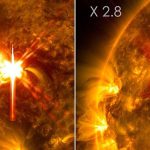
There is also the instrumentation angle. ESA notes that its Proba-2 spacecraft also witnessed the eclipse from orbit. A spacecraft view matters because it can provide perspectives and wavelength coverage that ground observers cannot. A station on Earth sees the event through Earth’s atmosphere and from one location. A solar-observing spacecraft can track different angles, different wavelengths, or repeated eclipse crossings depending on its orbit. That makes the event useful not only as a ground-based observational experience but also as a cross-platform science opportunity.
Why this particular eclipse resonated so strongly
Part of the reason the February 2026 eclipse received so much attention is that it united rarity with clarity. Annular eclipses are not everyday events, and the full ring-of-fire view was restricted to a place where almost nobody lives. That exclusivity, paradoxically, made the event more compelling. People knew a real celestial alignment was occurring, but only a very small number of observers on the ground saw the complete form directly.
There is also the aesthetic factor. A total eclipse often becomes famous because of the black disk and visible corona. An annular eclipse becomes famous because of symmetry. The image of a nearly perfect luminous circle floating over darkness is one of the cleanest and most arresting forms in observational astronomy. The simplicity of the shape makes the phenomenon instantly understandable even to non-specialists. No equations are required to feel the significance of that geometry.
In this case, the setting amplified the effect. Antarctica, with its stark horizon, low human footprint, and association with endurance, gave the event a cinematic quality. Even for people who only encountered it through photographs, the combination of isolation, science, and celestial alignment was hard to ignore.
What this eclipse says about modern science communication
The February 2026 eclipse also illustrates how science communication now works across multiple levels. NASA provides the predictive framework: path maps, timing tables, and the orbital explanation. ESA provides the observational narrative from the field, including what researchers at Concordia experienced and how the event looked in context. Space-based and ground-based agencies, mission teams, and science communicators together turn a brief event into a public learning moment.
This layered model matters. Good science communication is not only about announcing that something happened. It is about explaining why it happened, who could see it, what made it rare, what the limits were, and what broader science it connects to. In the case of the 17 February eclipse, the public could move from awe to understanding very quickly: the Moon was slightly too small in apparent size, the path was narrow, Antarctica happened to sit in the corridor, and spacecraft also captured the event from orbit.
That kind of clarity strengthens public trust in astronomy and in scientific institutions generally. Few things are as effective at demonstrating the precision of science as an eclipse prediction that unfolds almost exactly as calculated.
Safety and the enduring lesson of annular eclipses
Every major solar eclipse is also a reminder of a non-negotiable rule: looking at the Sun without proper protection can permanently damage eyesight. The annular form of this eclipse makes that especially important because there is never a fully safe unaided viewing phase. The bright ring remains visible, which means the solar photosphere is still exposed. Certified solar filters and proper eclipse-viewing methods are required from start to finish.
That safety message is part of the scientific literacy surrounding eclipses. Public fascination is valuable, but it must travel with accurate guidance. In many ways, eclipse culture today is a mix of wonder and discipline: prepare properly, know the geometry, protect your eyes, and understand what you are seeing.
Final takeaway
The annular solar eclipse of 17 February 2026 was a powerful example of how astronomical events can be both mathematically routine and experientially extraordinary. NASA’s data showed the precision of the event’s path and timing. ESA’s account from Concordia showed what it meant on the ground: a two-minute ring of fire over Antarctica, witnessed by only a small number of people inside the narrow central corridor.
What makes this eclipse memorable is not just the image itself. It is the way the event condensed so many core ideas of science into one brief moment: orbital mechanics, planetary geometry, instrument coordination, field observation, extreme-environment research, and public scientific curiosity. It was beautiful, yes, but it was also a demonstration of how deeply modern science understands the motions of the sky. That is the real lasting brilliance behind the ring of fire.