
In the wake of such support and encouragement for design thinking by big entities, it is easy to understand the significance and influence that design thinking will assume in the near future for all sorts of professions. Design thinking is a methodology for finding simplicity in complexity, improving quality of experience with the designed products and serving the needs of customers by addressing the target problem faced by them. Design thinking is at the core of the development of efficient and effective strategies for organizational change.
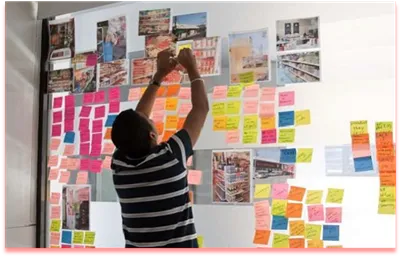
Design thinking is a five-step process, where each step focuses on a specific goal. Each of the steps is independent of the next step but is borne out of the previous step. Design thinkers are expected not to think of the following steps when working on one step.
For example, it is not recommended to think of solutions, when the problem is being defined. The problem definition must be written in detail without missing any point, even if it makes finding a solution difficult. In this tutorial, we will understand the importance of design thinking, its impact of strategy development and we will then explore each of the steps of design thinking.