




Researchers have struggled to develop good tissue scaffolds for engineering cardiac tissue for regenerative medicine. Now, researchers with the Chinese People’s Armed Police Forces have developed a scaffold using carbon nanohorns that shows promise.
The therapeutic challenge is to repair damaged cardiac tissue (from myocardial infarctions) and reverse congestive heart failure. This kind of tissue engineering requires scaffolds on which the new tissue can grow; but the construction of many traditional tissue scaffolds use metal catalysts in their construction, which are impurities that become difficult to remove.
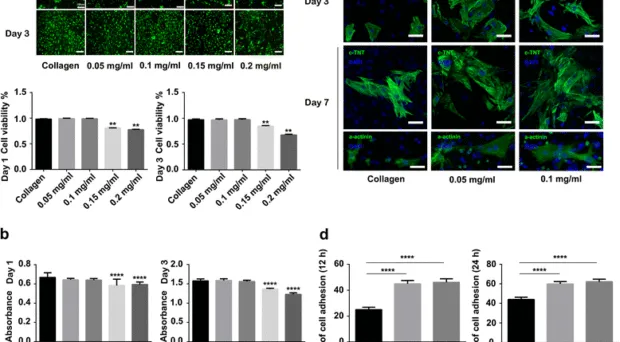
What Yujing Wu, Xiaoli Shi, Yi Li, Lei Tian, Rui Bai, Yujie Wei, Dong Han, Huiliang Liuand Jianxun Xu did was to study the use of a scaffold made with carbon nanohorns and collagen on neonatal rat heart ventricle muscle cells, and they found that this combination shows promise as a cardiac muscle tissue scaffold. They reported their findings in Nanoscale Research Letters.
Carbon nanohorns are horn-shaped graphitic tubules about 2-5 nanometers in diameter, which, in bulk, form spheres 50-100 nanometers across. What makes these nanohorns different from traditional nanotubes is that they can be made without the use of metal catalysts, which reduces the impurity issue in tissue engineering.
They treated the nanohorns with collagen extracted from rat tails, and then the neonatal rat ventricular myocytes and cardiac fibroblasts were added (in accordance with the protocol accepted by the Institutional Animal Care and Use Committee of the Chinese Academy of Military Medical Science). They found that this substrate led to the cells displaying cell-specific characteristics that benefit cardiomyocytes and neurons, without disturbing the fibroblasts or glial cells.
