
I Have Yet To See Any Sort Of Awareness, On How To Find Out The Lel Of Chemical Fumes On Chemical Tankers
This Includes Sailors At Sea , Superintendents Ashore , External Shore Inspectors And Shore Training Houses.
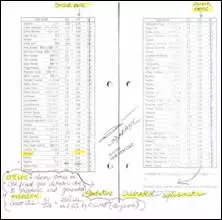
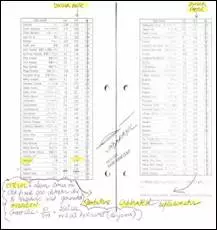
If your gas instrument has been calibrated for is-butane,you must know that it reads for isobutane, NOT any other gas.
On chemical tankers , we do NOT load isobutane in the tanks –right?
Be safe — you owe it to yourself —
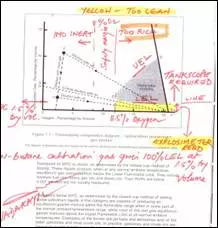
Above the upper flammable limit (UFL) the mixture of substance and air is too rich in fuel (deficient in oxygen) to burn. This is sometimes called the upper explosive limit(UEL).
Below the lower flammable limit (LFL) the mixture of substance and air lacks sufficient fuel (substance) to burn. This is sometimes called the lower explosive limit (LEL).
Hydrocarbon gas requires air to sustain combustion in the parameters as follows:
1% gas to 99% air = Lower explosion Limit (LEL)
10% gas to 90% air = Upper Explosion Limit (UEL)
1% LEL is 100 ppm.
To prevent explosion:
Keep HC >11% ( too rich )
Keep HC < 1.5% ( too lean )
Keep oxygen < 11.5% ( inert )