As part of NASA’s Hybrid Thermally Efficient Core (HyTEC) project, GE has been awarded multiple cost-share contracts for engine core development valued at more than $20 million when including both NASA and GE investments.
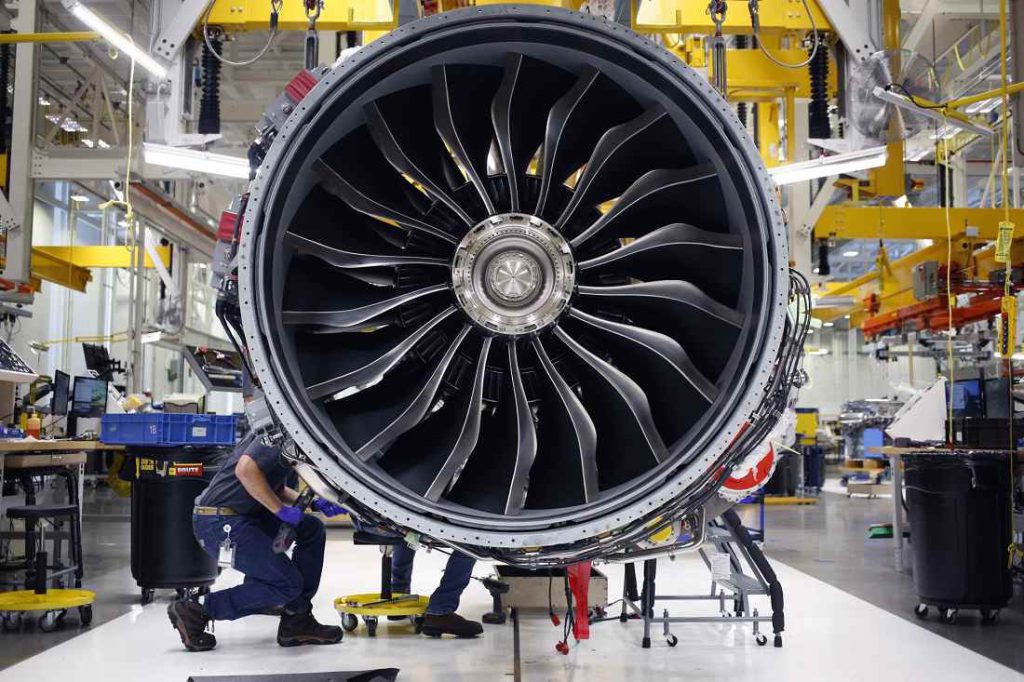
Plans are to ground test a new compact engine core by the mid-2020s.
GE will test and mature compact jet engine core designs, including compressor, combustor and high-pressure turbine technologies to improve thermal efficiency. Continued development of Ceramic Matrix Composites (CMCs), an advanced, heat-resistant material, is also a key part of the effort to improve fuel efficiency and reduce emissions.
Mohamed Ali, vice president of engineering for GE Aviation, commented: “The HyTEC project further expands GE Aviation’s partnership with NASA on the future of flight with our shared commitment to accelerate the introduction of technologies that reduce the environmental impact of commercial aviation and make a step-change reduction in fuel burn.”
These new contracts announced by NASA build on a previous award GE already received in 2020 and managed under the HyTEC programme. The 2020 award focused on maturing power extraction technology for a next-generation turbofan engine programme.
These HyTEC awards, under NASA’s Sustainable Flight National Partnership, also complement NASA’s recent selection of GE for a megawatt-class hybrid electric technology demonstrator.
“We are grateful for NASA’s confidence in GE Aviation as a partner to co-develop sustainable technology solutions, including new aircraft engine cores and hybrid electric powertrains that are critical elements of our CFM RISE Program,” Ali said.
GE Aviation is developing compact engine core designs as part of the CFM RISE (Revolutionary Innovation for Sustainable Engines) programme, announced in June.
A comprehensive series of technology maturation efforts and demonstrators are planned to increase propulsive and thermal efficiency while also being compatible with alternative energy sources, including 100% Sustainable Aviation Fuel and hydrogen. The technology roadmap includes an open fan architecture, hybrid electric capability to optimize engine efficiency, and a new compact core to target more than 20% lower CO2 emissions by the mid-2030s compared to the most efficient engines today.