History of Eddy Current Testing

Prabhu TL
1 Min Read
Disclosure: This website may contain affiliate links, which means I may earn a commission if you click on the link and make a purchase. I only recommend products or services that I personally use and believe will add value to my readers. Your support is appreciated!
Description: C:\Users\Admin\Desktop\Size Reduced assets\Size reduced\NDT\assets\23_files\image002.webp

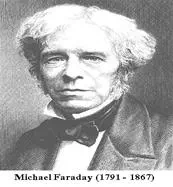
Eddy current testing has its origins with Michael Faraday’s discovery of electromagnetic induction in 1831. Faraday was a chemist in England during the early 1800’s and is credited with the discovery of electromagnetic induction, electromagnetic rotations, the magneto-optical effect, diamagnetism, and other phenomena. In 1879, another scientist named Hughes recorded changes in the properties of a coil when placed in contact with metals of different conductivity and permeability. However, it was not until the Second World War that these effects were put to practical use for testing materials. Much work was done in the 1950’s and 60’s, particularly in the aircraft and nuclear industries. Eddy current testing is now a widely used and well-understood inspection technique.


Share This Article
Prabhu TL is a SenseCentral contributor covering digital products, entrepreneurship, and scalable online business systems. He focuses on turning ideas into repeatable processes—validation, positioning, marketing, and execution. His writing is known for simple frameworks, clear checklists, and real-world examples. When he’s not writing, he’s usually building new digital assets and experimenting with growth channels.
Leave a review