If you’ve ever felt like you’re posting content, running ads, or sending traffic to your website… and nothing consistent happens, you probably don’t have a funnel—you have “random marketing.” A sales funnel turns random traffic into a predictable system: it attracts the right people, builds trust, and guides them to buy.
- Key Takeaways
- Table of Contents
- What a Sales Funnel Really Is
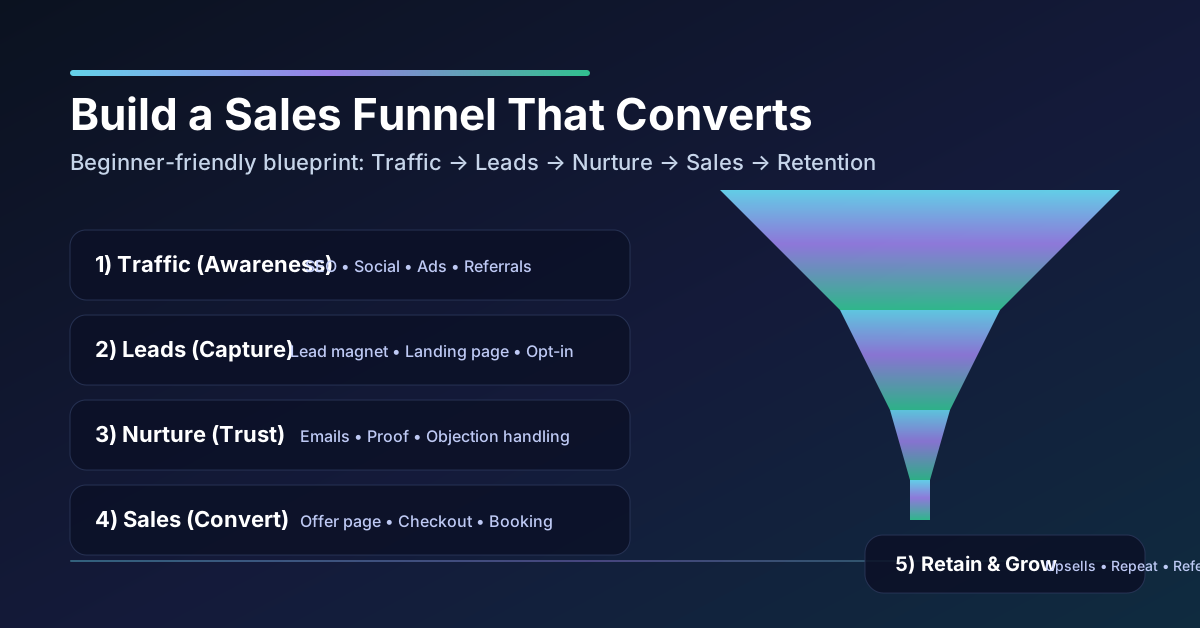
- The 5 Core Stages of a Funnel (Simple Model)
- Stage 1: Awareness
- Stage 2: Capture (Lead Generation)
- Stage 3: Nurture (Trust Building)
- Stage 4: Convert (Purchase/Commitment)
- Stage 5: Retain (Upsell, Repeat, Referral)
- Before You Build: Audience, Problem, and Offer
- Choose the Right Funnel Type (with Examples)
- A) Lead Magnet Funnel (Best for beginners)
- B) Webinar / Workshop Funnel
- C) Tripwire Funnel (Low-cost first purchase)
- D) Product Page Funnel (E-commerce)
- E) Demo / Consultation Funnel (B2B and services)
- Build the Funnel Assets (Pages, Emails, Tracking)
- Step 1: Create a lead magnet people actually want
- Step 2: Build a landing page that converts
- Step 3: Don’t waste the thank-you page
- Step 4: Set up a nurture email sequence
- Step 5: Add automation (so it runs without you)
- Step 6: Add tracking (non-negotiable)
- How to Drive Traffic into Your Funnel
- Nurture & Follow-Up: Turning Leads into Buyers
- Conversion: Sales Page, Checkout, and Friction Removal
- Optimization: Improve What’s Working
- Funnel Metrics That Actually Matter
- Common Funnel Mistakes (and Fixes)
- Mistake 1: Trying to sell immediately to cold traffic
- Mistake 2: A confusing offer
- Mistake 3: Too many steps
- Mistake 4: No follow-up
- Mistake 5: No tracking
- Beginner Funnel Blueprint You Can Copy
- Step 1: Pick ONE core offer
- Step 2: Create ONE lead magnet
- Step 3: Build these 3 pages
- Step 4: Write a 6-email sequence
- Step 5: Drive traffic for 30 days
- Step 6: Review numbers weekly
- FAQs
- What is a good conversion rate for a sales funnel?
- Do I need paid ads to build a funnel?
- What’s the easiest funnel to start with?
- How many emails should my nurture sequence have?
- Should I use a long sales page or a short one?
- What if people opt in but don’t buy?
- References & Further Reading
In this beginner-friendly guide, you’ll learn how to build a sales funnel from scratch—without complicated jargon. We’ll cover funnel stages, offer design, lead magnets, landing pages, email sequences, conversion tracking, and optimization. By the end, you’ll have a clear funnel blueprint you can implement even if you’re starting today.
Key Takeaways
- A high-converting funnel is a system, not a single page: traffic → capture → nurture → convert → retain.
- Start with the customer journey: what problem do they have, what do they need to believe, and what is the next best step?
- Your offer matters more than your design. A “good funnel” can’t save a weak offer.
- Track one primary metric per stage (opt-in rate, show-up rate, conversion rate, CAC, LTV) and improve the bottleneck.
- Most funnels fail because of unclear messaging, too many steps, weak follow-up, or no tracking.
Table of Contents
- What a Sales Funnel Really Is
- The 5 Core Stages of a Funnel (Simple Model)
- Before You Build: Audience, Problem, and Offer
- Choose the Right Funnel Type (with Examples)
- Build the Funnel Assets (Pages, Emails, Tracking)
- How to Drive Traffic into Your Funnel
- Nurture & Follow-Up: Turning Leads into Buyers
- Conversion: Sales Page, Checkout, and Friction Removal
- Optimization: Improve What’s Working
- Funnel Metrics That Actually Matter
- Common Funnel Mistakes (and Fixes)
- Beginner Funnel Blueprint You Can Copy
- FAQs
- References & Further Reading
What a Sales Funnel Really Is
A sales funnel is a step-by-step path that guides a stranger toward becoming a customer—and ideally, a repeat customer. It’s called a “funnel” because:
- Many people enter at the top (traffic).
- Some become leads (opt-in or inquiry).
- A smaller group buys (conversion).
- An even smaller group stays loyal and refers others (retention and advocacy).
Important: A funnel is not only an “ads thing.” You can build funnels with organic traffic, referrals, partnerships, YouTube, SEO, WhatsApp groups, or even offline traffic (QR codes). The funnel simply organizes the journey so people don’t get lost.
If you want to understand why funnels work, it’s because they match how humans buy: they don’t wake up ready to purchase from you; they gradually move from curiosity to trust to decision. Funnels create that progression intentionally.
Helpful external resources:
HubSpot: Sales Funnel,
CXL: Conversion Funnel,
NN/g: Journey Mapping
The 5 Core Stages of a Funnel (Simple Model)
Stage 1: Awareness
People discover you. This could be from Google search, YouTube, Instagram, LinkedIn, ads, or a referral. Your job is to match intent and earn the next click.
Goal: Get the right people to the right entry point (blog post, video, landing page, quiz, webinar registration).
Stage 2: Capture (Lead Generation)
You collect a contact method (usually email or phone) in exchange for something valuable. This “something” is your lead magnet.
Goal: Convert visitors into leads (email subscribers, WhatsApp opt-ins, demo requests).
Stage 3: Nurture (Trust Building)
Most people won’t buy immediately. Nurture is where you educate, handle objections, and demonstrate value.
Goal: Create belief: “This solves my problem” and “I trust this brand.”
Stage 4: Convert (Purchase/Commitment)
This is where you ask for the sale: checkout, booking call, paying an invoice, or starting a trial.
Goal: Make buying feel like the obvious next step and remove friction.
Stage 5: Retain (Upsell, Repeat, Referral)
A strong funnel doesn’t stop at purchase. It improves customer results, increases lifetime value, and generates referrals.
Goal: Deliver value, reduce churn, and create repeat purchases.
Want a simple mental model? Think: Traffic → Lead → Relationship → Sale → Loyalty.
Before You Build: Audience, Problem, and Offer
Funnels fail most often because people start with tools (“Which email platform should I use?”) instead of fundamentals (“Why should anyone buy from me?”). Before you build pages, answer these three questions:
1) Who is this for?
Define a specific audience. “Everyone” is not an audience. A funnel that converts speaks to one primary person, with a clear problem.
- B2B example: Small agencies struggling to get consistent clients.
- E-commerce example: New moms looking for safe skincare products.
- Local service example: Car owners in Madurai who want periodic servicing.
2) What problem do you solve?
Write it as: “I help [person] achieve [result] without [pain].”
Example: “I help first-time founders get their first 100 customers without wasting money on random ads.”
3) What is your offer?
Your offer is the exchange: what they get, how it works, and what it costs. Strong offers have:
- Clear outcome: A result people want.
- Specific mechanism: Your process, framework, or method.
- Risk reversal: Guarantee, free trial, or clear onboarding.
- Proof: Testimonials, case studies, numbers, or demos.
Offer tip: If you can’t explain the offer in one sentence, your funnel will struggle.
Extra reading:
Shopify: Value Proposition,
Intercom: Customer Onboarding
Choose the Right Funnel Type (with Examples)
Different businesses need different funnels. Here are beginner-friendly funnel types that convert well:
A) Lead Magnet Funnel (Best for beginners)
Flow: Content/Ad → Lead Magnet Landing Page → Thank You Page → Email Nurture → Offer
Best for: service providers, coaches, SaaS trials, B2B, info products.
Why it works: Low commitment first step. You build trust before selling.
B) Webinar / Workshop Funnel
Flow: Webinar Registration → Reminder Emails/SMS → Live/Recorded Webinar → Offer → Follow-up
Best for: higher-ticket offers that need explanation (courses, consulting, B2B solutions).
Tools often used:
Calendly for booking,
Zoom for live sessions.
C) Tripwire Funnel (Low-cost first purchase)
Flow: Lead Magnet → Low-cost Offer (Tripwire) → Upsell → Core Offer
Best for: creators, e-commerce, digital products.
Why it works: A small purchase turns a lead into a buyer. Buyers are easier to convert again.
D) Product Page Funnel (E-commerce)
Flow: Product Page → Cart → Checkout → Post-purchase Upsell → Email/SMS Retention
Best for: e-commerce stores.
Helpful resource:
Stripe Docs,
Shopify Blog
E) Demo / Consultation Funnel (B2B and services)
Flow: Content/Ads → Case Study Page → “Book a Call” → Qualification → Sales Call → Proposal
Best for: agencies, freelancers, B2B services, high-ticket offers.
Build the Funnel Assets (Pages, Emails, Tracking)
Now we build the pieces. A funnel is like plumbing: if one section leaks, conversions drop. Here’s what you need for a beginner funnel that converts.
Step 1: Create a lead magnet people actually want
A lead magnet is a quick win. It should be specific, fast to consume, and closely related to your paid offer.
High-converting lead magnet ideas:
- Checklist: “Sales Funnel Launch Checklist (1-page)”
- Template: “Landing Page Copy Template”
- Swipe file: “10 High-Converting CTA Examples”
- Quiz: “Which Funnel Fits Your Business?”
- Mini-course: “3-day Funnel Starter Email Series”
- Calculator: “Revenue Goal → Leads Needed”
Rule: The lead magnet should attract your ideal buyer, not freebie hunters.
Step 2: Build a landing page that converts
Your landing page has one job: get the opt-in. Don’t clutter it with navigation menus or 20 different links.
Landing page structure (simple and effective):
- Headline: Clear promise (“Build a Sales Funnel in 7 Days—Step-by-Step”)
- Subheadline: Who it’s for + outcome
- Bullets: What they’ll get (specific wins)
- Form: Email (and name optional)
- Trust: Small proof: testimonial, numbers, or “as featured in”
- CTA button: Benefit-driven (“Send Me the Checklist”)
Helpful tools:
WordPress,
Elementor,
Unbounce
Step 3: Don’t waste the thank-you page
Most beginners ignore this page. Big mistake. Your thank-you page can:
- Deliver the lead magnet
- Set expectations (“Check your email in 2 minutes”)
- Offer the next step (watch a short video, book a call, join a community)
- Pixel/track conversions (important for ads)
Step 4: Set up a nurture email sequence
Email is where most conversions happen for beginner funnels because it gives you multiple chances to build trust. Your first sequence should include:
- Email 1 (Immediate): Deliver the lead magnet + quick win instructions
- Email 2: Your story + why the problem matters
- Email 3: Teach a framework + small case study
- Email 4: Handle objections (time, money, trust, complexity)
- Email 5: Present the offer + clear CTA
- Email 6: Reminder + FAQ + urgency (if relevant)
Email platforms to explore:
Mailchimp,
ConvertKit,
Klaviyo,
HubSpot Marketing
Step 5: Add automation (so it runs without you)
Automation means:
- When someone opts in, they get Email 1 instantly.
- If they click your offer but don’t buy, they get follow-up emails.
- If they buy, they stop receiving pitch emails and start onboarding emails.
To connect tools without code, many use:
Zapier
Step 6: Add tracking (non-negotiable)
If you don’t track, you guess. Beginners often “feel” their funnel isn’t working but don’t know where it breaks.
- Analytics: Google Analytics Help
- Tagging events: Google Tag Manager
- Heatmaps: Hotjar
- Ads pixel (if running ads): Meta Pixel Help
How to Drive Traffic into Your Funnel
A funnel converts only if the right people enter it. Start with one primary traffic source and do it well.
Organic traffic (recommended for beginners)
- SEO: Write blog posts targeting problem-based keywords. Useful resource: Ahrefs SEO Basics
- YouTube: Create tutorials and link to your lead magnet in the description.
- Social: Short tips, story-based posts, and mini case studies that lead to your opt-in page.
- Communities: Offer value, then invite people to a free resource (no spam).
Paid traffic (optional, but powerful)
If you use ads, keep it simple:
- Run one campaign to your lead magnet.
- Retarget visitors who didn’t opt in.
- Retarget leads who clicked your offer but didn’t buy.
Ad platforms:
Google Ads,
Meta Ads,
LinkedIn Ads
Nurture & Follow-Up: Turning Leads into Buyers
Nurture is where you help leads connect the dots between their current problem and your solution—without sounding pushy.
What to send during nurture
Use a mix of:
- Value: Tutorials, frameworks, “do this next” guidance
- Proof: Before/after stories, testimonials, screenshots, case studies
- Objection handling: “What if I’m a beginner?” “What if I have no budget?”
- Personal connection: Your origin story, behind-the-scenes, lessons learned
Simple copy formulas that work
- PAS: Problem → Agitate → Solve
- Before/After/Bridge: Current pain → desired future → how to get there
- 3-part CTA: “If you want [result], start with [next step], here’s the link.”
Speed matters (especially for services)
If your funnel is for booking calls or demos, respond fast. Even a 10–30 minute delay can reduce conversion for time-sensitive leads. Automate confirmation, then follow-up quickly.
Conversion: Sales Page, Checkout, and Friction Removal
Conversion is about clarity and confidence. People buy when they understand what they’re getting and trust it will work.
Sales page structure (beginner-friendly)
- Big promise headline: outcome + timeframe (if honest) + who it’s for
- Problem framing: show you understand their pain
- Solution: your method/framework
- What’s included: modules, deliverables, features
- Proof: testimonials, results, examples, demo
- Pricing: transparent and simple
- Guarantee/risk reversal: if applicable
- FAQ: objections and concerns
- CTA: repeated naturally across the page
Checkout best practices
- Reduce fields (name + email + payment is often enough)
- Show trust signals (secure payment, refund policy)
- Use clear product summary
- Offer an order bump only if it genuinely helps
Post-purchase: lock in satisfaction
After someone buys, your funnel continues:
- Thank-you page with next steps
- Onboarding email series
- Quick-start guide so they get an early win
- Support channel (email, chat, community)
Optimization: Improve What’s Working
Optimization is not random tweaking. It’s a simple loop:
- Measure each stage
- Find the bottleneck (where the biggest drop happens)
- Test one change at a time
- Keep winners, remove losers
What to test first (highest impact)
- Offer: pricing, packaging, bonuses, guarantee
- Headline: clearer promise often beats “creative” wording
- CTA: button copy and placement
- Lead magnet: improve relevance and perceived value
- Email subject lines: improve open rate
UX research tools:
Hotjar,
Nielsen Norman Group
Funnel Metrics That Actually Matter
Track these metrics so you know exactly what to fix:
Top-of-funnel
- Traffic volume (sessions, unique visitors)
- Click-through rate (CTR) on ads or links
- Cost per click (CPC) if paid traffic
Lead stage
- Opt-in rate = leads / landing page visitors
- Cost per lead (CPL) if running ads
Nurture stage
- Email open rate and click rate
- Reply rate (great indicator for trust)
Conversion stage
- Sales conversion rate = purchases / leads (or purchases / visitors)
- Customer acquisition cost (CAC)
- Average order value (AOV)
- Refund rate (quality and expectation match)
Retention stage
- Repeat purchase rate
- Lifetime value (LTV)
- Churn (for subscriptions)
Analytics resources:
Google Analytics,
Google Tag Manager
Common Funnel Mistakes (and Fixes)
Mistake 1: Trying to sell immediately to cold traffic
Fix: Start with a lead magnet or value-first content. Warm them up before pitching.
Mistake 2: A confusing offer
Fix: Simplify. One audience, one main outcome, one clear CTA. Add proof and risk reversal.
Mistake 3: Too many steps
Fix: Reduce friction. Every extra field and extra click reduces conversions.
Mistake 4: No follow-up
Fix: Add a 5–7 email nurture sequence. Most sales come after multiple touches.
Mistake 5: No tracking
Fix: Set up analytics + conversion events. Otherwise you’ll “optimize” blindly.
Bonus resource:
OptinMonster (lead capture ideas),
WordStream (ads & conversion tips)
Beginner Funnel Blueprint You Can Copy
If you want a simple funnel that converts, start here. This is the most beginner-friendly option because it doesn’t require advanced tech or complicated ads.
Step 1: Pick ONE core offer
Examples:
- Service: “Website + SEO setup for local businesses”
- Product: “Premium hair care kit for postpartum moms”
- Digital: “Sales Funnel Templates Pack”
Step 2: Create ONE lead magnet
Example: “Sales Funnel Launch Checklist (PDF)” that naturally leads into your offer.
Step 3: Build these 3 pages
- Landing page (opt-in)
- Thank-you page (deliver + next step)
- Offer page (simple sales page or booking page)
Step 4: Write a 6-email sequence
Use the structure mentioned earlier. Keep it human, clear, and focused on one next step.
Step 5: Drive traffic for 30 days
Choose one channel:
- SEO (publish 4–8 posts)
- YouTube (publish 4 videos)
- Instagram/LinkedIn (daily short posts for 30 days)
- Ads (small budget to lead magnet)
Step 6: Review numbers weekly
Ask:
- Is traffic relevant?
- Is opt-in rate healthy?
- Are emails getting clicks?
- Where do people drop off?
Then fix the biggest bottleneck first. That’s how funnels become predictable.
FAQs
What is a good conversion rate for a sales funnel?
It depends on the business and traffic quality. As a beginner baseline, many aim for: 20–40% opt-in rate on a strong lead magnet landing page, and 1–5% purchase rate from cold traffic. The key is improving stage by stage, not chasing “perfect” numbers.
Do I need paid ads to build a funnel?
No. Funnels work with organic traffic (SEO, YouTube, social, referrals). Paid ads simply add speed and scale once your funnel is working.
What’s the easiest funnel to start with?
A lead magnet funnel: a single landing page + a simple email sequence + one offer. It’s the best starting point because it’s low-tech and high-learning.
How many emails should my nurture sequence have?
Start with 5–7 emails over 7–14 days. After that, continue with weekly value emails to stay top-of-mind.
Should I use a long sales page or a short one?
If your offer is simple and low-cost, short pages can work. If your offer is expensive or requires trust, longer pages that address objections and show proof often convert better.
What if people opt in but don’t buy?
That usually means one of these: the offer is not the right next step, the nurture isn’t building belief, the pricing/value feels mismatched, or you’re attracting the wrong audience with your lead magnet. Fix alignment first.
References & Further Reading
- HubSpot: Sales Funnel overview
- CXL: Conversion & optimization articles
- Nielsen Norman Group: UX research
- Google Analytics documentation
- Google Tag Manager
- Hotjar (heatmaps & behavior analytics)
- Mailchimp (email marketing)
- ConvertKit (creator email automation)
- HubSpot CRM
- Zapier (automation)
- Unbounce (landing pages)
- Elementor (WordPress page builder)
- Stripe (payments)
- Shopify Blog (e-commerce marketing)
- WordStream (ads & conversion marketing)
Pro tip: Bookmark this page and revisit after you build your first version. Funnels get better through iterations, not perfection.