How to Choose Between ETF and Index Fund
How to Choose Between ETF and Index Fund: beginner-friendly ETF guide with examples, comparison table, checklist, FAQs, useful resources and references.
Affiliate disclosure: This article contains promotional and affiliate links. Sensecentral may earn a commission when you visit or buy through some links, at no extra cost to you. Investment content is educational only and is not personalised financial advice.
Key Takeaways
- ETFs can provide diversified market exposure through a single exchange-traded unit.
- Beginners should check costs, liquidity, bid-ask spread, index methodology, holdings, and tracking quality.
- A simple ETF plan is often easier to follow than a complex portfolio with many overlapping products.
- ETFs are not risk-free; market risk, liquidity risk, tracking risk, and behavioural risk still matter.
- Use the article as education, not personalised financial advice. Consider a qualified adviser for your situation.
Overview: What This Topic Really Means
How to Choose Between ETF and Index Fund helps investors compare similar-looking products without getting stuck in marketing language. ETFs, mutual funds, and index funds can all provide diversified exposure, but they differ in trading style, pricing, convenience, costs, taxation rules, minimum investments, and behaviour during market hours. The right choice depends on the investor’s habits as much as on the product structure.
Some investors prefer ETFs because they like real-time trading, transparent holdings, and the ability to use limit orders. Others prefer mutual funds or index funds because they want automatic SIP-like investing, end-of-day pricing, or less temptation to trade. A beginner should not ask which product is universally best; the better question is which product fits the goal, platform, discipline, and risk tolerance.
This guide focuses specifically on How to Choose Between ETF and Index Fund. Keep the title in mind while reading: the goal is not to memorize ETF jargon, but to build a repeatable decision process. A useful process asks four questions: What does the ETF own? What index or strategy does it follow? What costs and trading frictions apply? How does it fit with the rest of the portfolio?
For Sensecentral readers, the practical lesson is to avoid product excitement and focus on fit. A low-cost ETF may still be unsuitable if it tracks a narrow, volatile theme. A popular ETF may still be unnecessary if it overlaps heavily with what you already own. A portfolio that looks boring on paper may be excellent if it matches your goal, risk capacity, and review routine.
An ETF pools investor money and invests according to a stated objective. The ETF units then trade on an exchange, so buyers and sellers can transact during market hours. This is different from many mutual funds, where transactions happen at end-of-day net asset value. The exchange-traded structure gives flexibility, but it also means investors should understand order placement, spreads, and market price behaviour.
The best ETF choice is rarely the one with the most exciting name. It is usually the one that gives the required exposure at a reasonable cost, with adequate liquidity, transparent holdings, and an index or mandate that you can understand. Beginners should read the fund factsheet before investing, not after something goes wrong.
Why This Matters for ETF Investors
The comparison between ETFs, mutual funds, index funds, and individual stocks becomes clearer when you look at investor behaviour. ETFs give flexibility, but flexibility can be misused. Mutual funds reduce intraday decisions, but they may have different expense structures or less transparency. Individual stocks offer control, but they demand research skill and emotional strength.
For a busy investor, the product that encourages consistency may be better than the product that looks best on paper. If you are likely to trade too often, a mutual fund or automated index fund may protect you from yourself. If you are disciplined and comfortable using a broker, ETFs can be efficient. The product should fit the person, not the other way around.
Costs should be compared fully. ETF expense ratios may be low, but brokerage charges and bid-ask spreads can matter, especially for frequent trades or small amounts. Mutual funds may have expense ratios and exit loads depending on the scheme. Tax treatment can also differ by country and asset class, so investors should check the latest local rules before making decisions.
Another reason this topic matters is behavioural simplicity. Many investors fail not because they lack access to products, but because they constantly change products. They buy after strong recent performance, sell after temporary weakness, and add new holdings without checking overlap. ETFs can help only when combined with rules. A written rule might include monthly investing, a maximum allocation per ETF, a minimum liquidity requirement, and a scheduled review.
ETF investing also helps beginners learn markets without needing to predict individual company outcomes. When a broad ETF falls, it usually reflects market-level conditions, not one company scandal. This makes it easier to think in terms of allocation and time horizon. Still, diversification does not guarantee profit. It simply spreads exposure in a more structured way.
Step-by-Step Framework
Use this framework before buying, switching, or adding any ETF. It is intentionally simple so that you can repeat it for every product you compare.
- Compare convenience: Ask whether you prefer automatic investing through a fund platform or exchange-based investing through a broker.
- Compare costs: Look at expense ratio, brokerage, spreads, platform charges, and tax impact, not just one number.
- Compare behaviour risk: ETFs trade all day, which is useful, but it can tempt frequent trading. Mutual funds reduce intraday decision pressure.
- Check availability: Some markets, retirement accounts, and platforms offer better access to one structure over another.
- Choose based on process: The best product is the one you can understand, buy consistently, and hold with discipline.
Sensecentral tip: Create a short ETF note before investing. Write the ETF name, index, reason for buying, planned allocation, review date, and the condition under which you would sell. This one-page habit can prevent many emotional decisions.
Helpful Comparison Table
| Choice | How it works | Best fit | Caution |
|---|---|---|---|
| ETF | Trades on exchange through the day | Investors who want lower cost, transparency, and limit orders | Needs demat/brokerage and trade discipline |
| Index fund | Mutual fund that tracks an index, priced at end-of-day NAV | Investors who want simple automatic investing | No intraday trading flexibility |
| Active mutual fund | Fund manager selects securities | Investors seeking professional active selection | Higher costs and manager risk |
| Individual stocks | Direct ownership of companies | Investors who can research businesses deeply | Higher concentration and stock selection risk |
The table above is not a recommendation to choose one option blindly. It is a way to compare structure, convenience, risk, and behaviour. A beginner-friendly product should be understandable, liquid, reasonably priced, and aligned with the goal. When two choices look similar, choose the one you can hold with more discipline.
Beginner ETF Checklist
| Checklist item | Question to ask | Beginner caution |
|---|---|---|
| Goal fit | Does this ETF match your time horizon and risk level? | Do not buy without a written purpose. |
| Underlying index | Which index, asset class, sector, or factor does it track? | Avoid products you cannot explain. |
| Expense ratio | What is the annual cost of owning the ETF? | Lower cost helps, but it is not the only factor. |
| Liquidity | How active is trading and how wide is the bid-ask spread? | Wide spreads can hurt entry and exit prices. |
| Holdings | What are the top holdings and sector weights? | Check concentration and overlap. |
| Tracking | How closely has it followed the index? | Large tracking gaps need investigation. |
This checklist is especially useful when a product looks attractive because of past returns. Returns are visible and exciting, but risk is often hidden in the methodology, holdings, concentration, and trading quality. A disciplined investor checks the hidden parts first.
Common Mistakes to Avoid
- Choosing only by expense ratio: Costs matter, but convenience, liquidity, tax rules, and discipline matter too.
- Ignoring platform fit: A product you cannot invest in regularly may not suit your process.
- Assuming one structure is always better: ETF, index fund, and mutual fund each solve different problems.
- Overtrading ETFs because they are easy to trade: Liquidity is a benefit only when used sensibly.
Most ETF mistakes are not dramatic at the beginning. They look small: one extra sector ETF, one careless market order, one ignored expense ratio, or one purchase made after a viral post. Over time, these small mistakes can create overlap, higher cost, and emotional stress. Avoiding them is part of long-term investing skill.
Practical Example: How a Beginner Could Think
Imagine a beginner who wants long-term market exposure but does not want to research individual stocks. Instead of buying ten random companies, the investor starts with a broad ETF and studies its factsheet. They check the index, expense ratio, top holdings, sector weight, liquidity, and spread. They decide a small monthly investment amount and review the position every six months.
After one year, the market falls. The beginner does not panic because the ETF was bought for a long-term goal, not for a quick trade. During review, they check whether the ETF still tracks the chosen index and whether costs remain competitive. If the investment thesis remains intact, the investor continues. This kind of calm process is the real benefit of ETF investing.
Now compare that with a beginner who buys ETFs based only on last year’s returns. They may end up with multiple sector funds, overlapping holdings, and high volatility. When performance reverses, they lose confidence and sell. The difference is not the product alone; it is the process behind the product.
Useful Resources for Smart Investors and Creators
Explore Our Powerful Digital Products
Browse these high-value bundles for website creators, developers, designers, startups, content creators, and digital product sellers. Use them to build faster, plan content, design better assets, and launch more confidently.
Zee Sharp Free Productivity Tools
Zee Sharp is a growing suite of free online tools for productivity, development, and creativity. No sign-up. No watermarks. Just tools you can use while researching, planning, calculating, writing, and organizing work.
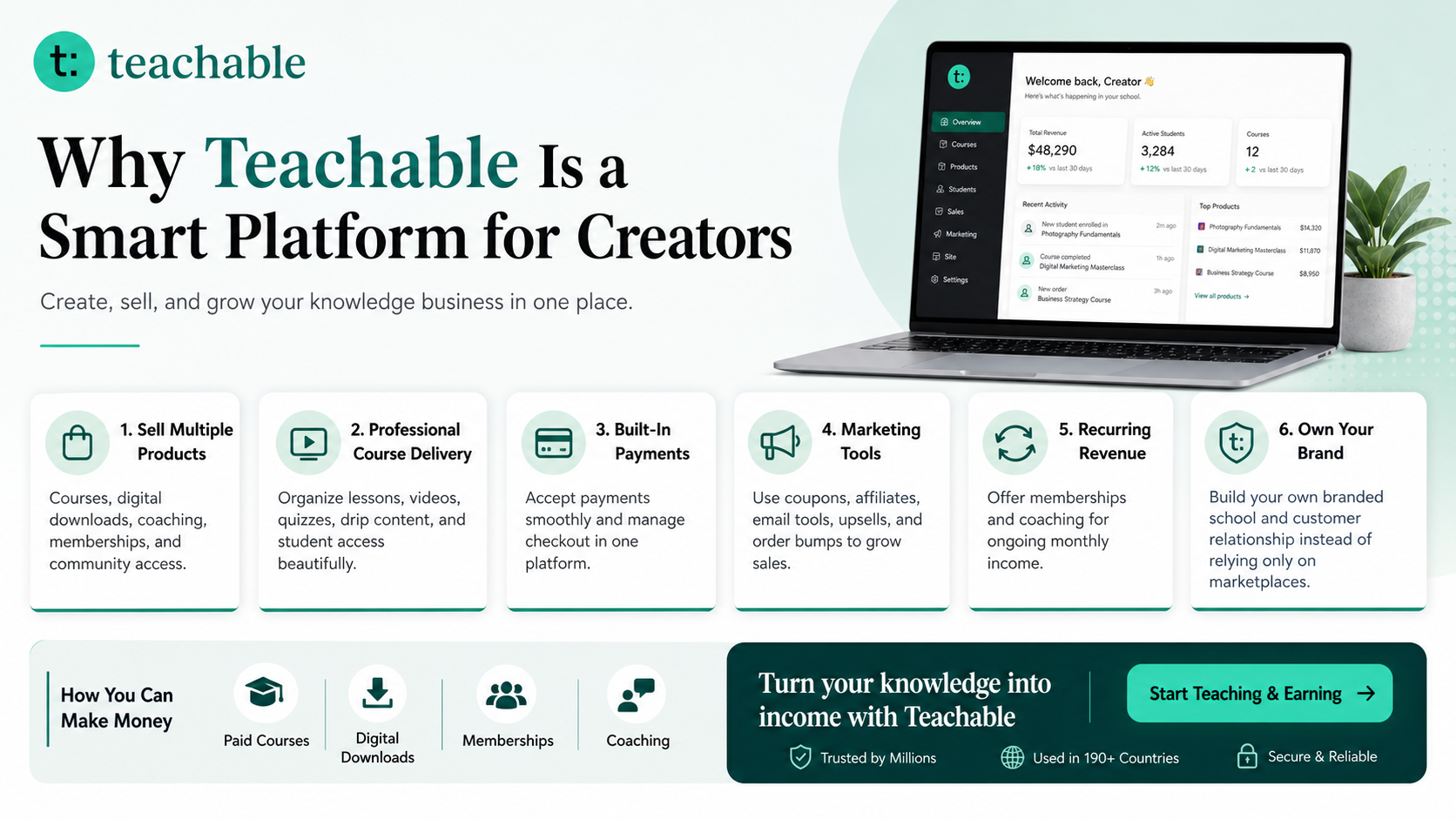
Creator Resource: Build and Sell Courses with Teachable
Teachable is an online platform that lets creators build, market, and sell courses, digital downloads, coaching, and memberships. It helps educators and entrepreneurs turn their knowledge into a branded digital business without needing complex coding.
How to Make Money with Teachable: A Complete Creator’s Guide
Frequently Asked Questions
Is an ETF always better than a mutual fund?
No. ETFs can be cheaper and more flexible, but mutual funds may be more convenient for automatic investing, certain platforms, or investors who do not want intraday trading decisions.
Are ETFs risk-free?
No. ETFs can fall in value because the securities inside them can fall. Diversification can reduce company-specific risk, but it cannot remove market risk.
Do I need a demat or brokerage account to buy ETFs?
In most markets, ETFs are bought and sold through a brokerage account because they trade on an exchange. The exact account requirement depends on your country and platform.
How often should I review an ETF investment?
For long-term investors, a quarterly, half-yearly, or yearly review is usually more useful than daily checking. Review costs, tracking, allocation drift, and whether the ETF still fits your goal.
Should I invest all my money in one ETF?
A single broad ETF can be simple, but the right answer depends on time horizon, risk tolerance, emergency fund status, and whether you need exposure to bonds, gold, or other asset classes.
Final Key Takeaways
- Use ETFs as tools for exposure, diversification, and cost control, not as shortcuts to guaranteed returns.
- Understand the underlying index, holdings, expenses, tracking quality, liquidity, and trading spread.
- Prefer simple structures when you are new. Add complexity only when it solves a clear portfolio need.
- Use limit orders and liquidity checks when buying or selling ETFs on an exchange.
- Review your ETF plan periodically and avoid reacting to every market movement.
Further Reading on Sensecentral
References and Useful External Links
Reference links are provided for education. Always verify latest product details, taxation, and regulations from official sources or a qualified adviser before investing.
Suggested SEO keyword tags: ETF investing, ETFs for beginners, passive investing, index investing, portfolio diversification, low cost investing, ETF vs index fund, index funds, underlying index, index methodology, choose