- Quick Answer
- Table of Contents
- Why This Matters
- A Practical AI Workflow
- Prompt Templates You Can Use
- Workflow Comparison Table
- Common Mistakes to Avoid
- Useful Resources
- Key Takeaways
- FAQs
- Can AI help even if I am not a designer?
- Should visual planning change by platform?
- Can I use AI to build a thumbnail system?
- What is the biggest win of visual planning?
- Further Reading on SenseCentral
- Useful External Resources
- References
How to Use AI for Better Visual Content Planning is about making your content workflow faster, clearer, and more repeatable without making it robotic. Visual planning is not only about design taste. It is about consistency, recognizability, and knowing what your audience should feel and notice. AI helps creators plan visual systems faster across thumbnails, carousels, short videos, and campaign assets.
Quick Answer
Use AI to map visual themes, content formats, design directions, and publishing consistency before production begins. The best results come when you use AI for structure, options, and cleanup – then apply your own judgment for clarity, accuracy, and brand fit.
Table of Contents
Why This Matters
Creators often lose momentum in the invisible part of the workflow: planning, rewriting, refining, and formatting. AI is useful here because it can accelerate the repeatable thinking you do over and over, while still leaving the final quality decisions in your hands.
- It helps you define repeatable visual patterns instead of designing from scratch every time.
- It improves consistency across thumbnails, posts, reels, and promo assets.
- It speeds up briefs for designers, editors, or your own future self.
Used well, AI does not flatten your originality. It removes friction so you can spend more time on creative judgment, better examples, stronger visuals, and sharper delivery.
A Practical AI Workflow
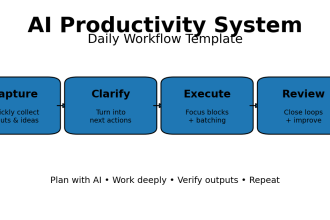
Instead of asking for one perfect answer, treat AI like a fast collaborator. Give it context, request options, refine the strongest direction, then convert the result into something usable in your real publishing workflow.
- Define your content pillars: Tell AI the recurring themes, audience expectations, and content types you publish.
- Set visual rules: Ask for color direction, layout logic, recurring elements, and text hierarchy ideas.
- Map formats: Create separate planning rules for thumbnails, reels covers, posts, carousels, and lead magnets.
- Tie visuals to intent: Make sure each visual style supports a goal such as clicks, trust, education, or conversion.
- Build a planning template: Turn the output into a checklist you can reuse before every publishing cycle.
Prompt Templates You Can Use
Good prompts are specific, contextual, and practical. Start with these and adapt them to your own channel, audience, and publishing style.
Create a visual planning framework for a creator who publishes tutorials, comparisons, and short educational clips every week.Suggest a repeatable visual system for thumbnails, post graphics, and reels covers that feels consistent but not repetitive.Turn my current content pillars into a visual planning checklist with layout, color, text, and asset recommendations.
Workflow Comparison Table
This quick comparison helps you decide how deeply AI should be involved in this part of your creator process.
| Visual Layer | Planning Question | Why It Matters |
|---|---|---|
| Layout | What repeats across every asset? | Consistency improves recognition |
| Text hierarchy | What is the main text versus support text? | Faster scanning on mobile |
| Asset style | Photos, icons, screenshots, or illustrations? | A clearer brand feel |
Common Mistakes to Avoid
- Planning visuals as decoration instead of communication.
- Changing too many design rules from one post to the next.
- Using AI suggestions without checking whether they fit your real editing tools or brand assets.
A simple rule helps: if an AI output sounds polished but not practical, it still needs work. Always force the output to become more specific, more useful, and more aligned with your actual audience.
Useful Resources
Disclosure: the resource links below include SenseCentral promotional recommendations and may include affiliate-style promotional placements where applicable.
Useful Resource – SenseCentral promotional recommendation
Explore Our Powerful Digital Product Bundles
Browse these high-value bundles for website creators, developers, designers, startups, content creators, and digital product sellers.
Recommended Android Apps for AI Learning
These two SenseCentral-recommended apps fit naturally alongside the workflows in this guide and are excellent companion resources for everyday AI learning.
| App | Best For | Download |
|---|---|---|
 Artificial Intelligence Free | Beginners, quick learning, and regular AI concept refreshers. | Download on Google Play |
 Artificial Intelligence Pro | Deeper learning, stronger reference access, and a more complete AI study experience. | Download on Google Play |
Key Takeaways
- Visual planning helps creators publish faster and look more consistent.
- AI is useful for turning broad ideas into repeatable visual rules.
- A strong visual system reduces creative fatigue.
- Each format needs its own visual logic even under one brand.
- Use AI for planning, then refine with human design taste and platform experience.
FAQs
Can AI help even if I am not a designer?
Yes. It can help you define structure, hierarchy, and consistency even if you are not creating highly advanced graphics.
Should visual planning change by platform?
Usually yes. The brand should stay familiar, but layout and text density should adapt to each platform.
Can I use AI to build a thumbnail system?
Yes. AI can help you define thumbnail rules, text length, emotional angle, and recurring design patterns.
What is the biggest win of visual planning?
It reduces decision fatigue and makes content production more scalable.
Further Reading on SenseCentral
These related SenseCentral pages can help you deepen the workflow in this article:
Useful External Resources
For deeper best practices, these public resources are worth bookmarking: