Utility is a term referring to the total satisfaction received from consuming a good or service. It differs from each individual and helps to show the satisfaction of the consumer after consumption of a commodity. In economics, utility is a measure of preferences over some set of goods and services.
Marginal Utility is formulated by Alfred Marshall, a British economist. It is the additional benefit / utility derived from the consumption of an extra unit of a commodity.
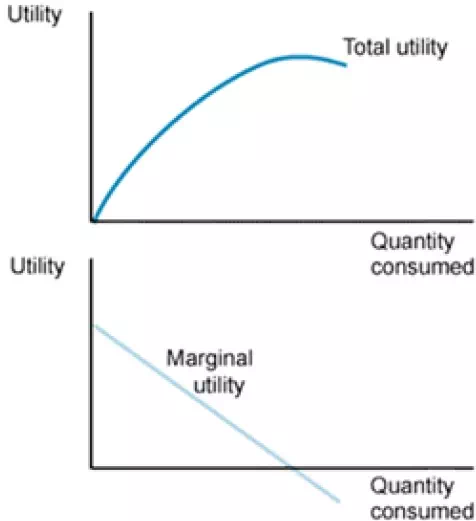
Following are the assumptions of Marginal utility analysis −
Cardinal Measurability Concept
This theory assumes that utility is a cardinal concept which means it is a measurable or quantifiable concept. This theory is quite helpful as it helps an individual to express his satisfaction in numbers by comparing different commodities.
For example − If an individual derives utility equals to 5 units from the consumption of 1 unit of commodity X and 15 units from the consumption of 1 unit of commodity Y, he can conveniently explain which commodity satisfies him more.
Consistency
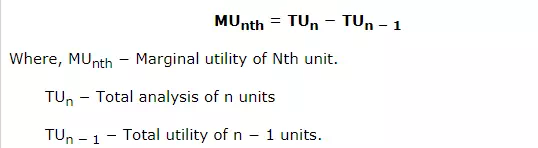
This assumption is a bit unreal which says the marginal utility of money remains constant throughout when the individual spending on a particular commodity. Marginal utility is measured with the following formula