Short for Microsoft Disk Operating System, MS-DOS is a non-graphical command line operating system derived from 86-DOS that was created for IBM compatible computers. MS-DOS originally written by Tim Paterson and introduced by Microsoft in August 1981and was last updated in 1994 when MS-DOS 6.22 was released. MS-DOS allows the user to navigate, open, and otherwise manipulate files on their computer from a command line instead of a GUI like Windows.
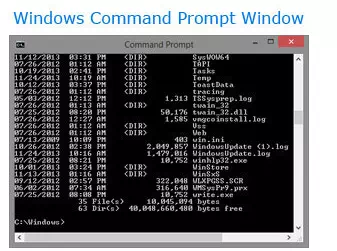
Today, MS-DOS is no longer used; however, the command shell, more commonly known as the Windows command line is still used by many users. The picture to the right, is an example of a Windows command line window running in Microsoft Windows 10.
Most computer users are only familiar with how to navigate Microsoft Windows using the mouse. Unlike Windows, MS-DOS is navigated by using MS-DOS commands. For example, if you wanted to see all the files in a folder in Windows you would double-click the folder to open the folder in Windows Explorer. In MS-DOS, you would navigate to the folder using the cd command and then list the files in that folder using the dir command.