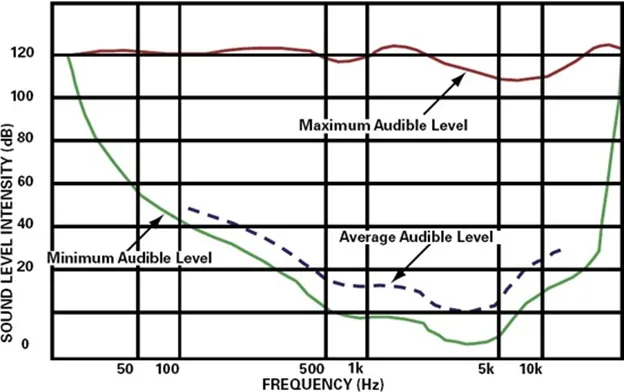
Audible Range of Sound – Sounds that are in the range of 20 to 20,000 Hertz (Hz).
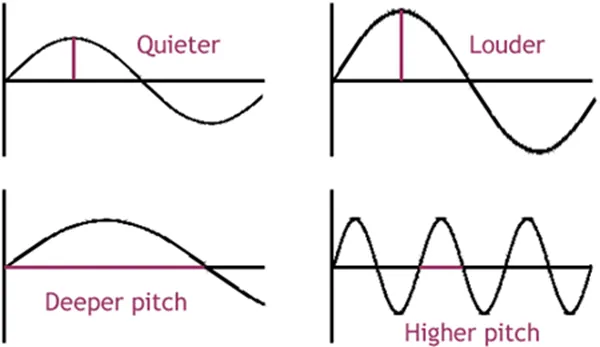
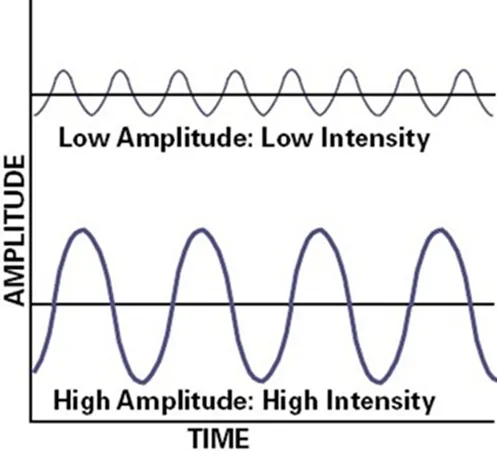
Amplitude – The vertical measurement between the top and bottom of a wave. Also see magnitude.
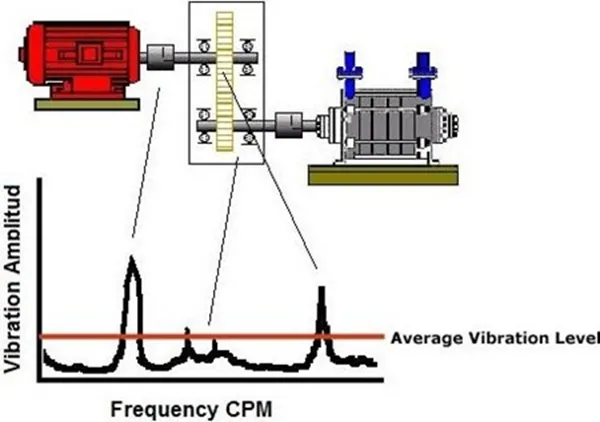
Beat – An NVH concern produced by two sounds that is most noticeable when the frequency difference is 1 to 6 Hz.
Bead Seating – The process of seating the tire to the rim. If properly lubricated the bead seating occurs when the tire and wheel are assembled.
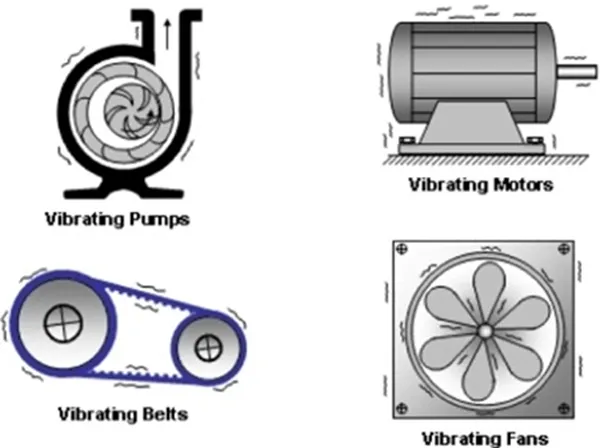
Compelling Force – A vibrating object acting upon another object that causes the other object to vibrate.
Cycle – The path a wave travels before the wave begins to repeat the path again.
Dampen – To reduce the magnitude of a noise or vibration.
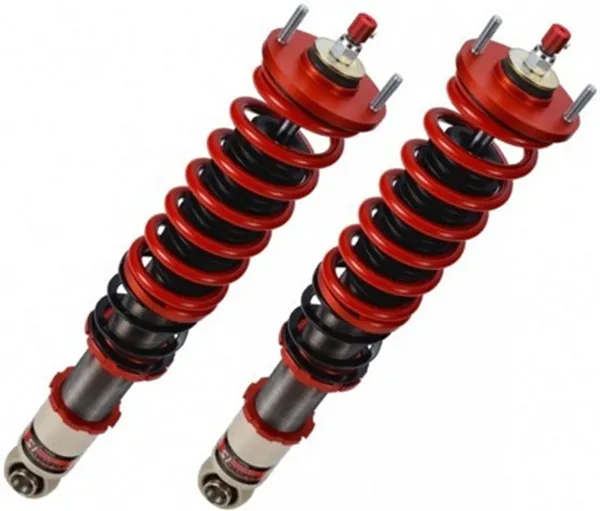
Dampers – A component used to dampen a noise or vibration. Foam and rubber are commonly used to dampen vibrations.
Dynamic Balance – A procedure that balances a tire and wheel assembly in two planes. Dynamic balance removes radial and lateral vibrations.
Droning, High-Speed – A long duration, non-directional humming noise that is uncomfortable to the ears and has a range of 50 mph (80.5 kph) and up.
Droning, Low-Speed – A long duration, low-pitched noise that is non-directional and has a range of up to 30 mph (48 kph).
Droning, Middle-Speed – A long duration, low-pitched noise that is non-directional and has a range of 30 to 50 mph (48 to 80.5 kph).
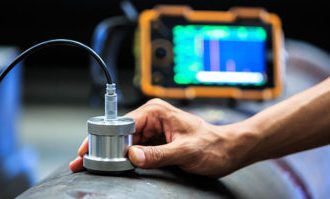
Electronic Vibration Analyzer – An electronic NVH diagnostic tool that measures frequency and amplitude.
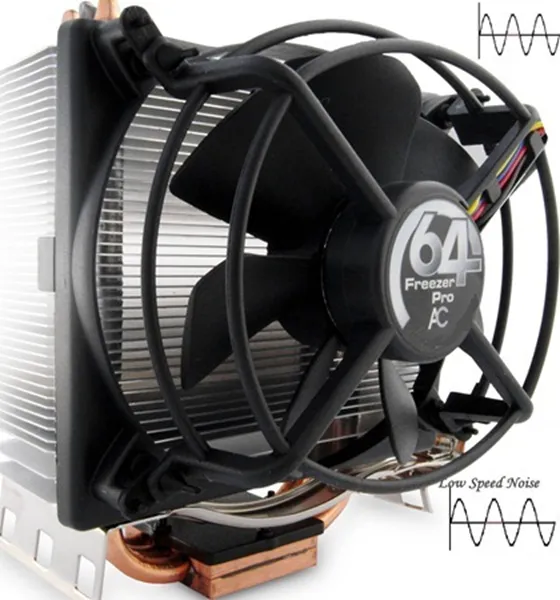
Frequency – The number of complete cycles that occurs in a given period of time.
Harshness – An aggressive suspension feel or lack of give in response to a single input.

Hertz – The unit of frequency measurement in seconds (a vibration occurring 8 times per second would be an 8 Hz vibration).
Intensity – The physical quality of sound that relates to the amount and direction of the flow of acoustic energy at a given speed.
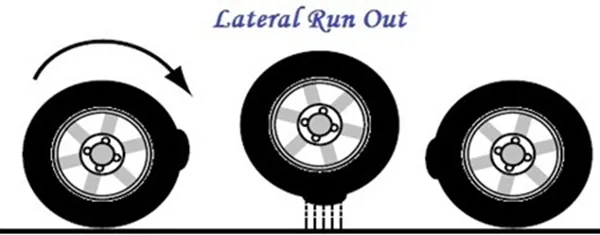
Lateral Run out – A condition where a rotating component does not rotate in a true plane. The component moves side-to-side (wobbles) on its rotational axis.
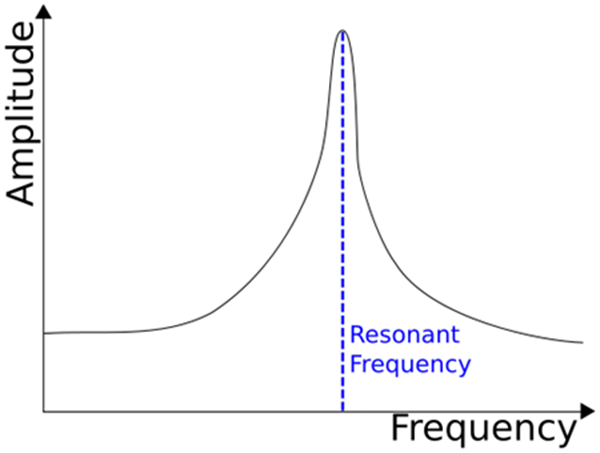
Magnitude (Amplitude) – The amount of force or the intensity of the vibration. The magnitude or strength of a vibration is always greatest at the point of resonance.
Medium – Provides a path for sound waves to travel through.
Natural Frequency – The frequency that a component will vibrate the easiest. Normally, the larger the mass, the lower its natural frequency.
● Engine block (2-4 Hz)
● Tire and wheel assemblies (1-15 Hz) – proportional to vehicle speed
● Suspension (10-15 Hz
● Driveline (20-60 Hz)
● Differential components (120-300 Hz)
Noise – The unpleasant or unexpected sound created by a vibrating object.
Order – The number of disturbances created in one revolution of a component.
Phase – The position of a vibration cycle relative to another vibration cycle in the same hertz rate (time frame).