When a particular arithmetic operation is to be performed first, the numbers and the operator(s) are placed in brackets. Thus 3 times the result of 6 minus 2 is written as 3 × (6 − 2). In arithmetic operations, the order in which operations are performed are:
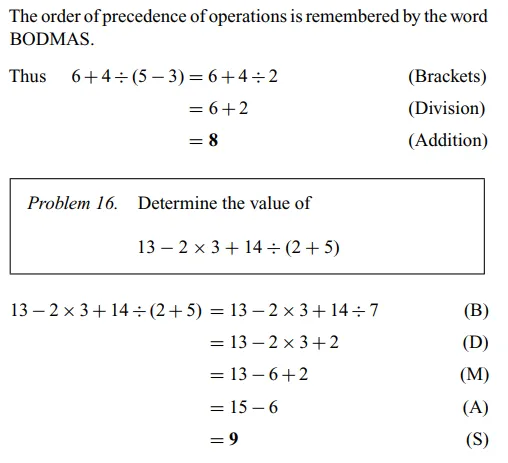
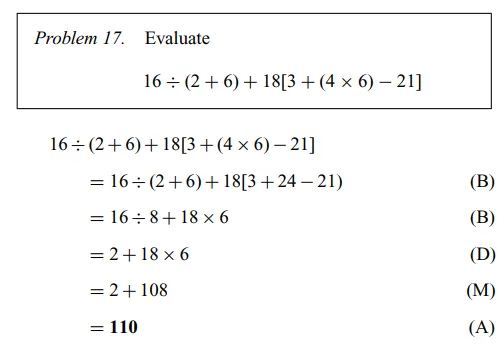
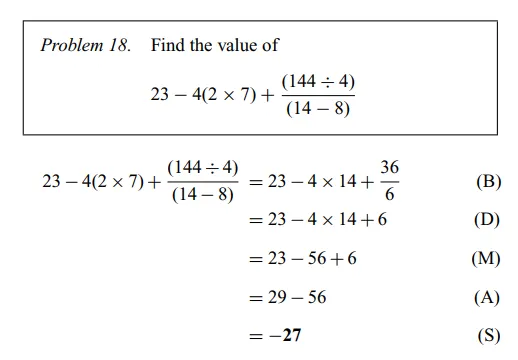
(i) to determine the values of operations contained in brackets;
(ii) multiplication and division (the word ‘of ’ also means multiply); and
(iii) addition and subtraction.
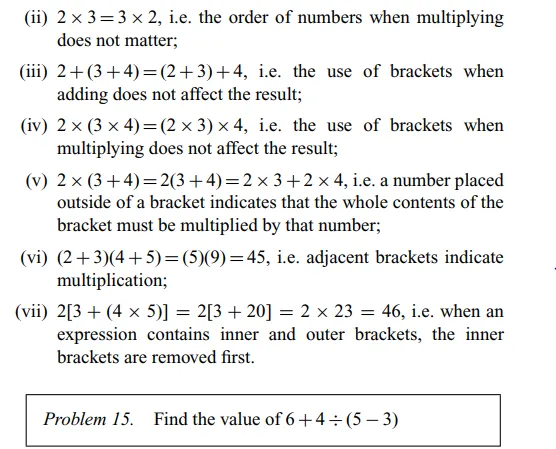
This order of precedence can be remembered by the word BODMAS, standing for Brackets, Of, Division, Multiplication, Addition and Subtraction, taken in that order. The basic laws governing the use of brackets and operators are shown by the following examples:
(i) 2 + 3 = 3 + 2, i.e. the order of numbers when adding does not matter;