Parallel and Sequential Reactions

Rajil TL
1 Min Read
Disclosure: This website may contain affiliate links, which means I may earn a commission if you click on the link and make a purchase. I only recommend products or services that I personally use and believe will add value to my readers. Your support is appreciated!


Parallel or Competing Reaction 

The reactions in which a substance reacts or decomposes in more than one way are called parallel or side reactions.

If we assume that both  of them are first order, we get.

k1 = fractional yield of B × kav

k2 = fractional yield of C × kav

If k1 >  k2 then

A → B main and
A → C is side reaction

Let after a definite interval x mol/litre of B and y mol/litre of C are formed.

i.e
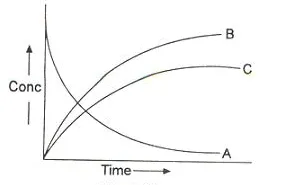
This means that irrespective of how much time is elapsed, the ratio of concentration of B to that  of C from the start (assuming no B  and C in the beginning ) is a constant equal to k1/k2.

Refer to the following video for parallel reactions:

Example of Parallel Reactions
 
Share This Article

Rajil TL is a SenseCentral contributor focused on tech, apps, tools, and product-building insights. He writes practical content for creators, founders, and learners—covering workflows, software strategies, and real-world implementation tips. His style is direct, structured, and action-oriented, often turning complex ideas into step-by-step guidance. He’s passionate about building useful digital products and sharing what works.

Leave a review