
If your company is not including UX specialists in the software design and development process, your process most likely looks like the image below.
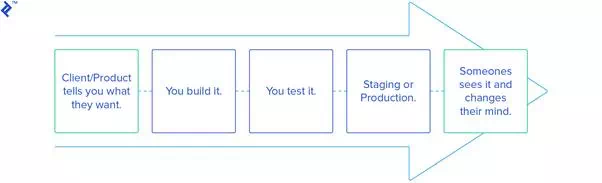
Software design and development process without UX specialists.
A client, product manager, CEO, or someone with the vision tells engineering what they want. Engineering builds it, tests it, and gets it on a staging or production server. The person with the vision then sees it and, wouldn’t you know, they aren’t happy. They want something different or have changed their mind.
Engineering has to then cycle back to the beginning, find out what this person now wants, build, test, and cross their fingers that this is the charm.
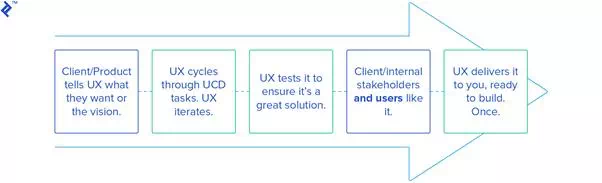
Software design and development process with UX involved.
If you have UX experts on the team, the process is quite different. That person with the vision comes to UX with the ideas, data, and customer pain points. UX cycles through the tasks in its user-centered design process and then tests these concepts before engineering writes a line of code. This ensures that the product or feature we’re considering building is the right execution of the right idea for our target customers.
Testing might bring some flaws to light, which allows UX to iterate and often test again. After UX’s process, you have a fully-vetted design ready to deliver to engineering.
If someone changes their mind along the way, that person talks to UX rather than putting it in as a change request to developers. UX runs interference during their process and nothing is sent to engineering without UX being involved in designs, decisions, and testing on real or archetypal customers.
Changes of mind at this point aren’t disasters since the cost for someone to change their mind at this point is minimal. Engineering hasn’t been delivered the blueprints, they haven’t started, and have nothing to rebuild. UX iterates on their designs and can do user testing to ensure that the ideas are a good, strong match to the customer base. Changes of mind burn time, but the overall impact on the budget is small.