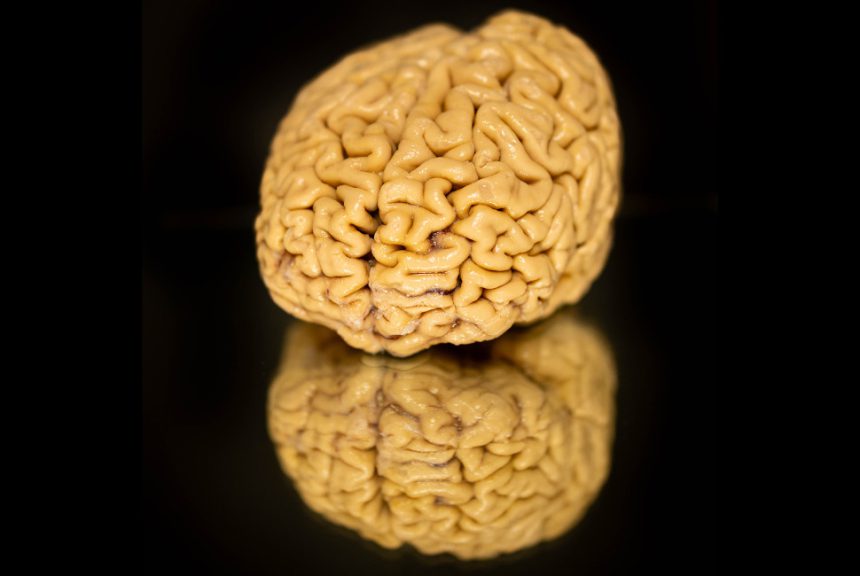
One of the most intriguing health and neuroscience stories of late February 2026 is not about a new drug or a futuristic device. It is about a rare group of older adults whose brains appear to keep doing something many scientists long debated: generating new neurons deep into late life. In a study highlighted by Nature and described in detail by Northwestern University and the University of Illinois Chicago, researchers found that “SuperAgers” produce substantially more new neurons in the hippocampus than their peers. According to Northwestern’s summary, SuperAgers generated between two and two and a half times more new neurons than healthy older adults and peers with Alzheimer’s disease, respectively.
- Why this discovery is such a big deal
- What the researchers actually studied
- What makes SuperAgers different?
- Why this matters for Alzheimer’s and cognitive decline
- Why this is not a simple anti-aging headline
- The bigger scientific message: the aging brain may be more dynamic than assumed
- Could lifestyle still matter?
- Final takeaway
That finding matters because SuperAgers are not simply healthy older adults. They are people aged 80 and above whose episodic memory performs as well as, or better than, people decades younger. Researchers have long treated them as a window into healthy cognitive aging. What changed this week is that the conversation moved from behavioral observation to direct biological evidence. Instead of saying only that SuperAgers remember unusually well, researchers now have stronger grounds to say that their brains may remain more plastic, more regenerative, and more resilient at the cellular level.
Why this discovery is such a big deal
The idea of adult neurogenesis—the formation of new neurons in the adult human brain—has been one of the most contested topics in neuroscience. In many animal species, especially rodents, adult neurogenesis has been well documented. In humans, however, the evidence has been mixed. Different labs, methods, tissue conditions, and interpretations have produced disagreement about how much neuron formation persists beyond childhood and whether it remains functionally important in old age.
That is why this new work is more important than a single catchy headline. According to Northwestern, the study not only supports the idea that neurogenesis happens in healthy adult humans, but also suggests that the amount of that neurogenesis may differ sharply depending on cognitive status. In the study, SuperAgers stood out as the most neuronally fertile brains in the comparison, while brains affected by Alzheimer’s disease showed dramatically less evidence of new neuron formation. If that pattern holds up in additional studies, it provides a biological explanation for something researchers and families alike have long observed: some people retain remarkable memory capacity in late life, while others decline quickly.
What the researchers actually studied
One reason this story is gaining attention is that the methodology was not superficial. Northwestern reports that the researchers examined nearly 356,000 individual cell nuclei from the hippocampus using an advanced single-cell multiomic sequencing approach. That matters because the hippocampus is central to memory formation and learning, and because single-cell methods allow scientists to study the behavior of distinct cell populations instead of averaging everything together into one blurred signal.
The team compared postmortem hippocampal tissue across multiple groups: healthy young adults, cognitively healthy older adults, older adults with mild or early dementia, individuals with Alzheimer’s disease, and SuperAgers. The SuperAger tissue came through Northwestern’s long-running SuperAger program, while other comparison samples were supplied through collaborating institutions. The goal was not just to ask whether neuron development existed but to track the stages of that process in a more granular way.
As the University of Illinois Chicago explained, the researchers looked for three stages of developing neurons: stem cells, neuroblasts, and immature neurons. A useful way to think about those stages is as early, middle, and late developmental checkpoints on the path toward a mature functioning neuron. Detecting all three provides stronger evidence that active neurogenesis is occurring, not just a residual signal from an earlier life stage.
What makes SuperAgers different?
The simplest version of the answer is that SuperAgers appear to maintain a brain environment that is unusually supportive of neuron birth and survival. Northwestern describes this as a distinct “resilience signature” in the hippocampus. That phrase is important because it shifts the conversation away from a single miracle cell and toward a systems-level explanation. SuperAgers may not be special because of one isolated factor; they may be special because multiple cellular and genetic conditions remain supportive of healthy adaptation even in advanced age.
The study also points to specific cell types that may help explain that resilience. Northwestern’s release highlights astrocytes and CA1 neurons as key contributors. Astrocytes are support cells, but “support” does not mean passive. They regulate chemical balance, influence signaling environments, and shape how neurons survive and function. CA1 neurons are part of a crucial hippocampal circuit involved in memory processing. If these systems remain healthier or operate differently in SuperAgers, that could help preserve the conditions needed for memory stability and ongoing neurogenesis.
In practical terms, that means SuperAgers may be living examples of what successful biological aging looks like in the brain. Instead of merely aging more slowly, they may be maintaining active renewal pathways that are switched down, disrupted, or lost in less resilient aging brains.
Why this matters for Alzheimer’s and cognitive decline
The most immediate public relevance of this research is its connection to dementia prevention and treatment. The study does not claim to cure Alzheimer’s disease, and it does not mean neuron growth alone explains all aspects of memory. But it does suggest that one pathway of decline may involve the loss of regenerative capacity in the hippocampus. If that is correct, then therapies aimed at preserving or supporting neurogenesis could become part of future prevention strategies.
Northwestern notes that the genetic programs that support cell survival and communication remain active in SuperAgers but are switched off in Alzheimer’s disease in the relevant cell populations. That is a striking observation. It implies that the difference between resilient aging and neurodegenerative decline may involve not just damage accumulation, but a measurable change in which cellular programs remain available to the brain over time.
Researchers were careful not to overstate the result, yet the translational potential is obvious. If scientists can identify the molecular cues that sustain this “resilience signature,” they may eventually be able to design interventions that preserve those cues or recreate some of their effects. That could mean therapies, biomarkers, prevention strategies, or targeted monitoring tools for people at risk of decline.
Why this is not a simple anti-aging headline
It is tempting to read this story as proof that there is a hidden switch for youthful memory. The actual science is more nuanced. First, the study relies on postmortem tissue, which means it provides a rich cellular snapshot but not a live, real-time movie of the brain. Second, SuperAgers are a rare population. Their biology may involve unique combinations of genetics, lifestyle, neural reserve, and environmental exposure. Third, correlation is not the same as immediate clinical application. A strong association between neurogenesis and memory resilience does not automatically tell us how to safely boost that process in ordinary aging brains.
Still, those caveats do not reduce the importance of the discovery. They simply define its stage. This is not a consumer wellness story. It is a serious mechanistic advance in understanding why some brains age better than others. That distinction matters because real scientific progress often looks like this: one step that clarifies the map, not a magic shortcut to the destination.
The bigger scientific message: the aging brain may be more dynamic than assumed
For years, aging was often framed in popular culture as a steady one-way slope toward decline. Modern neuroscience has been pushing back against that simplification, and this study reinforces that shift. The aging brain is not necessarily static. It can remain biologically active, flexible, and adaptive. What differs from person to person is the degree to which those capacities are preserved.
That point matters well beyond dementia research. It influences how scientists think about rehabilitation, lifelong learning, brain health, and preventive care. If some older brains retain stronger regenerative and plastic mechanisms, then interventions might be able to focus not only on preventing damage but on preserving adaptability. That is a more hopeful and, arguably, more realistic model of aging.
It also reframes what makes the SuperAger population so valuable. These individuals are not simply exceptional outliers to admire. They are scientific models of resilience. Studying them may help define what healthy aging looks like at the cellular and molecular level, which in turn can shape more realistic goals for future therapies.
Could lifestyle still matter?
The study itself is primarily biological, but it naturally raises the next question: what helps produce or preserve the SuperAger state? Northwestern’s broader body of SuperAger research has previously documented behavioral and structural differences in this group, including stronger social engagement and slower cortical thinning. This does not prove that lifestyle alone creates the cellular signature observed in the new study, but it does suggest that the biology is unlikely to exist in total isolation from lived experience.
Researchers have already indicated that future work may examine factors such as diet, exercise, inflammation, and environment. That is exactly the right next step. If the cellular resilience of SuperAgers is shaped by both internal biology and external habits, then the field may eventually identify practical strategies that shift ordinary aging in a healthier direction even without making everyone a SuperAger.
That prospect is important because the best medical advances are often not the ones that create perfection. They are the ones that meaningfully reduce risk, preserve independence, and extend quality of life for large numbers of people.
Final takeaway
The latest SuperAger study stands out because it turns a fascinating human story into a concrete biological one. Researchers did not just observe that some people in their 80s remember unusually well. They found evidence that these individuals maintain substantially more new neuron growth in the hippocampus and possess a distinct cellular environment that appears to support that resilience. The analysis of nearly 356,000 hippocampal cell nuclei and the comparison across multiple aging and disease groups make this one of the more important neuroscience stories of the month.
The result does not instantly solve memory decline or Alzheimer’s disease. But it changes the landscape. It strengthens the case that adult human neurogenesis matters, that healthy late-life memory may depend on preserving it, and that exceptional cognitive aging has measurable biological foundations. In a field where aging is too often discussed only in terms of loss, this is a powerful reminder that some brains remain active builders even in late life. That may prove to be one of the most hopeful scientific messages of 2026 so far.