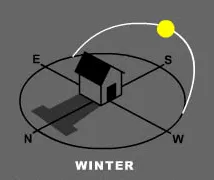
The above method will provide a precisely shaped shade that will provide full protection over the time period selected. However, we have not yet looked at how much Sun we will get in winter, when some penetration is usually desirable. Unfortunately, a shading device will not suddenly stop working after a certain date (unless it is retractable). It will usually partially obscure the window year round, more so in summer and less so in winter.
This is where the trade-off begins the amount of which depends on the relative heating and cooling stresses in the environment. In a very hot climate you may not actually need solar gains in winter, whereas in a very cold climate solar gains even in summer may be desirable.
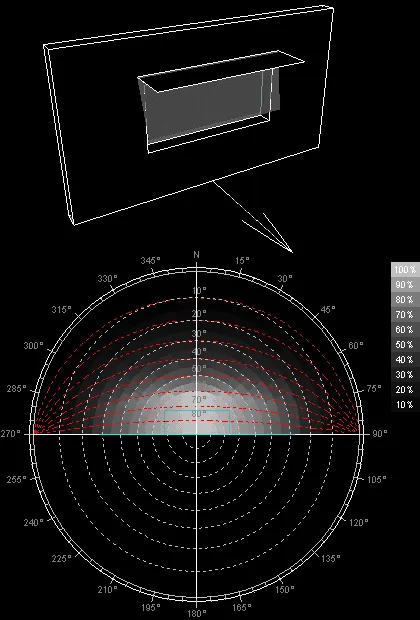
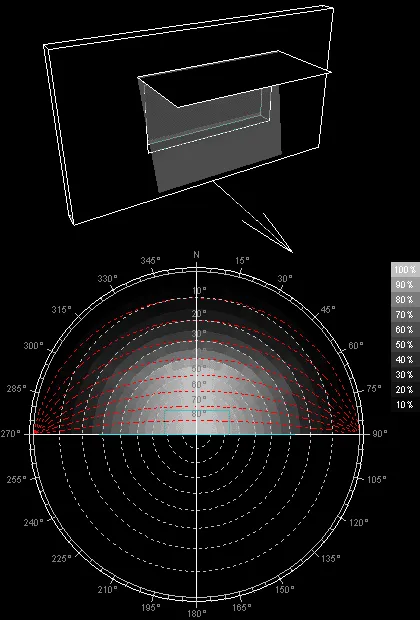
In order to understand the full effect of a shading device, we really need to turn again to the sun-path diagram and a percentage overshadowing graph. It may be that, whilst we want 100% shading throughout most of summer, we could probably live with only 80 to 85% shading in early Autumn in order to gain extra solar gains in winter. You will notice that the shading patterns displayed in the diagram below all display “fuzzy” edges. This is because we are dealing with a large window surface, not a single point.