




Efficiency of a system is generally defined as the ratio of its output to input. The efficiency can be classified into technical efficiency and economic efficiency.
1.Technical efficiency
It is the ratio of the output to input of a physical system. The physical system may be a diesel engine, a machine working in a shop floor, a furnace, etc.
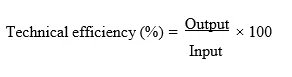
The technical efficiency of a diesel engine is as follows:
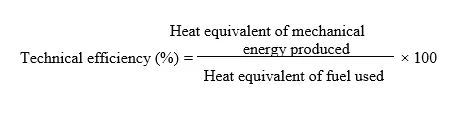
In practice, technical efficiency can never be more than 100%.
This is mainly due to frictional loss and incomplete combustion of fuel, which are considered to be unavoidable phenomena in the working of a diesel engine.
2. Economic efficiency
Economic efficiency is the ratio of output to input of a business system.

Worth’ is the annual revenue generated by way of operating the business and ‘cost’ is the total annual expenses incurred in carrying out the business.
For the survival and growth of any business, the economic efficiency should be more than 100%.
Economic efficiency is also called ‘productivity’. There are several ways of improving productivity.
v Increased output for the same input Decreased input for the same output
v By a proportionate increase in the output which is more than the proportionate increase in the input
v By a proportionate decrease in the input which is more than the proportionate decrease in the output
v Through simultaneous increase in the output with decrease in the input.

