
HOW DOES AN AIRCRAFT BALANCE WEIGHT AND STRENGTH?
Finding a safe compromise between low weight and high strength is critical when creating an aircraft. Aircraft structures must be light yet strong and stiff enough to resist the various forces acting on an airplane during flight. They must also be durable enough to withstand these forces over the airplane’s entire life span.
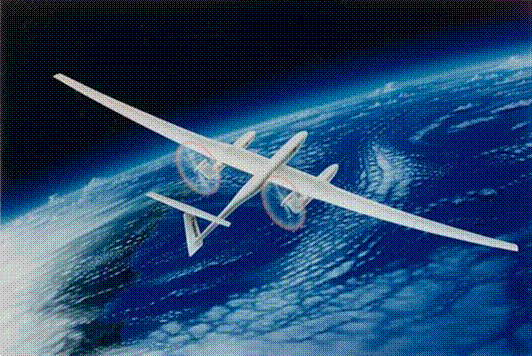
Wings don’t have to be heavy to be strong. This pilotless aircraft called Theseus was built for high-altitude research flights. The skin consists of a honeycomb material sandwiched between layers of woven carbon fibers embedded in a plastic resin. Similar stiff, lightweight materials are used on other types of aircraft.
Credit: Aurora Flight Sciences, Manassas, Virginia
Any aircraft design is a carefully planned compromise in which many competing factors are traded against one another: payload capacity, cost, range, speed, fuel economy, durability, noise levels, required runway length, and many others. The function of an aircraft—whether an airliner or a fighter, a business jet or a private airplane—is the major influence in balancing these factors. The best design typically provides maximum performance at the lowest weight.