- Key Takeaways
- Table of Contents
- Quick Comparison: Best SMS Marketing Platforms (2026)
- How We Picked These Platforms
- The 10 Best SMS Marketing Platforms in 2026
- 1) Klaviyo SMS
- 2) Attentive
- 3) Postscript
- 4) SimpleTexting
- 5) EZ Texting
- 6) SlickText
- 7) TextMagic
- 8) Brevo (Sendinblue) SMS
- 9) Twilio Messaging
- 10) Sinch Engage
- How to Choose the Right SMS Platform
- 1) Start with your primary use case
- 2) Confirm compliance support before you buy
- 3) Check integrations that you’ll use weekly
- 4) Don’t overpay for volume you don’t send
- SMS Marketing Compliance Checklist (2026)
- 1) Get explicit opt-in (and store proof)
- 2) Always include opt-out instructions
- 3) Respect carrier requirements (US: A2P 10DLC)
- 4) Follow industry best practices (CTIA)
- 5) Know international consent rules (GDPR/PECR and similar laws)
- High-Converting SMS Campaign Ideas & Best Practices
- 1) Build a “Welcome Series” that feels human
- 2) Use SMS for urgency, not newsletters
- 3) Segment aggressively to protect deliverability
- 4) Combine SMS + email for better results
- 5) Write messages like a person, not a billboard
- SMS Pricing, Budgeting & ROI Basics
- FAQs
- 1) What is the best SMS marketing platform for small businesses in 2026?
- 2) What is the best SMS platform for Shopify stores?
- 3) Do I need A2P 10DLC registration to send marketing texts in the US?
- 4) How often should I send marketing SMS?
- 5) What’s better: SMS or WhatsApp marketing?
- 6) Can I send SMS marketing without consent?
- 7) What KPIs should I track for SMS campaigns?
- 8) Should I use SMS for customer support?
- References & Helpful Resources
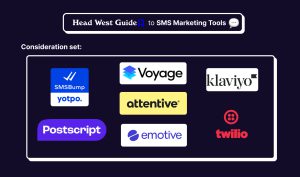
SMS marketing in 2026 is less about blasting promos and more about delivering timely, consent-based, personalized messages—at scale—without getting blocked by carriers or regulators.
Whether you run an eCommerce store, a local service business, a SaaS product, or a multi-location brand, text marketing can drive fast results when it’s done right: strong opt-ins, smart segmentation, useful automations, and compliant sending practices. But the platform you choose matters a lot—because compliance workflows, deliverability controls, integrations, and analytics vary widely.
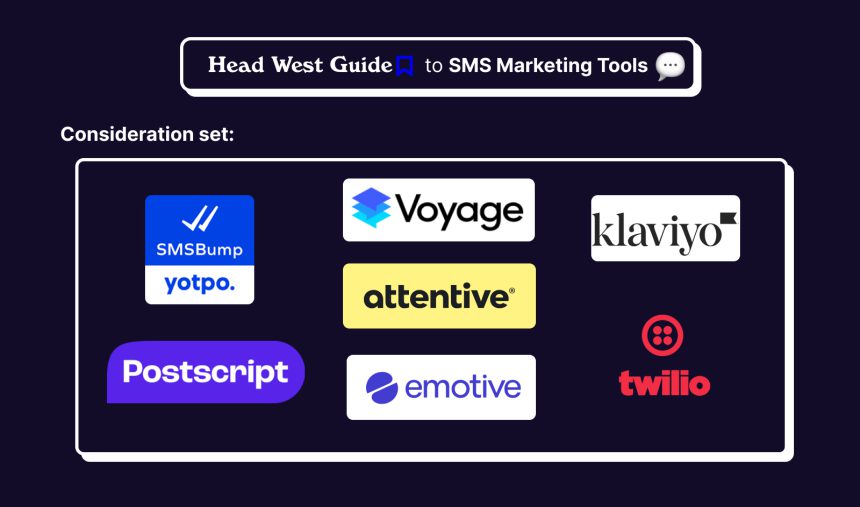
In this guide, you’ll find the 10 best SMS marketing platforms for businesses in 2026, plus a comparison table, selection checklist, compliance guidance (TCPA/CTIA, 10DLC, GDPR/PECR), and practical campaign ideas you can launch immediately.
Key Takeaways
- eCommerce-first: Klaviyo, Attentive, and Postscript excel for lifecycle flows like abandoned cart, winback, and VIP drops.
- SMB & local services: SimpleTexting, EZ Texting, and SlickText are great for two-way texting, mass sends, and easy list growth.
- Power + flexibility: Twilio is ideal when you need APIs, custom workflows, or product-grade messaging inside your app.
- Enterprise scale: Sinch Engage is built for high-volume campaigns, integrations, and large-team workflows.
- Compliance is non-negotiable: Prior express consent, clear opt-out, proper identification, and (in the US) A2P 10DLC registration protect deliverability and reduce legal risk.
Quick Comparison: Best SMS Marketing Platforms (2026)
Tip: If you’re choosing quickly, start with the “Best For” column and pick the platform built for your business model (eCommerce vs. local services vs. API/custom product).
| Platform | Best For | Standout Strength | Pricing Model (High-level) |
|---|---|---|---|
| Klaviyo | eCommerce + email/SMS together | Deep segmentation & flows using customer data | Subscription + message credits |
| Attentive | Mid-market/enterprise DTC | Personalization + multi-channel (SMS/RCS/email) | Custom (sales-led) |
| Postscript | Shopify-first brands | Shopify-native flows + list growth tools | Monthly minimum + per-message |
| SimpleTexting | SMBs, events, local service businesses | Easy mass texting + 2-way conversations | Tiered plans by messages |
| EZ Texting | Growing SMBs | Compliance-minded defaults + list growth | Credit-based plans |
| SlickText | Small teams, creators, local brands | Strong list growth + straightforward automations | Plans by monthly credits |
| TextMagic | Ops + support teams, appointment reminders | Usage-based texting + business messaging tools | Pay-as-you-go credits |
| Brevo | Email + SMS on a budget | Simple SMS campaigns alongside email automation | Subscription + SMS credits |
| Twilio | Developers, SaaS, custom products | APIs + global scale + channel flexibility | Pay-as-you-go |
| Sinch Engage | Enterprise campaigns | High-volume marketing with CRM integrations | Custom / enterprise |
How We Picked These Platforms
To build a list that’s actually useful in 2026 (not just a random roundup), we prioritized platforms that consistently deliver in these areas:
- Deliverability & compliance tooling: Opt-in capture, automated opt-out, consent records, and support for carrier requirements like 10DLC (US) where relevant.
- Automation & segmentation: Welcome flows, winbacks, cart/browse abandonment, and behavior-based segments (not just “send to everyone”).
- Two-way messaging: Real replies matter—especially for customer support, appointment scheduling, and lead qualification.
- Integrations: Shopify, WooCommerce, HubSpot, Salesforce, Zapier, and analytics integrations depending on platform type.
- Analytics that drive decisions: Deliveries, clicks, conversions, unsubscribe rate, revenue attribution (where applicable).
- Scalability & support: From a local business texting 1,000 customers/month to a brand texting millions.
Below are the 10 best picks—each with “best for,” strengths, limitations, and who should skip it.
The 10 Best SMS Marketing Platforms in 2026
1) Klaviyo SMS
Best for: eCommerce brands that want email + SMS powered by the same customer data (purchase history, browsing behavior, segments, and lifecycle stages).
Klaviyo is popular because SMS isn’t a bolt-on—it’s part of the same segmentation and automation engine used for email. That means you can run coordinated flows like: “send email → if unopened, send SMS,” or “SMS for VIP early access → email for follow-up content.”
Why it stands out in 2026
- Unified customer profiles that make segmentation more precise (e.g., “high AOV + 60-day no purchase + browsed category X”).
- Lifecycle automations that blend email and SMS intelligently instead of duplicating messages.
- Strong integrations with ecommerce stacks and analytics tooling.
Potential drawbacks
- Can become expensive as your profile count grows.
- Best value is for ecommerce; non-ecommerce teams may not use the full power.
Official links:
Klaviyo SMS •
Pricing
2) Attentive
Best for: Mid-market and enterprise brands that want premium SMS experiences plus personalization, compliance tooling, and multi-channel expansion (including RCS in supported regions).
Attentive positions itself as an AI-powered platform for customer messaging. For larger brands, the value is in scale: list growth at high volume, sophisticated segmentation, and workflows that help reduce fatigue while increasing revenue per message.
Why it stands out in 2026
- Enterprise-grade infrastructure for big lists and frequent sending.
- Personalization & optimization tools designed to improve engagement without spamming.
- Multi-channel reach (SMS, RCS, and email capabilities as advertised).
Potential drawbacks
- Often sales-led pricing (not ideal if you want self-serve).
- May be “too much” for small businesses with simple needs.
Official links:
Attentive •
Messaging solution
3) Postscript
Best for: Shopify brands that want a Shopify-native SMS platform with strong list growth tools and ecommerce automations.
Postscript is laser-focused on Shopify. If your store runs on Shopify and you want SMS flows that mirror your ecommerce lifecycle (abandoned cart, shipping updates, winback, VIP drops), it’s one of the most “plug-and-play” options.
Why it stands out in 2026
- Shopify-first workflows that feel native to store operations.
- Subscriber acquisition features built for ecommerce (popups, keywords, opt-in tools).
- Clear SMS marketing focus rather than being an “everything” platform.
Potential drawbacks
- Primarily optimized for Shopify; if you’re on WooCommerce/custom, you may prefer other options.
- Costs can scale with volume, so you’ll want careful segmentation.
Official links:
Postscript •
Pricing •
Shopify App Listing
4) SimpleTexting
Best for: Small-to-mid-sized businesses that want easy mass texting, two-way conversations, and straightforward setup.
SimpleTexting is a strong all-rounder for SMBs. It’s popular for promotions, community updates, events, schools, gyms, local retail, restaurants, and service businesses—especially when you want both broadcast campaigns and real 1:1 texting.
Why it stands out in 2026
- Fast learning curve for non-technical teams.
- Team features for multi-agent texting (useful for sales/support).
- Solid feature set including campaigns, automations, and list growth tools.
Potential drawbacks
- If you need deep ecommerce revenue attribution like “SMS drove $X,” ecommerce-native tools may feel stronger.
- Advanced personalization might require more manual setup than enterprise platforms.
Official links:
Features •
Pricing
5) EZ Texting
Best for: Growing businesses that want a polished SMS marketing platform with compliance-friendly defaults and scalable list-building.
EZ Texting is widely used by organizations that want “responsible messaging” with less risk. It’s a good fit for franchises, multi-location businesses, and teams that need both marketing sends and operational texting (reminders, updates, confirmations).
Why it stands out in 2026
- List growth tools designed for web + in-person acquisition.
- Compliance-first positioning (helpful if you’re worried about rules and carrier filtering).
- Suitable for multi-location use with the right setup.
Potential drawbacks
- Some advanced ecommerce automations may be better in Klaviyo/Postscript.
- Enterprise brands may require deeper custom workflows.
Official links:
EZ Texting •
Pricing
6) SlickText
Best for: Small teams and local brands that care about list growth, simple automations, and predictable credit-based plans.
SlickText is a friendly option for businesses that want strong list acquisition (keywords, popups, sign-up forms, QR codes) and don’t want to wrestle with a complex enterprise UI. It’s especially useful for promotions, loyalty programs, local events, and community-based marketing.
Why it stands out in 2026
- All tools included across plans (great for avoiding “feature gating” surprises).
- Rollover credits can help if your sends vary month to month.
- Useful integrations for common business workflows.
Potential drawbacks
- If you need enterprise governance or highly advanced segmentation, you may outgrow it.
- Not as ecommerce-native as Shopify-focused solutions.
Official links:
SlickText •
Pricing
7) TextMagic
Best for: Operations-heavy messaging (appointment reminders, confirmations, support) plus light marketing campaigns—especially when you want pay-as-you-go flexibility.
TextMagic is often chosen by teams who want reliable business texting without committing to a large “marketing suite.” It’s a practical pick if SMS supports your service delivery (booking reminders, payment follow-ups, feedback requests) and you also run occasional promotions.
Why it stands out in 2026
- Usage-based pricing works well for irregular senders.
- Strong operational fit for reminders, alerts, and customer communication.
- Clear pricing explanations and credit-based control.
Potential drawbacks
- Not built as a high-end ecommerce revenue engine (compared to Klaviyo/Postscript).
- Some features may require careful setup depending on region (sender IDs/number registration).
Official links:
TextMagic •
Pricing
8) Brevo (Sendinblue) SMS
Best for: Businesses that want email + SMS in one affordable marketing platform—especially startups and small teams.
Brevo is a multi-channel marketing platform that includes SMS campaigns as part of a broader toolkit. If you already use Brevo for email marketing, adding SMS for time-sensitive nudges can be simple and cost-effective.
Why it stands out in 2026
- Convenient multi-channel setup for teams already running email automation.
- Pay-as-you-go SMS option can be budget-friendly.
- Good for basics: promos, updates, simple segmentation.
Potential drawbacks
- Not as specialized for ecommerce SMS as Klaviyo/Postscript.
- Deep SMS-specific tooling may be lighter than SMS-only platforms.
Official links:
Brevo SMS Marketing •
Pricing
9) Twilio Messaging
Best for: Developers, SaaS products, and businesses that want custom workflows, programmatic sending, and product-grade messaging infrastructure.
Twilio is not a “drag-and-drop SMS marketing tool” first—it’s a communications platform with APIs. That’s exactly why it’s powerful. If you want to build your own messaging logic (e.g., triggers from your app, custom segmentation, event-based messaging, transactional + marketing flows), Twilio can be the backbone.
Why it stands out in 2026
- API-first flexibility to build anything from simple SMS to multi-channel messaging.
- Global scale with country-specific pricing and routes.
- Compliance tooling and guidance including US A2P 10DLC processes (important for deliverability).
Potential drawbacks
- Requires technical resources (or an integration partner) to get the most value.
- You’ll build/assemble the “marketing layer” yourself (UI, segmentation, reporting) unless using additional tools.
Official links:
Twilio pricing overview •
Messaging pricing •
What is A2P 10DLC?
10) Sinch Engage
Best for: Enterprise teams running high-volume SMS campaigns with robust integrations (HubSpot, Salesforce, Shopify, etc.) and the need for scalable outbound marketing.
Sinch has a strong footprint in messaging infrastructure, and Sinch Engage is presented as an SMS marketing platform designed for bulk campaigns at scale. It’s a solid option if your organization needs high throughput, governance, and integration into existing customer systems.
Why it stands out in 2026
- Built for high-volume sends with enterprise-grade reliability.
- Integration-friendly for CRM and commerce workflows.
- Use-case versatility across promotions, reminders, alerts, and customer support.
Potential drawbacks
- Overkill for small businesses with simple broadcast needs.
- Pricing is often sales-led for enterprise deployments.
Official links:
Sinch Engage SMS •
Bulk SMS marketing (Sinch)
How to Choose the Right SMS Platform
Here’s a fast decision framework you can use to avoid “feature overload” and pick the platform that fits your business model.
1) Start with your primary use case
- eCommerce lifecycle + revenue attribution: Choose Klaviyo or Postscript. Consider Attentive if you’re mid-market/enterprise.
- Local promotions + 2-way texting: Choose SimpleTexting, EZ Texting, or SlickText.
- Operational texting (reminders/confirmations): Choose TextMagic or SimpleTexting.
- Custom product messaging (API): Choose Twilio.
- Enterprise scale + integrations: Choose Attentive or Sinch Engage.
2) Confirm compliance support before you buy
If you send marketing texts without strong opt-in proof and opt-out workflows, you risk legal exposure and carrier filtering. Look for:
- Automated STOP handling and suppression lists
- Consent capture tools + consent logs
- Clear sender identity and message templates
- Support for US A2P 10DLC registration (if applicable)
3) Check integrations that you’ll use weekly
Integrations matter most when they remove manual work. Prioritize connections to:
- Your store/CRM (Shopify, WooCommerce, HubSpot, Salesforce)
- Automation tools (Zapier, Make)
- Analytics (GA4, data warehouses, BI tools)
4) Don’t overpay for volume you don’t send
If you send campaigns occasionally, pay-as-you-go can be ideal (TextMagic, Twilio). If you send weekly and run automations, monthly plans may be cheaper. Either way: avoid sending to your entire list unless you have a real reason.
SMS Marketing Compliance Checklist (2026)
Important: This is practical guidance, not legal advice. Rules vary by country/state. When in doubt, consult a qualified attorney or compliance professional.
1) Get explicit opt-in (and store proof)
- Use clear opt-in language: what users will receive, how often, and from whom.
- Store the timestamp, source (form/keyword/checkout), and wording shown at opt-in.
2) Always include opt-out instructions
- Include “Reply STOP to unsubscribe” or equivalent in initial messages (and periodically thereafter).
- Ensure STOP is honored immediately via suppression lists.
3) Respect carrier requirements (US: A2P 10DLC)
- If sending marketing messages in the US using 10-digit long codes, you may need A2P 10DLC registration (brand + campaign) depending on your setup.
4) Follow industry best practices (CTIA)
- CTIA guidelines are widely used as standards by carriers and ecosystem partners.
- Maintain clarity, transparency, and consumer-friendly messaging policies.
5) Know international consent rules (GDPR/PECR and similar laws)
- For UK/EU audiences, consent for marketing texts is typically explicit and must be specific to SMS—not “marketing in general.”
- Keep records and provide easy opt-out mechanisms.
Helpful compliance resources:
- CTIA Messaging Principles & Best Practices
- CTIA Principles (PDF)
- FCC TCPA consent guidance (PDF)
- Twilio: What is A2P 10DLC?
- ICO (UK): Consent for text marketing
- FTC: CAN-SPAM compliance guide
- AWS: 10DLC registration overview
High-Converting SMS Campaign Ideas & Best Practices
1) Build a “Welcome Series” that feels human
Instead of sending a coupon instantly, try a 2–3 message sequence:
- Message 1 (immediate): Confirm subscription + set expectations (“2–4 texts/month”).
- Message 2 (day 1–2): Ask a preference question (“Reply 1 for Men, 2 for Women, 3 for Kids”).
- Message 3 (day 3–5): Deliver offer aligned to the preference.
2) Use SMS for urgency, not newsletters
SMS is best for time-sensitive content:
- Limited-time drops
- Back-in-stock alerts
- Appointment reminders
- Flash sales (short windows)
3) Segment aggressively to protect deliverability
The fastest way to get unsubscribes is sending irrelevant messages. Practical segments include:
- Engaged in last 30 days vs. unengaged
- VIP/high AOV customers
- Browsed category or purchased category
- Location-based (store events, delivery areas)
4) Combine SMS + email for better results
A simple high-performing combo:
- Email tells the story (longer content).
- SMS delivers the nudge (deadline + link).
5) Write messages like a person, not a billboard
- Keep it short (1 idea per text).
- Use natural language.
- Include a clear CTA link.
- Avoid excessive emojis, ALL CAPS, and aggressive “spammy” patterns.
SMS Pricing, Budgeting & ROI Basics
Most SMS tools charge based on message volume (credits) or pay-as-you-go. In many markets, SMS can cost a few cents per message depending on destination, carrier routes, and whether the message is SMS vs. MMS.
Budgeting tip: Instead of asking “How many messages can I send?”, ask “How many relevant messages can I send?” Sending fewer, better-targeted campaigns often drives higher ROI and lower unsubscribe rates.
Helpful reads:
- SimpleTexting: cost of mass texting
- EZ Texting: how much does SMS marketing cost?
- Twilio: US SMS pricing page
FAQs
1) What is the best SMS marketing platform for small businesses in 2026?
For most SMBs, SimpleTexting, EZ Texting, and SlickText are strong choices because they’re easy to use, support two-way texting, and offer list growth and campaign features without heavy technical work.
2) What is the best SMS platform for Shopify stores?
If you want Shopify-native SMS workflows, Postscript is a top pick. If you want email + SMS unified with powerful segmentation, Klaviyo is also excellent.
3) Do I need A2P 10DLC registration to send marketing texts in the US?
Many businesses sending application-to-person (A2P) traffic via US long codes will need A2P 10DLC registration depending on provider and sender type. Check your provider’s guidance and register early to protect deliverability.
4) How often should I send marketing SMS?
Start conservatively: 2–4 texts per month is a common baseline for many brands. Increase frequency only if engagement stays strong and unsubscribes remain low.
5) What’s better: SMS or WhatsApp marketing?
SMS has universal reach (no app required), while WhatsApp can offer richer experiences (images, buttons) in supported regions and use cases. Many businesses use both, based on geography and customer preference.
6) Can I send SMS marketing without consent?
In most regions, marketing texts require some form of consent/opt-in. Always follow local laws and industry best practices and maintain clear opt-in records.
7) What KPIs should I track for SMS campaigns?
Track delivery rate, click-through rate, conversion rate, unsubscribe rate, and (if your platform supports it) revenue attribution per campaign and per segment.
8) Should I use SMS for customer support?
Yes—especially for appointment scheduling, confirmations, and quick resolution. Just separate support conversations from marketing broadcasts and keep opt-outs properly managed.
References & Helpful Resources
- Klaviyo Pricing
- Attentive Platform
- Postscript Pricing
- SimpleTexting Pricing
- EZ Texting Pricing
- SlickText Pricing
- TextMagic Pricing
- Brevo SMS Marketing
- Twilio Pricing
- Sinch Engage SMS
- CTIA Messaging Principles (PDF)
- FCC TCPA Consent Guidance (PDF)
- A2P 10DLC Explained
- ICO: SMS consent guidance (UK)
- FTC: CAN-SPAM compliance guide