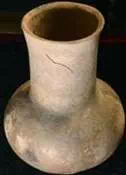
Although acoustic emissions can be created in a controlled environment, they can also occur naturally. Therefore, as a means of quality control, the origin of AE is hard to pinpoint. As early as 6,500 BC, potters were known to listen for audible sounds during the cooling of their ceramics, signifying structural failure. In metal working, the term “tin cry” (audible emissions produced by the mechanical twinning of pure tin during plastic deformation) was coined around 3,700 BC by tin smelters in Asia Minor. The first documented observations of AE appear to have been made in the 8th century by Arabian alchemist Jabir ibn Hayyan. In a book,Hayyan wrote that Jupiter (tin) gives off a ‘harsh sound’ when worked, while Mars (iron) ‘sounds much’ during forging.
Many texts in the late 19th century referred to the audible emissions made by materials such as tin, iron, cadmium and zinc. One noteworthy correlation between different metals and their acoustic emissions came from Czochralski, who witnessed the relationship between tin and zinc cry and twinning. Later, Albert Portevin and Francois Le Chatelier observed AE emissions from a stressed Al-Cu-Mn (Aluminum-Copper-Manganese) alloy.
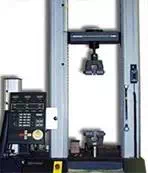 Modern Tensile Testing Machine (H. Cross Company) Modern Tensile Testing Machine (H. Cross Company) |
The next 20 years brought further verification with the work of Robert Anderson (tensile testing of an aluminum alloy beyond its yield point), Erich Scheil (linked the formation of martensite in steel to audible noise), and Friedrich Forster, who with Scheil related an audible noise to the formation of martensite in high-nickel steel. Experimentation continued throughout the mid-1900’s, culminating in the PhD thesis written by Joseph Kaiser entitled “Results and Conclusions from Measurements of Sound in Metallic Materials under Tensile Stress.” Soon after becoming aware of Kaiser’s efforts, Bradford Schofield initiated the first research program in the United States to look at the materials engineering applications of AE. Fittingly, Kaiser’s research is generally recognized as the beginning of modern day acoustic emission testing.