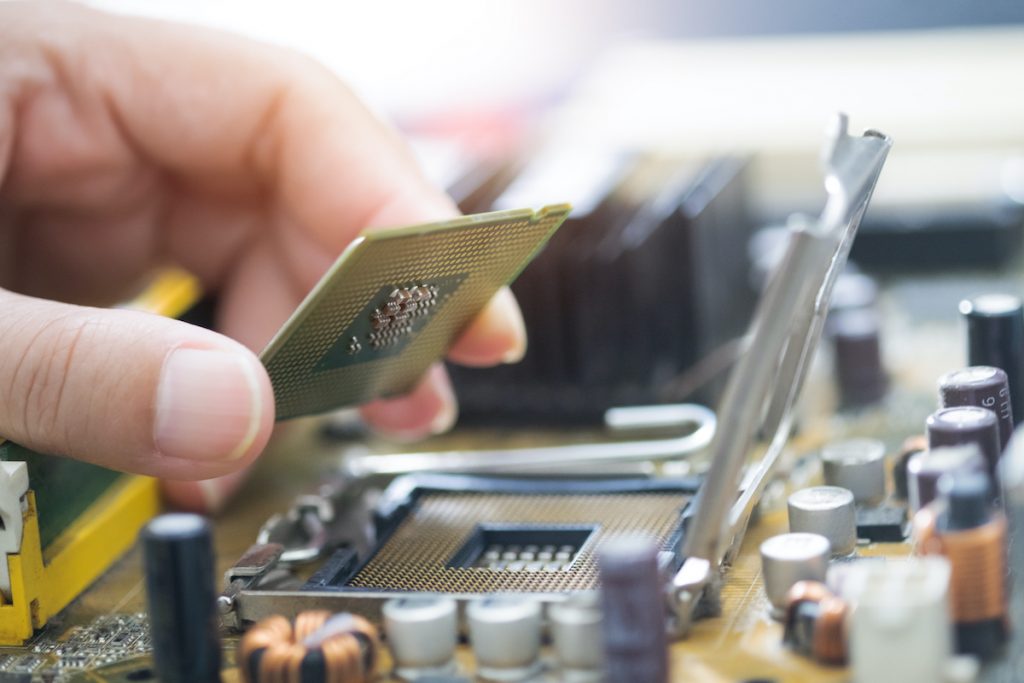
AI hardware performance depends on more than the processor itself. Modern accelerator systems often combine processor dies, high-bandwidth memory and densely connected components in a single package. Advanced semiconductor packaging makes those relationships possible.
What is advanced chip packaging?
Traditional computers place separate chips on circuit boards, but leading accelerators require much denser connections. Packaging technologies including silicon interposers can bring components closer together and improve the movement of data. These techniques are especially important when processing large artificial intelligence models.
Why chiplets and interposers matter
A chiplet is a smaller functional die that can be combined with others in a larger system. A silicon interposer provides fine-pitch links between dies. Rather than designing one enormous monolithic chip, manufacturers can assemble different pieces into an integrated product. This creates flexibility but introduces manufacturing, thermal and testing challenges.
Why packaging capacity influences supply
Producing an AI accelerator requires adequate wafers, memory, packaging equipment, substrates and final testing. A shortage in any one stage may delay shipments. As a result, packaging throughput and manufacturing yields are important indicators of infrastructure supply alongside GPU specifications.
What engineers should monitor
Useful measures include energy efficiency, bandwidth, thermal characteristics, manufacturing yield and cost per completed workload. Organizations planning AI infrastructure should investigate total system constraints rather than focusing only on nominal processor performance.
The bigger picture
Chip packaging is becoming a major area of semiconductor innovation. Better interconnects and more flexible manufacturing could support future AI hardware, but improvements will require advances across entire supply chains.
Frequently asked questions
Is an interposer a processor? No. It provides electrical connections between components. Are chiplets always cheaper? Not necessarily; savings depend on design, packaging yield and production scale.