Have you watched this viral time-lapse webcam footage, which is all over Youtube, Facebook, Twitter of a Dutch tunnel construction that took up only the weekend of the 20th to the 22nd of May?
This footage shows that efficient planning of construction methods can speed up construction. Structural engineering is not just about understanding structural theories, but also determining the optimal construction methods that will benefit cost, time, and productivity.
The construction process of the Dutch tunnel had three activities:
1. Demolition of existing overpass
2. Installation of prefabricated tunnel
3. Rebuilding the overpass to be wider
1. Demolition of existing overpass
2. Traffic was initially diverted. Then, four cranes were used to demolish portions of the existing overpass and soil.
3. Installation of prefabricated tunnel
4. The prefabricated 70m long fauna tunnel with noise dampening asphalt was then slowly aligned into place under the highway overpass, while demolition was just at its last stages. After the tunnel was installed in its position, cranes were then used to fill the gaps between the tunnel and the paving with backfill.
5. Rebuilding the overpass to be wider
6. The tunnel installation also resulted a new three-lane highway and one shoulder.
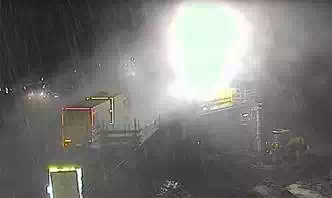
Constructing through the Storm Source: http://www.express.co.uk/
The fast construction demonstrates that effective planning and management of construction methods and techniques can make projects more cost-effective and less time consuming. Here were some construction techniques that were used:
1. Temporary diversion of traffic
2. Traffic was temporarily diverted to an alternative route so that the construction operation will only cause minimal disruption to the traffic.
3. Modular or prefabricated construction
4. Preassembled fabricated tunnel was used, so that the tunnel can be made of high quality, with good tolerances, and in a more controlled environment. Less waste was also accumulated. Since the tunnel was prefabricated elsewhere and not placed insitu on site, more space was created due to the delivery of the tunnel assembly. Installation of the tunnel was rapid due to the lack of site constraints.
5. Demolition of the overpass was a parallel operation to the tunnel installation.
6. Time was saved when the overpass was demolished from the edge to the middle of the overpass. When the edge of the overpass was demolished and demolition was continuing at the middle of the overpass, the tunnel can be installed simultaneously with the demolition works at the middle of the overpass.
7. Use of porous asphalt during the storm
8. Porous asphalt was used so that workers can pave and strip in the storm. Stormwater can move through the large voids in the porous asphalt, which makes permeable paving possible. After installation of the paving, porous asphalt can also decrease water runoff and conserve water when water infiltrates the asphalt, moves into the stone bed, and into the soil. Contaminants in the stormwater are removed when the water passes through the asphalt and stone bed. The decrease of water on the pavement also makes driving safer.
This shows us that man can work at an amazing pace. With the ever changing technologies and innovative strategies, we have the power to complete projects in a cost effective and timely manner and in any conditions and environment. Therefore, during the design process, not only should we consider the structural integrity of the structure, we also need to consider the constructability of critical structures, the coordination of trades and machinery, and the efficient use or allocation of resources.