How to Build a Client List From Scratch
Affiliate disclosure: This article may contain affiliate or sponsored links. If you click and buy through some links, Sensecentral may earn a commission at no extra cost to you. We only recommend resources that can be useful for readers building online income, freelancing systems, content businesses, or digital product workflows.
- Table of Contents
- Quick Answer
- Why This Works
- Best Options and Comparison
- Step-by-Step Plan
- Step 1: Choose one buyer type
- Step 2: Define one small paid outcome
- Step 3: Create proof before asking for money
- Step 4: Make a simple offer
- Step 5: Repeat outreach and improve weekly
- Tools and Useful Resources
- Useful Resource: Explore Our Powerful Digital Products
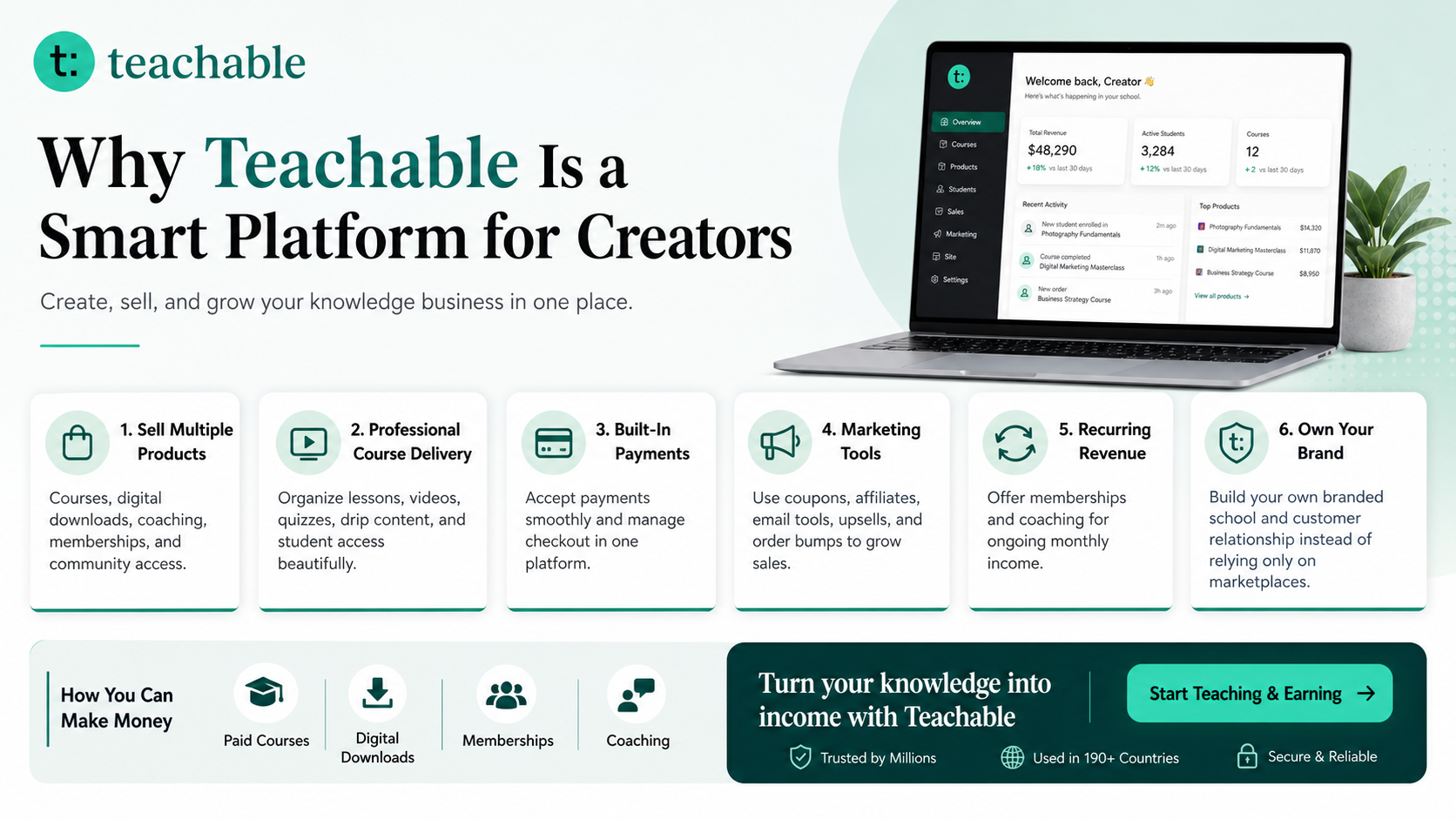
- Creator Platform to Try: Teachable
- Free Tool Hub: Zee Sharp
- Common Mistakes to Avoid
- Mistake 1: Learning forever without testing demand
- Mistake 2: Pricing too low without a plan
- Mistake 3: Copying someone else’s business model exactly
- Mistake 4: Ignoring trust and communication
- Simple Action Plan
- Key Takeaways
- FAQs
- How many people should I contact every week?
- What should I say if I have no portfolio?
- How do I avoid sounding spammy?
- Should I offer free work to get clients?
- How long does client acquisition take?
- Further Reading on Sensecentral
- External Useful Links
- References
How to Build a Client List From Scratch becomes easier when you stop thinking of client hunting as begging and start treating it as helpful problem discovery. The goal is to find people who already have a problem, then make the next step feel simple and low-risk.
In this guide, you will learn a beginner-friendly way to approach building a repeatable client system. The focus is simple: track prospects, conversations, follow-ups, offers, and referrals every week. You will also see examples, tables, tools, outreach ideas, beginner mistakes, FAQs, and useful resources you can bookmark while building your online income plan.
Table of Contents
Quick Answer
The practical answer is to build a simple weekly lead system around a clear starter offer. Your first offer can be website audit, content cleanup, or social media template. Then you need a small list of prospects, a helpful first message, polite follow-ups, and a way to record every conversation.
Freelancers often believe they need a famous personal brand before they can get clients. In reality, many first clients come from clear positioning, useful comments, referrals, local business outreach, free audits, and direct messages that show you understand a real problem.
Why This Works
This approach works because it removes unnecessary friction. A beginner does not need a perfect logo, a complex funnel, or a full website to test whether people will pay for a result. You need a clear promise, basic proof, honest communication, and a simple way to accept the next conversation. That is why building a repeatable client system is often more realistic than trying to launch a large business from day one.
Online earning also improves when you focus on demand rather than excitement. A task may sound boring, but if business owners, creators, students, or professionals need it every week, it can become a dependable starting point. Simple services often lead to better opportunities because clients trust people who solve small problems reliably.
The best beginner strategy is not to ask, “What makes the most money?” The better question is, “What useful result can I deliver this week with the skill, time, and confidence I currently have?” When you answer that question clearly, you avoid overthinking and start collecting real market feedback.
Best Options and Comparison
The table below compares practical options related to How to Build a Client List From Scratch. Use it to choose a path that matches your time, personality, skill level, and comfort with outreach.
| Lead Source | How to Use It | Starter Offer | Strength | Avoid This |
|---|---|---|---|---|
| Warm network | Ask for leads or referrals | website audit | Low pressure | Asking too vaguely |
| Online communities | Answer questions and be useful | content cleanup | Trust building | Dropping spam links |
| Direct outreach | Send specific helpful messages | social media template | Predictable pipeline | Mass-copy pitching |
| Content posts | Share examples and mini lessons | lead list research | Authority | Posting without a call-to-action |
| Free audit | Show one improvement opportunity | email follow-up sequence | Urgent needs | Giving away the full project |
Step-by-Step Plan
Step 1: Choose one buyer type
Do not start with “everyone.” Choose one buyer type such as local shops, coaches, bloggers, students, small ecommerce sellers, consultants, restaurants, creators, accountants, tutors, or startup founders. A narrow buyer type helps you write clearer examples, find better problems, and avoid generic pitches.
Step 2: Define one small paid outcome
A small paid outcome might be website audit, content cleanup, or lead list research. Keep the scope small enough that you can explain it in one sentence and deliver it within a fixed time. This protects both you and the buyer from confusion.
Step 3: Create proof before asking for money
Proof does not always mean client testimonials. It can be a sample, checklist, short video walkthrough, before-and-after screenshot, mockup, mini audit, or public post explaining how you solve a problem. Proof reduces doubt because prospects can see how you think.
Step 4: Make a simple offer
Your first offer should include the result, who it is for, what is included, what is not included, delivery time, and price range. Avoid vague phrases like “I can help with anything.” Clear offers make you look more professional even when you are new.
Step 5: Repeat outreach and improve weekly
Outreach is not a one-day activity. Send messages, answer questions, publish small examples, ask for referrals, and follow up politely. At the end of each week, review which messages got replies, which offers created interest, and which objections appeared often. Then improve one part of the system.
Tools and Useful Resources
You can begin with free or low-cost tools. Use Google Docs for proposals, Google Sheets for tracking leads, Canva for simple graphics, Notion or Trello for task planning, Loom-style screen recordings for audits, and a simple payment method that works in your country. The goal is not to collect tools; the goal is to deliver outcomes faster and more clearly.
Useful Resource: Explore Our Powerful Digital Products
Explore Our Powerful Digital Products — browse high-value bundles for website creators, developers, designers, startups, content creators, and digital product sellers. These resources can help you move faster when creating websites, templates, client assets, digital products, content packs, design bundles, and startup materials.
Creator Platform to Try: Teachable
Teachable is an online platform that lets creators build, market, and sell courses, digital downloads, coaching, and memberships. It helps educators and entrepreneurs turn their knowledge into a branded digital business without needing complex coding.
Learn more: How to Make Money with Teachable: A Complete Creator’s Guide
Free Tool Hub: Zee Sharp
Zee Sharp is a growing suite of free online tools for productivity, development, and creativity. No sign-up. No watermarks. Just tools. Use it when you need quick utilities for client work, content planning, formatting, productivity, or small daily tasks.
Common Mistakes to Avoid
Mistake 1: Learning forever without testing demand
Learning is useful, but it becomes a trap when you use it to avoid the market. After a short learning period, create a sample and talk to potential buyers. Real feedback teaches faster than another random tutorial.
Mistake 2: Pricing too low without a plan
Low prices can help you get early proof, but staying cheap forever leads to burnout. Decide what your starter price is, what proof you need to raise it, and what result would justify a higher package later.
Mistake 3: Copying someone else’s business model exactly
What works for an experienced creator may not work for your current skills, location, confidence, or time. Use other people as inspiration, but build a plan around your own strengths and buyer access.
Mistake 4: Ignoring trust and communication
Clients often choose the person who communicates clearly over the person who claims to be the most talented. Reply on time, summarize requirements, confirm deadlines, explain trade-offs, and be honest when something is outside your scope.
Simple Action Plan
Use this simple plan to turn How to Build a Client List From Scratch into action instead of another saved idea.
| Timeframe | Action |
|---|---|
| Monday | Add 20 prospects to your client list. |
| Tuesday | Engage with 10 useful posts or community questions. |
| Wednesday | Send 5 specific outreach messages. |
| Thursday | Follow up with older conversations. |
| Friday | Review replies, objections, and next actions. |
After completing the plan, do not judge success only by money. Count useful signals too: replies, questions, objections, referrals, sample views, and repeat conversations. These signals show whether your offer is getting closer to a real market need.
Key Takeaways
- How to Build a Client List From Scratch is easier when you focus on helping real prospects solve visible problems.
- A specific starter offer beats a vague “I can do anything” message.
- Follow-ups, referrals, and free audits can create warmer conversations than random pitching.
- A client pipeline protects your confidence because you are not depending on one prospect.
- Track every lead, message, reply, objection, and next step weekly.
FAQs
How many people should I contact every week?
A beginner can start with 25 to 50 thoughtful touches per week across comments, messages, referrals, and follow-ups. Quality matters more than volume, but consistency matters more than perfection.
What should I say if I have no portfolio?
Use a sample, mini audit, before-and-after improvement, or a practice project. Clients need evidence that you understand the problem and can communicate clearly.
How do I avoid sounding spammy?
Mention a specific observation, keep the message short, avoid exaggerated promises, and make the next step easy. A helpful message feels like it was written for one person, not copied to hundreds.
Should I offer free work to get clients?
Free work is risky if it has no boundary. A better option is a tiny free audit or sample that demonstrates your thinking while keeping the main implementation paid.
How long does client acquisition take?
Some conversations convert quickly, but many need follow-up. Build a pipeline so your confidence does not depend on one message, one prospect, or one platform.
Further Reading on Sensecentral
- How to Get Freelance Clients Using Free Audits
- How to Offer a Starter Service to Win Clients
- How to Find Freelance Leads Every Week
- How to Earn Online Using Skills You Already Have
- How to Make Money with Teachable: A Complete Creator’s Guide
External Useful Links
- Teachable Official Website
- Google SEO Starter Guide
- FTC Endorsement Guides FAQ
- SBA Market Research and Competitive Analysis
References
- Teachable: online courses, coaching, digital downloads, and memberships
- Teachable Digital Downloads
- FTC Endorsement Guides: What People Are Asking
- Google Search Central SEO Starter Guide
- SBA Market Research and Competitive Analysis
- Upwork: How to Create a Proposal That Wins Jobs
- Fiverr Help Center: Best practices for freelancers