How to Build a Coaching Business Beyond Hourly Calls
Affiliate disclosure: This post contains affiliate links. If you click and purchase through these links, Sensecentral may earn a commission at no extra cost to you. We recommend tools only when they are relevant to the topic and useful for readers.
Useful Platform for Coaches: Teachable
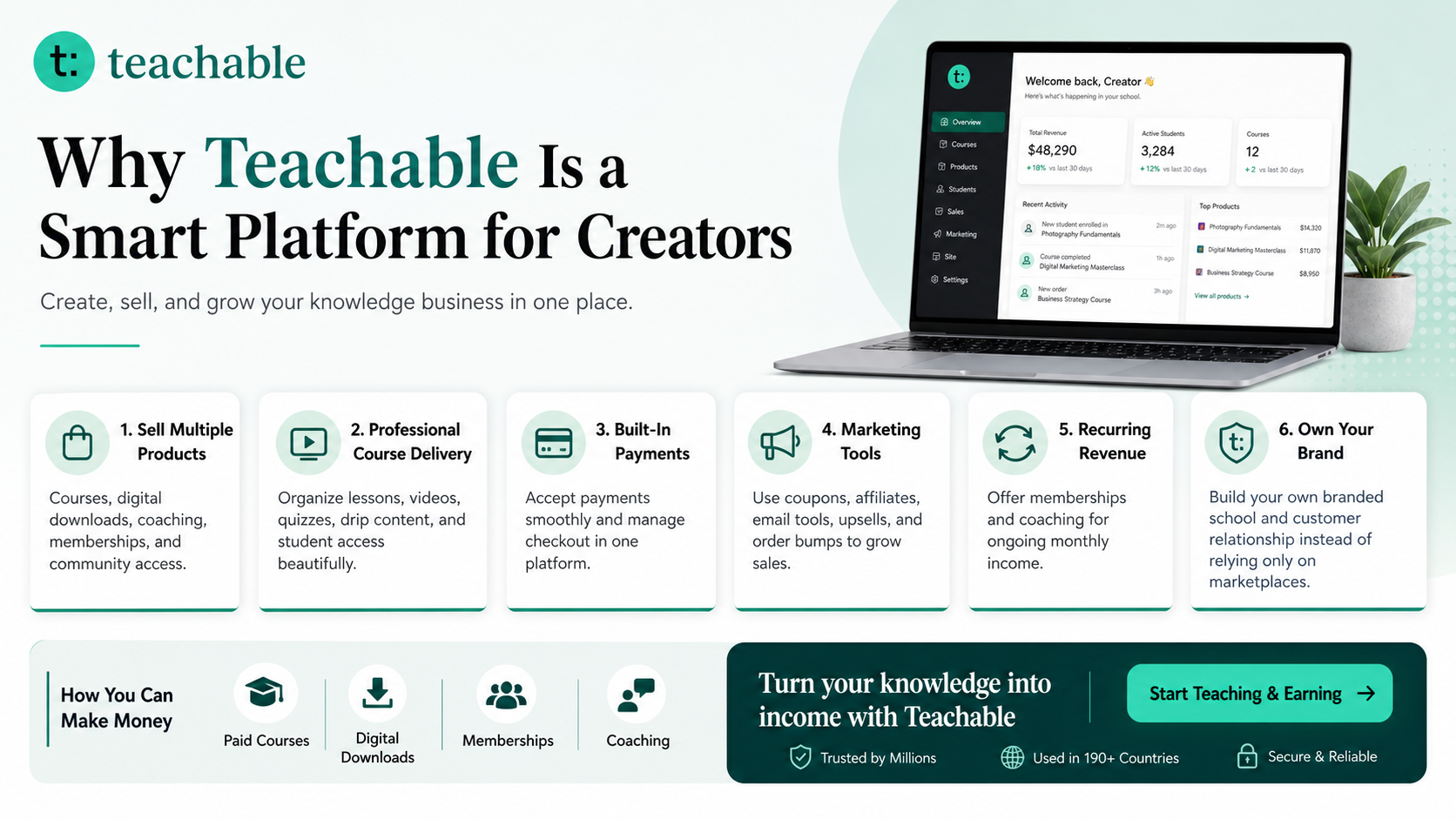
Teachable is an online platform that lets creators build, market, and sell courses, digital downloads, coaching, and memberships. It helps educators and entrepreneurs turn their knowledge into a branded digital business without needing complex coding.
Learn more: How to Make Money with Teachable: A Complete Creator’s Guide

How to Build a Coaching Business Beyond Hourly Calls is a practical guide for business coaches, startup advisors, marketing consultants, and growth mentors who want to convert expertise into a structured online offer without being buried under plugins, coding, page builders, separate checkout tools, manual email threads, and scattered Google Drive folders. The goal is simple: package your method, deliver your materials professionally, and create a system that helps clients move from confusion to a clear result.
- Table of Contents
- Key Takeaways
- What This Strategy Means for Coaches
- Why Teachable Fits This Coaching Model
- Coaching Delivery Options Compared
- Step-by-Step Plan to Build the Program
- 1. Define the Transformation Before the Lessons
- 2. Map Your Signature Method into Milestones
- 3. Separate Teaching from Coaching
- 4. Create Downloadable Resources That Support Action
- 5. Build the Offer Page Around Outcomes
- 6. Add Onboarding and Progress Guidance
- 7. Improve the Program After Each Cohort
- Sample Coaching Offer Stack
- Simple Funnel to Sell the Program
- Mistakes to Avoid
- Creating Too Much Content Before Testing Demand
- Selling Calls Instead of Transformation
- Making the Tech Stack Too Complicated
- Ignoring Affiliate and Trust Disclosures
- Explore Our Powerful Digital Products
- Useful Resources and Further Reading
- FAQs
- Can I use Teachable for coaching and not just courses?
- Do I need advanced technical skills to create a coaching program?
- Should I sell a course, coaching package, or membership first?
- How do I price a coaching program?
- What should I include in my first coaching curriculum?
- How can I make the program feel premium?
- References
- Post Keywords and Tags
For many coaches, the biggest growth problem is not lack of knowledge. It is delivery friction. You may already know how to help clients, but every new client creates more repetitive work: sending the same onboarding message, explaining the same concept, attaching the same workbook, answering the same “where do I start?” question, and manually tracking progress. A platform like Teachable can help because it brings courses, coaching, digital downloads, memberships, payments, student experience, and basic business tools into one branded place.
This Sensecentral guide explains how to think strategically, build a coaching asset once, and reuse it across clients, cohorts, and packages. You will learn how to shape your offer, plan modules, add digital resources, promote your program ethically, and use affiliate-friendly resources without making the article feel like a shallow sales page.
Table of Contents
Key Takeaways
- A scalable coaching business starts by turning repeated advice into structured lessons, worksheets, templates, and milestones.
- Teachable can help coaches sell courses, coaching, digital downloads, and memberships from one branded school rather than relying on disconnected tools.
- The strongest coaching programs sell a transformation, not simply “access to calls.”
- Self-paced lessons reduce repetition, while coaching calls add accountability, diagnosis, feedback, and premium value.
- Clear curriculum, onboarding, deliverables, pricing, and follow-up systems are more important than a complicated tech stack.
What This Strategy Means for Coaches
In the context of business coaching, a coaching program is not just a folder of videos or a calendar full of calls. It is a guided experience that moves a client from a current problem to a desired outcome. A coach may begin with one-to-one sessions, but the knowledge inside those sessions often becomes repeated. You explain the same foundation, recommend the same worksheet, send the same checklist, or answer the same beginner question again and again. That repetition is the clue that your knowledge can become a product.
When you productize coaching, you are not removing the human element. You are protecting it. Instead of spending valuable call time on basic explanations, clients can complete the foundation lessons before meeting you. That allows live calls to focus on personalization, blockers, accountability, and decision-making. In other words, the course teaches the system; the coaching helps the client apply it.
This is especially useful for business coaches, startup advisors, marketing consultants, and growth mentors. Your time is limited, but your knowledge can be structured. A well-built program can include strategy lessons, business worksheets, playbooks, templates, and implementation calls. Once those materials are organized, they can support private clients, group cohorts, memberships, corporate clients, or lower-ticket self-paced buyers. The same core method becomes a flexible business asset.
Why Teachable Fits This Coaching Model
Teachable is useful for coaches because it combines multiple monetization formats in one environment. Instead of having one tool for video lessons, another for payments, another for downloads, another for memberships, and another for client delivery, a coach can create a branded school that houses the customer experience. For a coaching business, this matters because trust is built through clarity. Clients want to know where to log in, what to complete first, where their resources are, and what they purchased.
A Teachable-based setup is particularly helpful when your offer includes both education and service. For example, you may sell a course with weekly coaching calls, a coaching package that includes private lessons, a workbook bundle that supports a premium program, or a membership where clients receive monthly training and accountability. The platform’s value is not only in hosting content; it is in making your coaching process easier to present, sell, and repeat.
Another important advantage is positioning. A professional coaching program feels more valuable when clients enter a clear learning environment rather than receiving scattered files through email. The client sees modules, resources, progress, and next steps. That structure helps justify premium pricing because the buyer is not just paying for your time; they are paying for a system.
Coaching Delivery Options Compared
The best structure depends on your price point, the depth of transformation, and how much personal support clients need. The table below shows how common coaching delivery models can work inside a Teachable-style business.
| Model | Best For | What to Include | Revenue Role |
|---|---|---|---|
| Self-Paced Course | Foundational training and repeatable lessons | Videos, quizzes, checklists, workbooks, examples | Lower-touch scalable income |
| Private Coaching | High-value personal guidance | Calls, assignments, progress reviews, custom feedback | Premium offer and deeper transformation |
| Group Coaching | Serving multiple clients with shared momentum | Weekly calls, cohort lessons, replays, peer accountability | Scalable mid-ticket program |
| Membership | Recurring support and long-term learning | Monthly content, live sessions, archives, resource drops | Recurring revenue and retention |
| Digital Downloads | Templates, planners, workbooks, worksheets | PDFs, spreadsheets, scripts, guides, frameworks | Entry product, bonus, or upsell |
Step-by-Step Plan to Build the Program
1. Define the Transformation Before the Lessons
Start with the transformation. A strong coaching offer should clearly answer: What does the client struggle with now? What result do they want? What measurable change will prove progress? For example, a career coach might promise a clearer job-search system, a business coach might promise a launch-ready offer, and a wellness coach might promise a consistent habit routine. The topic of How to Build a Coaching Business Beyond Hourly Calls becomes easier to sell when the result is specific.
2. Map Your Signature Method into Milestones
Most coaches already have a method, even if it is not written down. Look at your past client sessions and identify the repeated phases. These might be diagnosis, mindset, planning, implementation, tracking, review, and optimization. Turn each phase into a module. Each module should have one purpose, one main lesson, one action task, and one resource that helps the client apply the idea.
3. Separate Teaching from Coaching
Teaching explains the concept. Coaching helps the client apply it. When you separate the two, your program becomes easier to scale. Record the explanation once as a lesson. Then use calls for personal review, accountability, decision-making, and feedback. This prevents your calendar from becoming overloaded with repeated beginner explanations.
4. Create Downloadable Resources That Support Action
Downloads are powerful because they move clients from passive watching to active implementation. A worksheet can help them diagnose a problem. A template can help them create something faster. A checklist can help them complete a task without missing steps. A planner can keep them consistent. For business coaching, the most useful resources are the ones that reduce confusion and make progress visible.
5. Build the Offer Page Around Outcomes
Your sales page should not merely list videos and calls. It should explain the problem, the promise, the process, the deliverables, who the program is for, who it is not for, and what happens after purchase. Add proof where available: testimonials, examples, case studies, screenshots, client wins, or before-and-after stories. If you do not have proof yet, use a beta version and collect feedback ethically.
6. Add Onboarding and Progress Guidance
A common mistake is assuming that buyers know what to do after checkout. A better approach is to create a welcome lesson that tells clients exactly where to start, how to use the program, when to book calls, where to download materials, and how to ask questions. This single lesson can reduce support requests and make the product feel more professional.
7. Improve the Program After Each Cohort
Every coaching program should improve through real client behavior. Track which lessons people complete, which resources they use, which questions they ask, and where they get stuck. Use those patterns to improve lesson titles, add examples, rewrite worksheets, create short explainer videos, or add a bonus training. Scaling does not mean you stop improving; it means your improvement benefits every future student.
Sample Coaching Offer Stack
A strong coaching program often works best when it has tiers. Different clients have different budgets, urgency levels, and support needs. A simple three-tier structure can help you sell to more people without creating a completely different business for each buyer.
| Offer Tier | Included | Ideal Buyer | Positioning |
|---|---|---|---|
| Starter | Self-paced lessons, workbook, checklist, resource library | Self-motivated learners | Affordable entry point |
| Signature | Everything in Starter plus group calls, replays, accountability tasks | Clients who want guided implementation | Best value transformation |
| Premium | Everything in Signature plus private coaching, review, templates, bonus support | High-commitment clients | Personalized and high-touch |
For a title like How to Build a Coaching Business Beyond Hourly Calls, the best offer stack is usually not about adding random bonuses. It is about helping clients move faster with fewer doubts. Your bonuses should remove objections: a quick-start checklist for “I do not know where to begin,” a workbook for “I need structure,” a template for “I do not want to start from scratch,” and a coaching call for “I need personalized feedback.”
Simple Funnel to Sell the Program
A simple funnel is enough for most coaching businesses. Start with a helpful article, video, webinar, checklist, or mini training that attracts the right audience. Offer a lead magnet that solves one small problem. Send a short email sequence that teaches, builds trust, explains your method, and invites the reader to your paid program. Then send visitors to a clear sales page with a direct call to action.
The funnel does not need to feel aggressive. In fact, coaching buyers usually need trust more than hype. Your content should show that you understand their problem, your free resource should give them a small win, and your paid program should logically become the next step. When the paid offer is aligned with the free content, the sale feels natural.
Use the program curriculum as your content engine. Each module can become a blog post, short video, email lesson, or social media carousel. Each resource can become a lead magnet, bonus, or digital download. This approach keeps your marketing consistent because the same framework supports your content, your sales page, and your client delivery.
Mistakes to Avoid
Creating Too Much Content Before Testing Demand
Coaches sometimes record a massive course before validating whether people want the offer. Instead, build a minimum viable version: a clear promise, a few core lessons, a workbook, and live support. Sell it to a small group, collect feedback, and improve it.
Selling Calls Instead of Transformation
“Six coaching calls” is a delivery format, not a compelling promise. Buyers want a result. Package the offer around the outcome, then show how calls, lessons, and resources support that outcome.
Making the Tech Stack Too Complicated
Too many tools create friction for you and the client. A simple school, clear modules, checkout, emails, downloads, and call instructions can outperform a complicated system that looks impressive but confuses buyers.
Ignoring Affiliate and Trust Disclosures
If your post includes affiliate links, disclosures should be clear, visible, and honest. This protects trust with readers and aligns your content with ethical marketing expectations. The disclosure should appear near the affiliate recommendation, not hidden at the bottom of the page.
Explore Our Powerful Digital Products
Browse these high-value bundles for website creators, developers, designers, startups, content creators, and digital product sellers. If you are building a coaching brand, you can use ready-made resources, templates, digital assets, planners, and creator tools to speed up launch preparation and improve your client experience.
Useful Resources and Further Reading
Continue learning with these internal Sensecentral resources and official external guides:
- How to Make Money with Teachable: A Complete Creator’s Guide
- Sensecentral Product Reviews and Comparisons
- Sensecentral Software Reviews
- Sensecentral Digital Product Guides
- Teachable Coaching Overview
- Teachable Pricing Page
FAQs
Can I use Teachable for coaching and not just courses?
Yes. Teachable supports coaching-style offers along with courses, digital downloads, memberships, bundles, and related creator products. For coaches, this means you can combine lessons, resources, and service-based support in a branded learning environment.
Do I need advanced technical skills to create a coaching program?
No. You need a clear offer, organized content, and a simple delivery process. Technical skills can help with customization, but most coaches can start by creating modules, uploading resources, writing a sales page, and setting up checkout.
Should I sell a course, coaching package, or membership first?
Start with the format that matches your buyer’s urgency and your available time. A course is good for repeatable education, coaching is good for personalized transformation, and a membership is better when clients need ongoing support and fresh resources.
How do I price a coaching program?
Price depends on the result, support level, buyer segment, proof, and depth of transformation. A self-paced product may be lower priced, while a program with private calls, feedback, templates, and accountability can justify a higher price.
What should I include in my first coaching curriculum?
Include only the lessons and resources needed to help clients reach the promised result. A strong first curriculum usually includes a welcome module, foundation lessons, action worksheets, implementation tasks, progress checkpoints, and a final review step.
How can I make the program feel premium?
Use a clear transformation promise, professional onboarding, polished worksheets, structured modules, client milestones, bonuses that remove objections, and a clean sales page. Premium is created by clarity, confidence, and outcome design, not just by adding more videos.
References
- Teachable official website
- Teachable coaching product overview
- Teachable support: create and set up coaching
- Teachable pricing page
- Google Search Central: helpful, reliable, people-first content
- FTC endorsement guides and disclosure guidance
- HubSpot marketing funnel overview
Post Keywords and Tags
business coaching, consulting, Teachable for coaches, online coaching, coaching program, sell coaching online, digital coaching, coaching course, Teachable tutorial, coaching business, client training, digital products