How to Know If an ETF Is Too Thematic

How to Know If an ETF Is Too Thematic is a practical beginner guide for investors who want ETF decisions to feel clear, documented, and repeatable. ETFs can be powerful because they offer exchange-traded access to diversified baskets, indexes, commodities, bonds, or international markets. But the convenience of ETFs can also make investors careless. A few taps inside a brokerage app can create a portfolio that looks modern but is actually expensive, illiquid, concentrated, duplicated, or unsuitable for the investor’s goals.
This Sensecentral guide focuses on a theme-risk framework for deciding whether a fashionable idea is strong enough for long-term holding. It is written for people who prefer simple explanations, comparison tables, checklists, and step-by-step thinking instead of jargon-heavy fund research. You do not need to become a professional analyst to make better ETF decisions. You only need a process that asks the right questions before money is committed.
1. Understand the Concentration Problem First
How to Know If an ETF Is Too Thematic is a risk-control topic. An ETF can look diversified because it owns many securities, but the real risk may still be concentrated in a few holdings, one sector, one country, one factor, or one theme. A fund with fifty holdings is not automatically diversified if the top five positions dominate the portfolio. A sector ETF is not wrong by itself, but it should not accidentally become the core of a beginner portfolio.
Concentration is not always bad. It can be intentional when you understand the exposure and keep the position size small. The danger is hidden concentration. Hidden concentration happens when you buy two or three ETFs that appear different but own many of the same companies or depend on the same sector cycle. For example, a broad index ETF, a technology ETF, and a momentum ETF may all lean toward the same large technology stocks during certain periods.
The goal of this guide is not to scare you away from focused ETFs. The goal is to help you decide whether the focus is suitable. A concentrated ETF may be appropriate as a satellite holding, but it may be too risky as a first ETF or as the largest position in a conservative portfolio.
2. Why Beginners Underestimate Concentration
Beginners often read only the ETF name. If the name includes a famous index, sector, commodity, or theme, they assume the product is safe. But ETF names are marketing-friendly shortcuts, not full risk reports. You need to open the factsheet and check the top holdings, sector weights, market-cap exposure, country allocation, and index methodology.
Know If an ETF Is Too Thematic matters because the damage from concentration usually appears late. During a bull market, concentrated ETFs may look brilliant. During a reversal, the same concentration can create deeper drawdowns and slower recovery. This is why the best time to check concentration is before buying, not after a loss.
A beginner-friendly ETF should normally survive a boring explanation. You should be able to say: this ETF owns a broad basket, tracks a clear index, has acceptable costs, trades with reasonable liquidity, and does not duplicate my existing holdings too much. If you cannot say this, the ETF may still be investable, but it requires smaller sizing and more careful review.
3. Beginner Checklist for How to Know If an ETF Is Too Thematic
Use the checklist below before you invest. It is intentionally simple because a checklist only works when you can repeat it every time.
- List the top 10 holdings and their combined weight.
- Check whether one sector or theme dominates.
- Compare overlap with your existing funds.
- Set a maximum allocation if the ETF is narrow.
- Write the reason you can hold it during underperformance.
4. ETF Selection Comparison Table
| Question | Why It Matters | Good Answer | Red Flag |
|---|---|---|---|
| What does the ETF track? | The index or asset drives returns. | A clear, established, understandable benchmark. | A theme you cannot explain. |
| How broad is the exposure? | Diversification reduces single-risk dependence. | Many holdings across sensible weights. | Top holdings or one sector dominate. |
| What is the cost? | Expense ratio reduces returns every year. | Competitive cost for the category. | High cost without better tracking or liquidity. |
| How liquid is it? | Liquidity affects real buying and selling price. | Narrow spread and reasonable order depth. | Low volume and wide spread. |
| Can I hold it through a bad year? | Behavior decides long-term results. | You understand the role and risk. | You would panic if it underperforms. |
5. Step-by-Step Workflow
Step 1: Define the portfolio job
Before you compare ETFs, write the job in plain words. Examples include “core equity exposure,” “short-duration debt exposure,” “international diversification,” “commodity hedge,” or “small satellite theme.” If the job is vague, the decision will also be vague.
Step 2: Verify the benchmark or underlying exposure
ETF quality begins with the index or asset it tracks. Read the benchmark name, index provider, selection rules, rebalancing frequency, weighting method, and concentration limits. A low-cost ETF tracking a weak or unsuitable index is still not a good fit.
Step 3: Compare cost with real-world tradability
Expense ratio matters, but it is not the only cost. Check the spread, trading volume, market price versus NAV, brokerage, taxes, and any platform charges. For a long-term investor, a low recurring cost is valuable, but not if every purchase is made at a poor price.
Step 4: Document your decision
Create a small note with the ETF name, ticker, objective, benchmark, role, expected holding period, maximum allocation, key risks, and review date. This note protects you from changing the story later when markets move.
Step 5: Review without overreacting
ETF investing does not require daily monitoring, but it does require periodic review. A quarterly or annual check is enough for most long-term investors. Look for changes in tracking difference, expense ratio, AUM, liquidity, portfolio concentration, and whether the ETF still fits your goal.
The concentration workflow starts with the top holdings. If the largest few names or one sector control the outcome, the ETF should be sized like a focused bet, not like a broad core holding.
6. Common Mistakes to Avoid
- Counting the number of ETFs instead of checking overlap.
- Treating a sector or theme ETF like a diversified core holding.
- Ignoring top-10 holding weight.
- Adding similar ETFs because each one has a different name.
- Holding a concentrated ETF without an exit or size rule.
The easiest way to avoid these mistakes is to create friction before buying. Add every new ETF idea to a watchlist for at least a few days. During that time, read the factsheet, check the order book, compare alternatives, and ask whether the ETF adds something your current portfolio does not already provide.
7. Simple Example
Suppose an ETF holds 40 companies but the top five holdings form 48% of assets. It is technically diversified across many companies, but the largest names still drive the result. A beginner may use it as a satellite, but should be cautious about making it the main holding.
This example shows why ETF selection should combine product research, portfolio fit, and execution discipline. A good ETF bought for the wrong reason can still become a poor investment experience. A suitable ETF bought with a clear plan is easier to hold through market noise.
8. Useful Resources for Investors, Creators, and Website Owners
Explore Our Powerful Digital Products
Browse these high-value bundles for website creators, developers, designers, startups, content creators, and digital product sellers. If you run blogs, comparison websites, digital shops, or creator projects, ready-made assets can save hours of production time.
Try Teachable
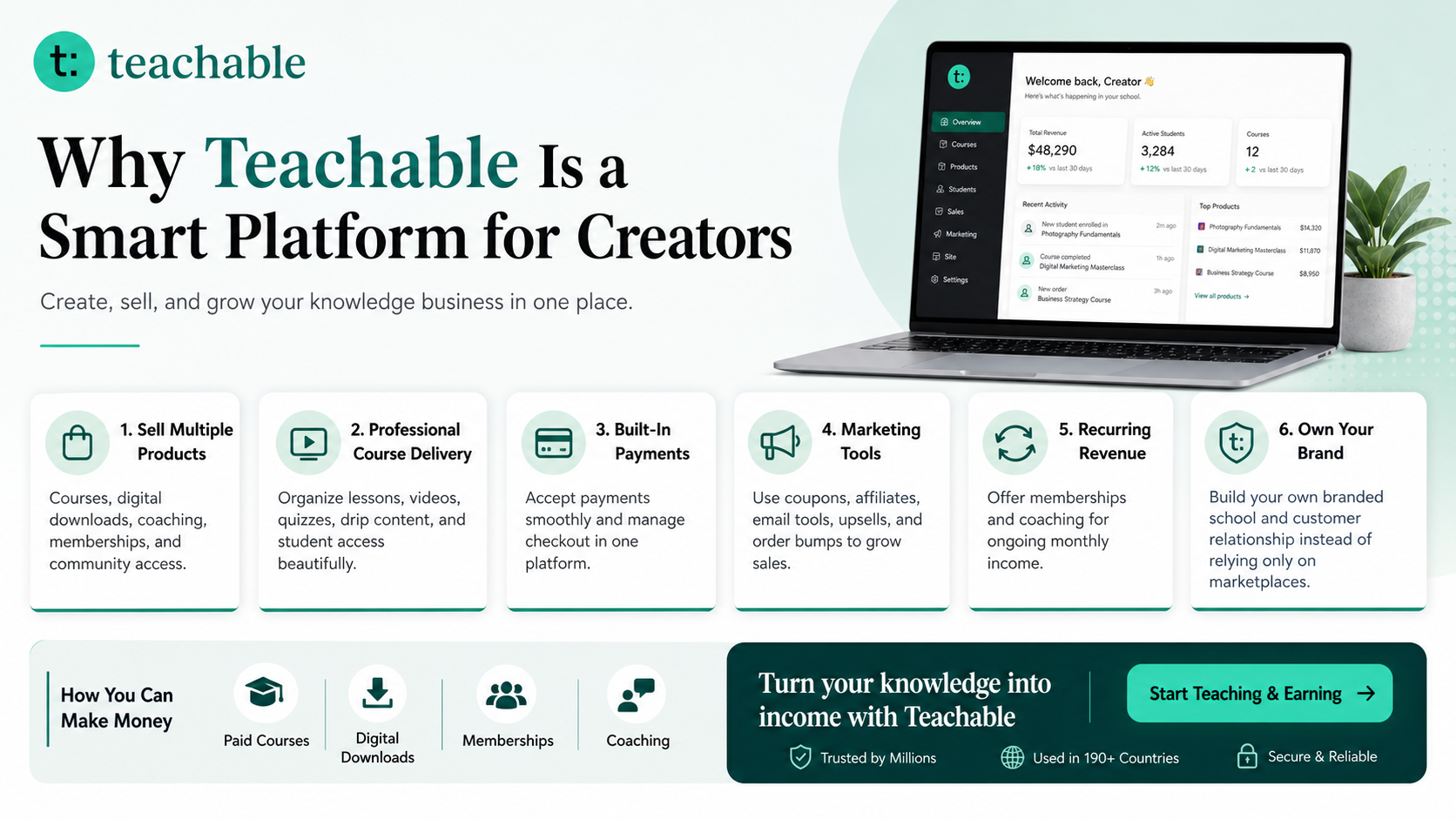
Teachable is an online platform that lets creators build, market, and sell courses, digital downloads, coaching, and memberships. It helps educators and entrepreneurs turn their knowledge into a branded digital business without needing complex coding.
Learn more: How to Make Money with Teachable: A Complete Creator’s Guide
Zee Sharp: Free Productivity Tools Hub
Zee Sharp is a growing suite of free online tools for productivity, development, and creativity. No sign-up. No watermarks. Just tools. Use it when you need quick utilities while building content, managing spreadsheets, preparing digital products, or organizing research.
9. Internal Links and Further Reading
More from Sensecentral
- How to Start ETF Investing With a Simple Rulebook
- How to Make Money with Teachable: A Complete Creator’s Guide
- How to Create an ETF Review Spreadsheet
- How to Compare ETF Returns With Mutual Fund Returns
- How to Know If an ETF Is Worth Holding Long Term
Useful External Links
- SEBI Investor Education: Understanding Exchange Traded Fund
- NSE India: About ETFs
- NSE India: Exchange Traded Funds market data
- AMFI: Categorization of Mutual Fund Schemes and ETFs
10. FAQs
Is how to know if an etf is too thematic important for every ETF investor?
Yes. Even if you invest small amounts, the habit of checking objective, cost, liquidity, tracking, and portfolio role protects you from emotional ETF buying.
Should beginners choose the ETF with the highest past return?
No. Past return is only one data point. Beginners should first check whether the ETF is understandable, diversified enough, liquid enough, and aligned with their goal.
How often should I review an ETF?
A basic quarterly scan and a deeper annual review is enough for many long-term investors. Review sooner if the ETF changes benchmark, cost, liquidity, or portfolio concentration significantly.
Can I hold more than one ETF?
Yes, but each ETF should have a clear role. Owning multiple ETFs that hold the same securities may create duplication rather than diversification.
What is the safest first step before buying?
Create a one-page note with the ETF objective, benchmark, cost, liquidity check, risk notes, and reason for buying. If the note is weak, wait.
Key Takeaways
- How to Know If an ETF Is Too Thematic works best when you use a written process instead of reacting to rankings or recent returns.
- The ETF’s benchmark or underlying exposure matters more than the ETF name.
- Expense ratio is important, but spread, liquidity, tracking difference, and portfolio fit also affect real results.
- Beginners should document every ETF decision and review it periodically.
- A simple ETF you can hold through volatility is often better than an exciting ETF you do not fully understand.
References
- SEBI Investor Education: Understanding Exchange Traded Fund
- NSE India: About ETFs
- NSE India: Exchange Traded Funds market data
- AMFI: Categorization of Mutual Fund Schemes and ETFs
- Investor.gov: Exchange-Traded Funds
- FINRA: Exchange-Traded Funds and Products
Reference links are included for investor education and further reading. Always verify the latest details from the ETF issuer, exchange, regulator, and official scheme documents before investing.