How to Promote Freebies by Email
How to Promote Freebies by Email is a strategic topic for creators who want more than random traffic. A good blog post can explain a product, answer buyer objections, create Pinterest content, support email marketing, and send warmer visitors to Etsy or a digital product landing page.
This guide is written for shop owners who want to turn subscribers into buyers of digital product emails without sending pushy promotions every week. It focuses on practical content planning, SEO structure, conversion placement, internal linking, and reader-friendly promotion. The aim is not to stuff a post with links, but to create a useful article that naturally earns clicks because it helps the reader make a better decision.
The goal is to move subscribers from first interest to trust, then from trust to a product click, without overwhelming them. When your blog content is clear, visual, and specific, it can work like a quiet salesperson: it teaches first, builds trust second, and promotes only when the reader understands why the product matters.
Key Takeaways
- Use the post to solve a real buyer problem before promoting digital product emails.
- Add a table of contents, examples, FAQs, internal links, and a clear CTA so readers know where to go next.
- Place affiliate/resource links where they genuinely support the tutorial, checklist, roundup, email strategy, or Pinterest workflow.
- Repurpose each post into Pinterest pins, email ideas, Etsy FAQ copy, and related blog links.
- Measure clicks, opt-ins, and product page visits so you know which topics are bringing qualified buyers.
Why This Matters for Digital Product Sellers
Digital products are easy to deliver, but they are not always easy for buyers to understand. A customer may wonder whether a printable is editable, whether a Canva template link will work, whether a digital planner is compatible with their app, whether a file is suitable for commercial use, or whether a bundle is worth the price. Blog content gives you room to answer those questions before the buyer reaches the checkout page.
For Etsy sellers, the blog can also support traffic diversity. Etsy search, Etsy ads, Pinterest, Google, email, and direct traffic all behave differently. When you publish helpful posts, you create assets that can rank, be pinned, be emailed, be linked from product descriptions, and be reused in customer support. The post becomes a hub instead of a one-time announcement.
The most effective posts are not generic. They connect one audience, one problem, one product type, and one next step. A post about “printables” is broad; a post about “how to use a weekly budget printable before payday” is easier to rank, easier to promote on Pinterest, and easier to connect to a product bundle.
Step-by-Step Strategy
1. Choose one promise per email
Do not make every email a sale announcement. Give one clear benefit: a tip, a setup shortcut, a seasonal idea, a before-and-after example, or a small win related to digital product emails.
For SenseCentral readers, the best approach is to combine practical instruction with a clear buyer pathway. Explain what the user should do, what mistake to avoid, and how a prepared digital product can save time. This keeps the article useful even for readers who are not ready to purchase on the first visit.
2. Segment by buyer interest
Tag readers by what they downloaded or clicked. Someone who joined for planner pages should not receive only wall art promotions. Simple segmentation makes promotions feel relevant.
For SenseCentral readers, the best approach is to combine practical instruction with a clear buyer pathway. Explain what the user should do, what mistake to avoid, and how a prepared digital product can save time. This keeps the article useful even for readers who are not ready to purchase on the first visit.
3. Use a soft-sell structure
Open with a helpful idea, explain why it matters, show one example, then mention the paid product as the faster or more complete solution. This works well for printable and template shops.
For SenseCentral readers, the best approach is to combine practical instruction with a clear buyer pathway. Explain what the user should do, what mistake to avoid, and how a prepared digital product can save time. This keeps the article useful even for readers who are not ready to purchase on the first visit.
4. Plan launch, evergreen, and seasonal emails
Use launch emails for new listings, evergreen emails for bestsellers, and seasonal emails for timely buying moments. A small shop can start with one helpful email per week.
For SenseCentral readers, the best approach is to combine practical instruction with a clear buyer pathway. Explain what the user should do, what mistake to avoid, and how a prepared digital product can save time. This keeps the article useful even for readers who are not ready to purchase on the first visit.
5. Measure clicks before sales
For digital products, the first signal is often link clicks, not immediate purchases. Track which subject lines, product angles, and freebie links drive the most qualified traffic.
For SenseCentral readers, the best approach is to combine practical instruction with a clear buyer pathway. Explain what the user should do, what mistake to avoid, and how a prepared digital product can save time. This keeps the article useful even for readers who are not ready to purchase on the first visit.
Planning Table for This Post Type
| Planning Area | What to Decide | How It Helps Sales |
|---|---|---|
| Search intent | What is the reader trying to solve before buying digital product emails? | Use the phrase in the title, intro, H2s, image alt text, and FAQ. |
| Reader problem | The customer wants confidence, compatibility, examples, or a faster result. | Open with the problem and show how the product removes friction. |
| Product fit | Show where your Etsy listing, bundle, freebie, or template helps. | Use screenshots, use cases, and a clear CTA instead of a hard sell. |
| Conversion trigger | Time saved, mistakes avoided, ready-made layout, commercial use, or beginner-friendly setup. | Repeat the strongest benefit near the product button. |
| Repurposing path | Turn the post into emails, Pinterest pins, checklist posts, and product FAQs. | Add internal links to related SenseCentral posts and Etsy product pages. |
Email Structure That Feels Helpful, Not Pushy
A strong digital product email usually follows a simple rhythm: one relatable problem, one useful tip, one example, one product bridge, and one clear link. The email should feel like a helpful recommendation from a creator who understands the reader’s situation. Avoid sending only discount codes, because subscribers quickly learn to ignore messages that do not teach or inspire.
For digital product emails, the product bridge can be a full bundle, a starter kit, an editable template, a printable pack, or a Teachable resource. Mention the product as a time-saving next step, not as the only way to succeed.
Recommended Tools and Affiliate Resources
Explore Our Powerful Digital Products Bundle
Browse these high-value bundles for website creators, developers, designers, startups, content creators, and digital product sellers. Use them for inspiration, product creation workflows, design assets, website resources, and digital shop planning.
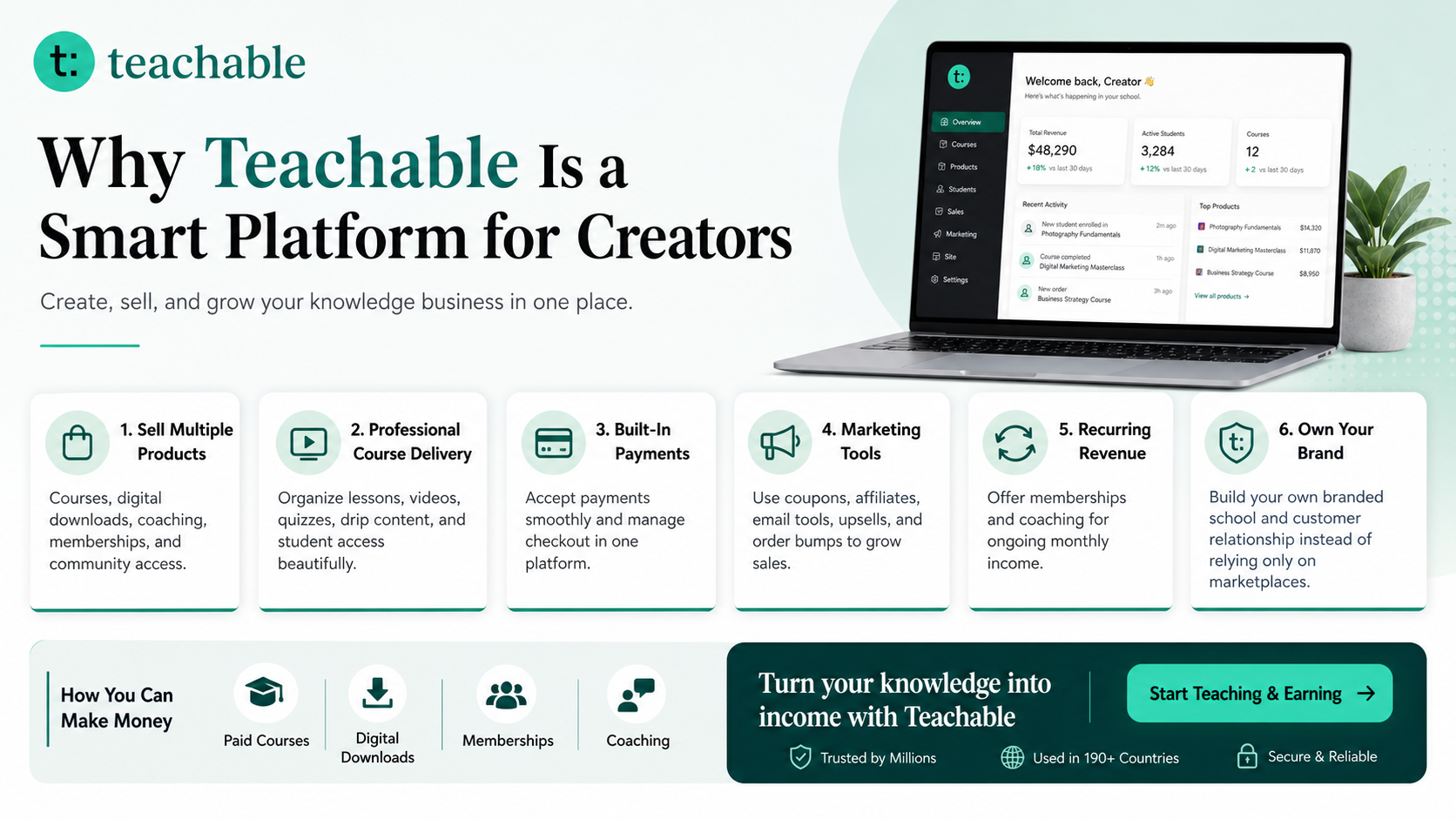
Try Teachable for Courses, Downloads, Coaching, and Memberships
Teachable is an online platform that lets creators build, market, and sell courses, digital downloads, coaching, and memberships. It helps educators and entrepreneurs turn their knowledge into a branded digital business without needing complex coding. If your digital product emails teach a repeatable skill, Teachable can help you package that knowledge beyond Etsy.
Learn more on SenseCentral: How to Make Money with Teachable: A Complete Creator’s Guide
Zee Sharp: Free Productivity Tools Hub
Zee Sharp is a growing suite of free online tools for productivity, development, and creativity. No sign-up. No watermarks. Just tools. Use it to speed up keyword cleanup, copy formatting, planning, product naming, and creator workflows.
Common Mistakes to Avoid
Writing only for search engines
SEO matters, but a post that reads like a keyword list will not build trust. Use natural language, examples, tables, and FAQs. The reader should feel that the post was written for their situation, not only for an algorithm.
Adding product links too early
If the reader does not yet understand the problem, a product link feels random. First explain the situation, then show the benefit, then link to the resource. This order is especially important for digital products because buyers often need to understand file formats, editing access, printing instructions, or app compatibility.
Ignoring internal links
Internal links help readers move through your site and help search engines understand topical relationships. Link from tutorials to product roundups, from idea posts to freebie posts, from Pinterest posts to blog strategy posts, and from email posts to lead magnet posts.
Forgetting the post after publishing
A blog post is not finished when it goes live. Add new examples, update product links, refresh screenshots, improve FAQs, and create new Pinterest pins. Small updates can improve usefulness and keep the article aligned with your current offers.
Quick Implementation Checklist
- Choose one long-tail keyword connected to how to promote freebies by email.
- Write a clear introduction that names the reader, the problem, and the outcome.
- Add screenshots, mockups, examples, or a short story that makes the digital product easy to understand.
- Include at least three internal links to related SenseCentral resources.
- Add one useful affiliate/resource block and disclose affiliate links clearly.
- Create three to five Pinterest pin ideas from the finished article.
- Add FAQs that answer objections about downloads, editing, printing, compatibility, value, or usage rights.
- Update the post every season or whenever your Etsy listings, bundles, or freebie offers change.
How to Make the Post More Stylish and Useful
Use a clean layout with short paragraphs, scannable headings, product screenshots, comparison tables, and callout boxes. A stylish post is not only about colors; it is about reducing cognitive load. Readers should instantly see what the post covers, what problem it solves, and what action they can take next.
For product-based posts, add a simple “best for” section. For tutorial posts, add numbered steps. For checklist posts, include a printable-style checklist. For gift guides, use categories by recipient or use case. For Pinterest posts, show pin title examples. For email posts, include subject line examples. These details make the content feel actionable instead of theoretical.
Finally, place your offers with context. The premium digital product bundle, Teachable resource, and Zee Sharp tools should appear as useful next steps. Readers who want assets can browse the bundle, creators who want to package knowledge can try Teachable, and makers who need quick tools can open Zee Sharp.
FAQs
Can a blog really help sell digital product emails?
Yes. A blog gives you space to answer search questions, show examples, compare options, and build trust before sending readers to Etsy or a product page. It is especially useful for digital products because buyers often need explanation before purchase.
How many product links should I add?
Use enough links to guide the reader, but do not make every paragraph a promotion. A good starting point is one contextual link near the top, one resource section in the middle, and one final CTA near the end.
Should I send readers to Etsy or my email list first?
Use both strategically. If the reader is ready to buy, send them to the product. If they need more education, offer a freebie or email opt-in so you can continue the relationship.
What makes this type of post convert better?
Specific examples, screenshots, comparison tables, beginner-friendly wording, clear benefits, FAQs, and honest expectations. The post should make the next step feel obvious and low-risk.
Can I reuse this post for Pinterest and email?
Yes. Pull the main steps, checklist items, table rows, and FAQs into separate Pinterest pins and email newsletter ideas. This saves time and keeps your messaging consistent.
Internal Links and Further Reading on SenseCentral
Continue building your digital product marketing system with these related SenseCentral resources:
References and Useful External Resources
Final Thoughts
How to Promote Freebies by Email works best when you treat the article as part of a full digital product funnel. Start with a searchable problem, teach the reader something useful, show examples, add a helpful table, answer objections, and guide the reader toward a relevant next step. This is how a blog becomes more than content; it becomes a long-term marketing asset for your Etsy shop, product bundles, freebies, email list, Pinterest traffic, and creator business.