Sensecentral Side Hustle Guide
How to Scale Without Working More Hours
A practical, beginner-friendly guide with systems, examples, tables, FAQs, tools, and useful resources.
A side hustle can feel exciting when the first payment arrives, but the real benefit comes from what you do after the money, time, or opportunity shows up. How to Scale Without Working More Hours is not only about earning extra cash; it is about creating a practical system that keeps your life stable while your income grows. Many beginners start with energy, accept every opportunity, spend quickly, and then wonder why the extra work does not improve their financial life. A better approach is to treat the side hustle like a small business from the beginning, even if the monthly income is small.
This guide from Sensecentral is written for freelancers, gig workers, creators, students, employees with evening side projects, and anyone trying to turn spare hours into useful income. You will learn how to think about scale without working more hours, what to track, what mistakes to avoid, and how to build repeatable habits without making the process complicated. The aim is simple: earn more clearly, spend more intentionally, and use your side hustle as a bridge toward better choices rather than another source of stress.
Disclosure: This article may include useful resource links and affiliate links. If you choose to use a partner link, Sensecentral may earn a commission at no extra cost to you. The content is educational and should not replace personalized legal, tax, or financial advice.
Table of Contents
Key Takeaways
- A side hustle becomes stronger when you create repeatable systems instead of relying on motivation.
- Templates, automation, batching, and simple review habits reduce wasted effort.
- Growth should improve profit and freedom, not only increase workload.
- Review whether to quit, continue, or double down using numbers and energy, not emotion alone.
Why Scale Without Working More Hours Matters
Most side hustles fail quietly. They do not always fail because the idea is bad. They often fail because the person running the side hustle never builds a simple operating system. Money mixes with personal spending, time gets stolen by urgent tasks, clients pay late, records disappear, and motivation drops when income is slow. By the time the side hustler realizes what happened, the work feels messy and unrewarding.
Scale Without Working More Hours matters because it gives your side hustle a clear job. The job may be to pay debt, create a safety buffer, buy better tools, test a business idea, build career skills, or create a second income stream. When the job is clear, decisions become easier. You know when to say yes, when to say no, when to raise prices, when to pause, and when to reinvest. You also avoid comparing your early progress with someone who has had years to build skills, systems, and an audience.
The best side-hustle system is not complicated. It should be easy enough to maintain after a long workday. A notebook, spreadsheet, free online tool, or simple template can be enough. The goal is not perfect accounting or perfect productivity. The goal is to build enough clarity that you can see where your income comes from, where your time goes, and what the next improvement should be.
Step-by-Step Plan to Handle Scale Without Working More Hours
1. Measure profit, demand, and energy
Growth decisions should not be based only on excitement. Look at profit, repeat demand, client quality, learning potential, and personal energy. A side hustle that earns well but damages your life may need better boundaries. A side hustle that earns slowly but builds valuable skills may deserve more time.
2. Productize what already works
If clients repeatedly ask for similar work, turn it into a package. Give it a name, a scope, a timeline, a price, and a clear result. Productized services are easier to explain and easier to sell than custom work every time. They also create a base for retainers, digital products, courses, or templates.
3. Move from random work to predictable income
One-time gigs are useful for starting, but predictable income creates stability. Look for repeat clients, monthly retainers, subscription content, maintenance packages, affiliate content, digital downloads, or course-based income. The goal is not passive income fantasy; the goal is income that becomes less chaotic over time.
4. Reduce work that does not require you
As the side hustle grows, some tasks can be templated, automated, delegated, or removed. Start with low-risk tasks such as formatting, research, file organization, basic design variations, editing checklists, or admin. Keep the high-value judgment and relationship work close until the process is proven.
5. Decide with a monthly review
Every month, ask whether to quit, continue, improve, or double down. If demand is growing, profit is clear, and the work fits your life, double down carefully. If the hustle has no demand, no skill growth, and high stress, quitting may be a smart business decision rather than failure.
A simple example: if you earn $500 this month, do not treat all $500 as spendable. First subtract direct expenses, reserve money for tax or future costs, then decide what goes to savings, debt, reinvestment, or personal rewards. This small order of operations turns extra income into controlled progress.
Practical Table for This Topic
| Income Model | Description | Growth Benefit |
|---|---|---|
| One-time work | Single project or gig. | Fast cash but unpredictable. |
| Repeatable package | Same deliverable sold repeatedly. | Easier to improve and price. |
| Retainer | Monthly ongoing support. | Creates stability. |
| Productized income | Templates, courses, downloads, or tools. | Scales beyond hourly work. |
Use Growth Stages Instead of Random Decisions
A long-term side hustle usually moves through stages. In the testing stage, your job is to learn what people will pay for. In the refining stage, your job is to improve the offer, price, and process. In the stability stage, your job is to create repeat buyers, retainers, or recurring systems. In the scaling stage, your job is to reduce dependence on your own hours. Knowing the stage prevents confusion. You do not need advanced automation when the offer is still unclear. You do not need a large team when the process is not repeatable.
Growth should make the side hustle healthier. If revenue increases but stress, refunds, late nights, and confusion increase faster, the business is not truly scaling. It is only becoming louder. Use monthly reviews to protect profit and personal life while you grow.
Define Your Next Level
Your next level may be your first $500 month, first retainer, first digital product, first assistant, first email list, first profitable ad campaign, or first month where the side hustle pays a major bill. Define the next level clearly, then build the smallest plan to reach it. Clear milestones reduce shiny object syndrome and keep your effort focused.
Useful Resources for Side Hustlers and Creators
Explore Our Powerful Digital Products: Browse these high-value bundles for website creators, developers, designers, startups, content creators, and digital product sellers. Use them to save time, launch faster, and create more professional side-hustle assets.
Explore Our Powerful Digital Products
Zee Sharp: A growing suite of free online tools for productivity, development, and creativity. No sign-up. No watermarks. Just tools.
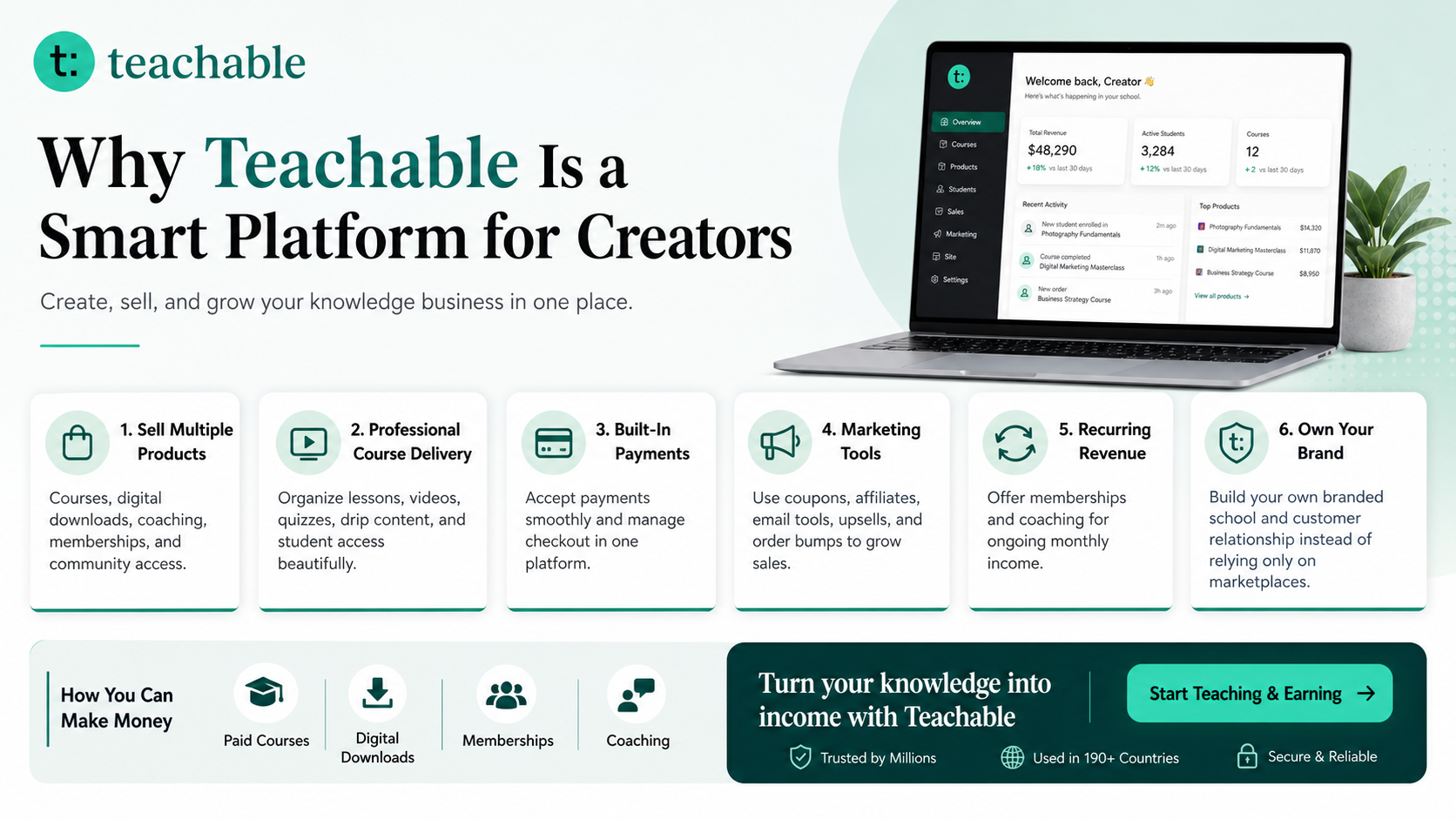
Build and Sell Knowledge Products With Teachable
Teachable is an online platform that lets creators build, market, and sell courses, digital downloads, coaching, and memberships. It helps educators and entrepreneurs turn their knowledge into a branded digital business without needing complex coding.
Learn more on Sensecentral: How to Make Money with Teachable: A Complete Creator’s Guide
Common Mistakes to Avoid
Mixing personal feelings with business decisions
It is normal to feel excited after a good month and discouraged after a slow month. But decisions should come from patterns, not one emotional week. Keep a small dashboard of income, expenses, hours, leads, clients, and energy. When emotions rise, return to the dashboard and make one practical adjustment.
Ignoring small leaks
Small leaks can include unused subscriptions, unclear project scope, unpaid invoices, platform fees, fuel costs, too many tools, or hours lost to switching between ideas. One leak may look harmless. Ten leaks can erase profit. Review leaks monthly and remove one at a time.
Copying someone else’s system blindly
A creator with a large audience, a freelancer with ten years of experience, and a student working weekends do not need the same system. Use other people’s advice as inspiration, but adapt it to your income level, time, family responsibilities, local rules, and risk comfort.
Forgetting the main reason you started
Some people start to pay debt, some to build savings, some to learn skills, and some to test a business. When the reason becomes unclear, every new opportunity looks tempting. Write your reason at the top of your tracker. It will protect you from chasing tasks that do not support your real goal.
FAQs
How often should I review scale without working more hours?
A monthly review is enough for most beginners. If money is tight, clients pay late, or your income changes weekly, add a quick 10-minute weekly check so problems do not build up.
Do I need paid software to manage a side hustle?
No. Many side hustlers can start with a spreadsheet, calendar, notes app, and simple folder system. Paid tools are useful only when they save more time or money than they cost.
When should I treat my side hustle like a business?
Treat it like a business as soon as money, clients, expenses, or taxes are involved. That does not mean making it complicated. It means keeping records, setting rules, and respecting your time.
What is the biggest beginner mistake?
The biggest mistake is confusing gross income with progress. Real progress comes from profit, savings, skill growth, repeatable systems, and better decisions over time.
Can a side hustle become full-time income?
Yes, but only if demand, profit, systems, and personal energy support the move. Before quitting a job, build an emergency fund, understand taxes, test repeatable income, and reduce dependence on one client or platform.
Further Reading on Sensecentral
- Best Gig Work Apps for Extra Income
- How to Use SEO for Creator Side Hustles
- Best Online Income Ideas for Complete Beginners
- How to Start Freelance Writing as a Beginner
- How to Start Affiliate Marketing With a Blog
External Useful Links
- IRS Gig Economy Tax Center
- U.S. Small Business Administration: Manage Your Finances
- Federal Trade Commission: How to Avoid Income Scams
- SBA Business Guide
References
- IRS Gig Economy Tax Center
- U.S. Small Business Administration: Manage Your Finances
- Federal Trade Commission: How to Avoid Income Scams
- SBA Business Guide
Final note: Keep your side hustle simple enough to maintain and serious enough to measure. The people who benefit most from extra income are not always the people who earn the most in one month. They are the people who turn small income into better habits, better tools, better offers, and better long-term decisions.