Sensecentral Side Hustle Guide
How to Sell Website Maintenance Services
A practical, beginner-friendly roadmap to package your skill, find clients, price your work, deliver confidently, and grow a profitable side income online.
Table of Contents
How to Sell Website Maintenance Services is a realistic side hustle path for beginners who want to earn online without waiting for a formal degree, perfect job title, or expensive agency setup. The real requirement is not a certificate. It is the ability to understand a client problem, create a useful result, explain your process clearly, and deliver files in a professional way.
This guide is written for people who want practical action: what to learn first, what to offer, how to build samples, how to price, how to talk to clients, and how to turn a small skill into repeat income. It is especially useful for Sensecentral readers who compare tools, digital products, platforms, and service ideas before deciding where to spend time and money.
Website work is valuable because every business needs a trustworthy online presence. Many local businesses already have old websites, incomplete pages, slow pages, missing contact forms, or no clear call-to-action. A beginner can start with small fixes, portfolio sites, blog setup, landing pages, and maintenance before moving into larger builds.
Why Website Maintenance Services Can Become a Profitable Side Hustle
The strongest side hustles solve a problem that people already know they have. Website Maintenance Services fits that rule because the buyer can connect your work to a visible business need: looking professional, getting more enquiries, saving time, improving trust, launching faster, or creating content consistently. When your service is tied to one of those outcomes, it becomes easier to sell than a generic “I can design” or “I can build websites” offer.
Your first goal is not to become the most advanced expert in the market. Your first goal is to become useful to a specific group of buyers. For this topic, good early buyers include businesses with existing WordPress, Shopify, Webflow or static sites. They usually need practical help, clear communication, quick turnaround, and files they can actually use after delivery.
A beginner can compete by being specific. Instead of saying “I do everything,” say “I help local service businesses create clean flyers and social posts,” or “I build simple booking websites for appointment-based businesses.” Specific offers feel safer to clients because they can imagine the final result.
Skills and Tools You Need
You do not need to learn every tool before starting. Learn the small set of skills required to deliver a clean first version. For website maintenance services, focus on problem understanding, layout, visual hierarchy, mobile-friendly output, file organization, and client communication. These skills matter more than chasing every new app or trend.
Core skills to practice first
- Brief reading: Understand the client’s goal, audience, offer, deadline, and required file sizes.
- Layout clarity: Make the important message visible before adding decoration.
- Brand consistency: Use the client’s colors, fonts, logo, tone, and existing assets where possible.
- Revision handling: Ask specific questions and limit revision rounds in the package.
- Export discipline: Deliver the correct formats, names, dimensions, and editable files when promised.
Useful tools for this path include WordPress updates, uptime monitors, backup tools, security checks and task trackers. Start with one main creation tool, one place to store files, one simple proposal or invoice template, and one portfolio page. A clean system beats a complicated stack.
Step-by-Step Launch Plan
Step 1: Choose one narrow offer
Pick a service that is easy to explain in one sentence. For example: “I create editable Instagram post templates for local boutiques” is stronger than “I do graphic design.” A narrow offer makes your portfolio clearer, your pricing easier, and your outreach more convincing.
Step 2: Create three sample projects
Before you have clients, create realistic samples for imaginary businesses. Make one conservative sample, one colorful sample, and one premium sample. Show your range while staying relevant to one audience. Each sample should include a short note about the goal, the design choices, and the result a client could use.
Step 3: Build a simple service page
Your service page does not need to be fancy. It should include the problem you solve, who you help, what is included, sample images, pricing or starting price, turnaround time, FAQs, and a contact form. If you do not have a website yet, use a portfolio platform, a Notion page, a Google Drive PDF, or a simple WordPress page.
Step 4: Offer a clear first-client deal
Do not work for free forever. A smart beginner offer could be a limited “portfolio-building package” with a discounted price, fixed scope, and permission to show the result in your portfolio. This gives the client value while helping you build proof.
Step 5: Document your process
Keep a checklist for every project: brief, research, first draft, client feedback, revision, final export, file delivery, testimonial request, and follow-up. When you document your process, you reduce stress and look more professional.
How to Build a Portfolio Without Clients
A portfolio without client work can still be strong if it looks realistic. The mistake beginners make is creating random pretty designs with no business context. Instead, make samples that show you understand real buyer needs.
Sample portfolio ideas
- Create a full mini-project for a fictional local business, including the brief and final files.
- Redesign a common weak design, but avoid using another business’s logo without permission.
- Build a before-and-after case study explaining what you improved and why.
- Create a niche bundle, such as templates for tutors, cafes, coaches, bloggers, or digital sellers.
- Turn your own side hustle brand into a case study with a logo, landing page, graphics, or tool.
For website maintenance services, your samples can include updates, backups, monitoring, small fixes, content changes and monthly reports. Present them as case studies, not just images. Add a short paragraph explaining the goal, constraints, and how the design or solution helps the client.
Pricing and Package Ideas for Website Maintenance Services
Pricing should be simple enough for clients to understand and structured enough to protect your time. Avoid selling unlimited revisions or vague “full service” work at a beginner price. Package the offer around outcomes, file types, revision limits, and delivery timelines.
| Package | What to Include | Beginner Price Range |
|---|---|---|
| Starter | One-page website or small fix package with mobile check | $150–$500 |
| Growth | 3–5 page website, forms, basic SEO setup and launch support | $600–$1,500 |
| Premium | Full site, copy support, speed review, analytics, training and 30-day support | $1,500–$5,000+ |
Note: These ranges are starting points, not fixed rules. Your final price should depend on country, niche, deadline, complexity, licensing, client value, and your experience.
How to Find Clients for Website Maintenance Services
Client acquisition becomes easier when you stop asking strangers to “hire me” and start showing them a specific improvement. Look for businesses that already need your service: outdated social posts, weak thumbnails, slow websites, missing booking pages, inconsistent branding, poor product images, or no clear call-to-action.
Where to look for first clients
- Local businesses: Search Google Maps, Instagram, Facebook pages, and local directories.
- Creator communities: Look for YouTubers, course creators, bloggers, coaches, and newsletter writers.
- Freelance platforms: Start with small fixed-scope projects where your samples match the request.
- LinkedIn and X: Share useful before-and-after breakdowns and short design or website tips.
- Existing network: Ask friends, relatives, colleagues, and local shop owners who might need a simple upgrade.
A good outreach message should be short, respectful, and specific. Mention one problem, one possible improvement, and one clear next step. Do not send long generic messages to hundreds of people. Ten thoughtful messages often perform better than one hundred copy-paste pitches.
Simple outreach script
Hi, I noticed your business is active online, but your current visuals/website could be made clearer for new customers. I create website maintenance services for businesses with existing WordPress and can prepare a simple improvement sample. Would you like me to send a quick idea?
Client Workflow and Delivery Checklist
A professional workflow protects both you and the client. It also helps you charge more over time because clients feel that you are organized. Use this checklist for every project:
- Discovery: Ask about the goal, audience, examples they like, deadline, content, and must-have details.
- Scope confirmation: Confirm deliverables, revisions, price, payment schedule, and usage rights.
- Asset collection: Gather logos, brand colors, text, images, links, product details, and login access only when necessary.
- Draft creation: Send the first version with a short explanation, not just a file attachment.
- Feedback round: Ask the client to combine feedback into one message or document.
- Final delivery: Provide final files, editable source files if included, export formats, and usage instructions.
- Follow-up: Ask for a testimonial, referral, or monthly support opportunity.
File organization matters. Name files clearly, keep a backup, and deliver them in a shared folder. Clients remember smooth delivery even more than small visual details.
Common Mistakes Beginners Should Avoid
New freelancers often fail not because they lack talent, but because their offer is unclear. Avoid these mistakes:
- Offering too many services at once: Start with one offer, one audience, and one simple package.
- Copying templates without customization: Templates are useful, but the final work must fit the client’s brand and goal.
- Skipping the brief: Without a brief, you will guess and revise endlessly.
- Giving unlimited revisions: Unlimited revisions make small projects stressful and unprofitable.
- Not asking for testimonials: Social proof helps the next client trust you faster.
- Underpricing forever: Introductory pricing is fine, but raise prices after proof, speed, and quality improve.
Quality Checklist Before You Deliver
| Check | Why It Matters |
|---|---|
| Mobile view checked | Many clients and customers will see the work first on a phone. |
| Spelling and numbers checked | Small errors reduce trust and can cost the client enquiries. |
| Brand colors and logo used correctly | Consistency makes the client look more professional. |
| Files exported in promised formats | Correct files reduce back-and-forth after delivery. |
| Instructions included | Clients feel confident using the final work. |
How to Scale This Side Hustle
After you complete a few projects, look for patterns. Which questions do clients ask repeatedly? Which files do you create again and again? Which part of delivery takes the most time? Those patterns show what to turn into templates, checklists, digital products, or retainers.
Good scaling options for website maintenance services include speed optimization, SEO checkup, blog upload package and redesign audit. You can also package your knowledge into a course, sell downloadable templates, create a paid resource library, or publish tutorial content that brings inbound leads.
The best long-term model combines services and products. Services give you cash flow and client insight. Products give you leverage because the same template, guide, or course can be sold many times. This is why learning platforms and digital product stores can fit naturally with a freelance side hustle.
Useful Resources for Creators and Side Hustlers
Explore Our Powerful Digital Products — browse high-value bundles for website creators, developers, designers, startups, content creators, and digital product sellers.
Explore Digital Product Bundles
Zee Sharp is a growing suite of free online tools for productivity, development, and creativity. No sign-up. No watermarks. Just tools.
Turn Your Skill Into a Digital Product With Teachable
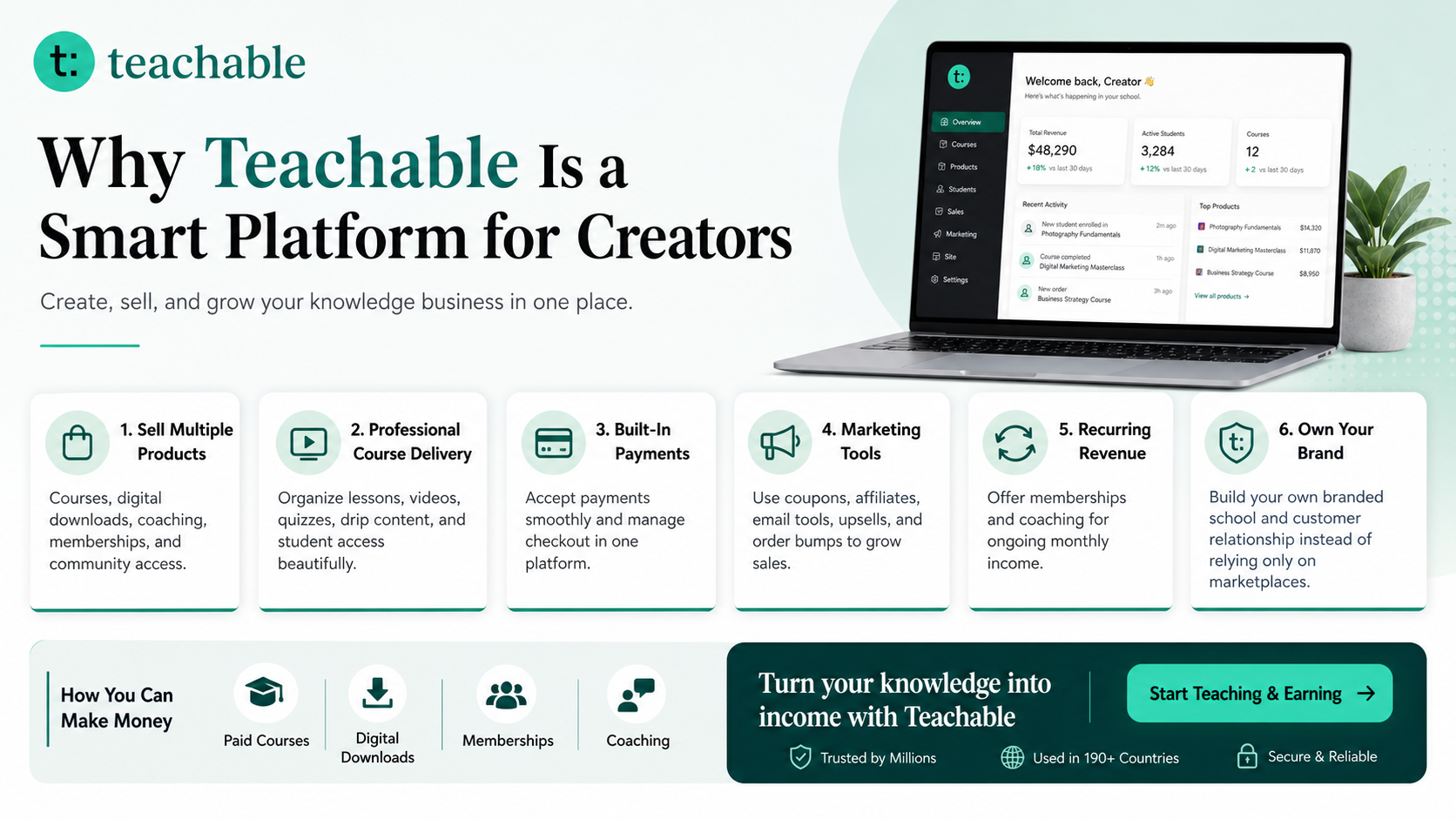
Once you learn a profitable skill, you can package your process as a mini-course, digital download, coaching offer, or membership. Teachable is an online platform that lets creators build, market, and sell courses, digital downloads, coaching, and memberships. It helps educators and entrepreneurs turn their knowledge into a branded digital business without needing complex coding.
How to Make Money with Teachable: A Complete Creator’s Guide
Watch: How to Create a Course With Teachable
Further Reading on Sensecentral
- How to Offer Speed Optimization Services
- How to Start Basic SEO Services for Small Businesses
- How to Make Money With Webflow Skills
- How to Build Simple Business Tools for Clients
- How to Make Money with Teachable: A Complete Creator’s Guide
FAQs
Do I need a degree to start?
No. A degree can help in some career paths, but freelance clients usually care more about samples, communication, reliability, and whether your work solves their problem.
How long does it take to get the first client?
It depends on your offer, samples, outreach quality, and niche. A focused beginner can often create samples in one week and start outreach immediately. The first client may come from your network, social media, a local business, or a small freelance platform project.
Should I show prices publicly?
For beginners, showing starting prices or package ranges can reduce confusion. You can still create custom quotes for complex work. Clear pricing also helps you avoid clients who expect unlimited work for a very low budget.
Can I use templates?
Yes, templates can speed up work, but you must customize them properly, respect licenses, and avoid selling something that looks generic. Add strategy, brand fit, and clean delivery to make the work valuable.
How do I move from one-time projects to monthly income?
Offer maintenance, monthly design packs, content updates, reporting, new templates, website care, or support retainers. Recurring income grows when clients see that your work saves time every month.
Key Takeaways
- Start with one narrow offer instead of trying to sell every creative or technical service.
- Create realistic portfolio samples even before you have paying clients.
- Use packages, revision limits, and clear deliverables to protect your time.
- Find clients by showing specific improvements, not by sending generic “hire me” messages.
- Scale by turning repeated work into templates, retainers, digital products, courses, or support plans.