How to Start Small Without Staying Small
Disclosure: This post may contain affiliate links and partner recommendations. Sensecentral may earn a commission if you buy through certain links, but the practical steps below are written to help you make a smarter decision.
Starting a side hustle sounds exciting until the choices become too many. You may see people talking about freelancing, digital products, consulting, YouTube, newsletters, printables, online courses, templates, virtual assistant work, and dozens of quick income ideas. The problem is not a lack of opportunity. The real problem is choosing a simple starting point, reducing mental noise, and building a repeatable path that you can follow even when life is busy.
This guide is written for beginners who want a realistic, calm, and low-pressure way to move from interest to action. Instead of chasing every trend, you will learn how to turn the idea behind How to Start Small Without Staying Small into a practical plan. The focus is not on becoming perfect before you begin. The focus is on creating a small offer, testing it with real people, improving based on feedback, and building confidence one useful task at a time.
A good side hustle does not need to start with a logo, paid ads, complicated software, or a large audience. It can begin with one clear service, one sample, one small promise, and one group of people who already need help. If you can deliver something useful and communicate clearly, you can start much earlier than you think.
Key Takeaways
- Pick one simple offer before you try to build a complete business.
- Your first goal is proof, not perfection. Create a sample and test demand.
- Begin with services because services teach you what buyers actually want.
- Use your existing routine, energy level, and skills instead of copying someone else.
- Track outreach, replies, objections, and small wins so momentum becomes visible.
- Turn repeated questions, templates, and checklists into future digital products.
Why This Side Hustle Approach Matters
The safest beginner approach is to start small enough that you can continue even on imperfect days. Many people fail not because their idea is bad, but because they choose a model that requires too much confidence, time, money, or technical skill at the beginning. When your side hustle fits your current life, it is easier to stay consistent long enough to learn what works.
For this topic, your best starting point is to identify one problem you can solve using basic ability. That might mean simple services based on your daily strengths. You do not need to call yourself an expert on day one. You need to be clear about what you can do, who you can help, what the result will look like, and how quickly you can deliver it.
Think of your first month as a learning sprint. You are not trying to build a large company immediately. You are testing whether people understand the offer, whether the problem matters, whether they are willing to pay, and whether you enjoy the work enough to repeat it. This mindset removes pressure and gives you useful data.
The Simple Rule: One Buyer, One Problem, One Result
Begin by writing this sentence: “I help [type of person] with [specific problem] so they can get [clear result].” For example, you might help neighbors, creators, small businesses, students by offering starter everyday service offer. A narrow sentence may feel small, but it makes marketing easier because the buyer can immediately understand the value.
Quick Comparison Table
Use this table to avoid overthinking and choose the simplest path forward.
| Decision Area | Best Beginner Choice | Example for This Topic |
|---|---|---|
| Fastest way to start | Offer one small service before building a big brand | Starter everyday service offer |
| Proof to create | Make a simple sample that shows the before and after | a one-page menu of what you can already do |
| Best first clients | Start with people who already understand the problem | neighbors, creators, small businesses, students |
| Simple deliverables | Keep the package narrow so you can finish quickly | simple services based on your daily strengths |
Step-by-Step Beginner Plan
Step 1: Choose a Small Problem You Can Solve This Week
Do not start by asking, “What is the most profitable side hustle?” A better question is, “What useful problem can I solve this week with the time and skills I already have?” Profit comes after clarity, proof, and repeatability. If the problem is too broad, shrink it. Instead of offering full business support, offer one checklist. Instead of becoming a complete designer, offer one type of Canva graphic. Instead of building a huge spreadsheet system, build one clean tracker.
Your beginner offer should be easy to explain in one message. A confused buyer rarely becomes a paying buyer. Keep the promise small, specific, and measurable. A good offer might say: “I will clean up your messy spreadsheet and return a simple tracker within 48 hours.” That is easier to buy than “I do Excel work.”
Step 2: Create Proof Before You Ask for Money
Proof does not have to be a paid client result. It can be a sample, mock project, before-and-after example, short case study, checklist, or template. For this topic, start with a one-page menu of what you can already do. Put it in a Google Doc, Canva file, PDF, spreadsheet, or simple portfolio page. The goal is to show what the buyer will receive and reduce their fear of hiring a beginner.
Proof also helps you build confidence. When you can point to something visible, outreach feels less awkward. Instead of saying, “Please trust me,” you can say, “Here is a quick sample of the kind of result I create.” That shift makes your message feel useful, not desperate.
Step 3: Offer a Tiny Paid Package
A tiny package is easier to sell than a vague service. Your first package can be simple: Starter everyday service offer. Put a clear scope, timeline, and price on it. Avoid unlimited revisions or unclear promises. Beginners often undercharge and overdeliver because they are afraid to lose the client. A better approach is to keep the scope small, deliver carefully, and improve the package after each project.
Start with one or two price points. For example, create a basic version for a quick result and a premium version with extra support. This teaches you what people value without forcing you to build a complicated pricing page.
Step 4: Talk to Real People Before Building Too Much
Many beginners build websites, logos, dashboards, social media pages, and product collections before speaking to a single potential buyer. That feels productive, but it can become a delay tactic. Real progress happens when you talk to people who might have the problem. Send polite, helpful messages. Ask what they struggle with. Offer your sample. Invite one small paid test.
Keep your first outreach simple: “I noticed many [buyer type] struggle with [problem]. I made a small sample that solves it. Would you like me to send it?” This opens a conversation without pressure.
Build a Simple Daily System
A side hustle grows through repeatable actions, not random bursts of motivation. Choose a daily task that takes 20 to 45 minutes. It could be improving your sample, sending two outreach messages, publishing one helpful tip, organizing your portfolio, or learning one micro-skill. The task should be small enough that you can do it after work, before breakfast, during a lunch break, or on a quiet evening.
| Day | Simple Task | Why It Matters |
|---|---|---|
| Day 1 | Write one sentence describing the problem you solve. | Clear positioning removes confusion and makes outreach easier. |
| Day 2 | Create a small sample: a one-page menu of what you can already do. | A sample creates trust before you have testimonials. |
| Day 3 | List 20 possible buyers: neighbors, creators, small businesses, students. | A small buyer list is better than vague hope. |
| Day 4 | Package your service as: Starter everyday service offer. | Packages reduce negotiation and help clients understand value. |
| Day 5 | Send five polite messages with your sample link. | Action beats endless planning. |
| Day 6 | Improve your offer using any replies or objections. | Feedback tells you what the market actually wants. |
| Day 7 | Repeat outreach or publish one helpful post about the problem. | Visibility compounds when you keep showing up. |
After the first week, review what happened. Did people understand the offer? Did they ask about price? Did they ignore the message? Did they request something slightly different? These clues are not failures. They are market feedback. Adjust your offer and repeat the process.
Common Mistakes to Avoid
Mistake 1: Trying to Look Bigger Than You Are
You do not need to pretend to be an agency when you are starting alone. Honest positioning can be powerful. Say that you offer a focused, beginner-friendly, affordable service with personal attention. Many clients prefer simple help from a real person instead of a complicated agency process.
Mistake 2: Learning Forever Without Selling Anything
Learning is useful, but learning without testing can become avoidance. Set a rule: after every short learning session, create one asset or take one market action. Watch one tutorial, then make one sample. Read one article, then improve your offer. Learn one tool, then apply it to a real deliverable.
Mistake 3: Copying Someone Else’s Energy Level
Some people can post every day, take calls, edit videos, and manage multiple clients. Others need a quieter model. Choose a side hustle that matches your energy. If you dislike calls, offer async deliverables. If you enjoy teaching, try tutoring or micro-courses. If you like structure, offer templates, spreadsheets, or organization systems.
Mistake 4: Underestimating Boring Skills
Boring skills are often paid skills. Many businesses need clean files, clear writing, organized data, simple designs, formatted documents, research summaries, customer replies, and better processes. If you can make someone’s work easier, faster, cleaner, or less stressful, you have the beginning of a sellable service.
From Service to Digital Product
Services are a strong starting point because they help you understand real customer problems. After you complete several projects, look for patterns. Are clients asking the same questions? Are you creating the same checklist again and again? Are you using the same spreadsheet, script, template, or workflow? That repeated asset can become a digital product.
For example, a writing service can become an email template pack. A spreadsheet service can become a budget tracker. A design service can become a Canva template bundle. A teaching service can become a mini-course. This is how you move from trading only time for money to building assets that can sell repeatedly.
Useful Resources for Building Faster
Affiliate disclosure: This article may include affiliate or partner links. If you buy through some links, Sensecentral may earn a commission at no extra cost to you. We only recommend resources that can be useful for creators, freelancers, and online business builders.
Explore Our Powerful Digital Products
Browse high-value bundles for website creators, developers, designers, startups, content creators, and digital product sellers. These resources can help you design faster, launch products quicker, and avoid starting every project from a blank page.
Explore Digital Product Bundles
Zee Sharp: Free Productivity Tools Hub
Zee Sharp is a growing suite of free online tools for productivity, development, and creativity. No sign-up. No watermarks. Just tools. Use it when you need quick utilities while planning, writing, organizing, calculating, or building your side hustle systems.
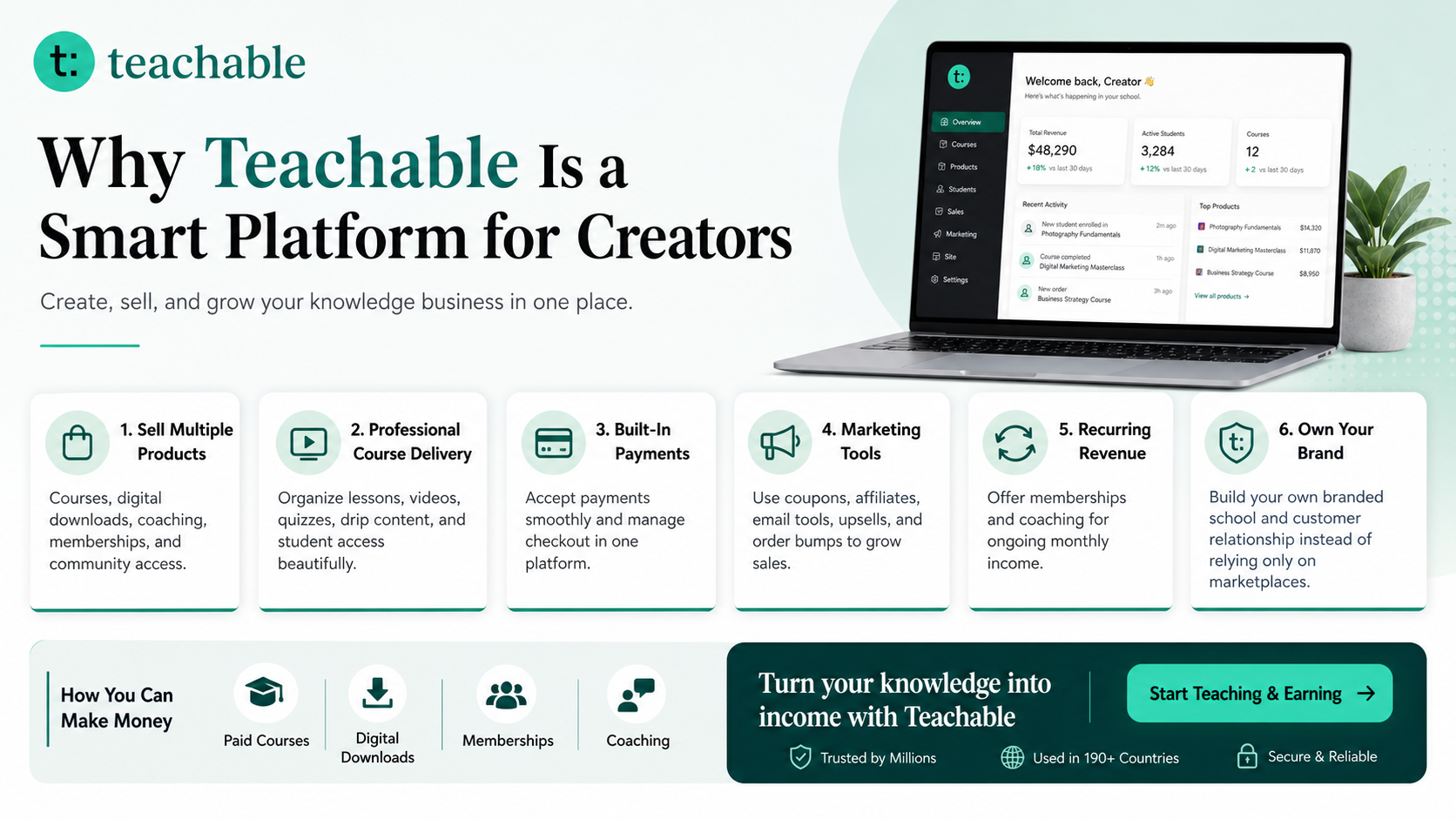
Turn Your Knowledge Into a Sellable Product with Teachable
Teachable is an online platform that lets creators build, market, and sell courses, digital downloads, coaching, and memberships. It helps educators and entrepreneurs turn their knowledge into a branded digital business without needing complex coding.
Learn more: How to Make Money with Teachable: A Complete Creator’s Guide
Further Reading on Sensecentral
FAQs
Can I start this side hustle with no experience?
Yes, but you should begin with a small, honest offer. Do not promise advanced results if you are still learning. Create a sample, define a simple scope, and sell a beginner-friendly package that you can deliver confidently.
How much time do I need each day?
You can start with 20 to 45 minutes a day. The key is consistency. A short daily routine is better than one intense weekend followed by two weeks of silence.
Should I build a website before finding clients?
A website helps later, but it is not required on day one. A simple portfolio page, Google Doc, Canva PDF, or sample link is enough to start conversations. Build a larger website after you have a clearer offer.
What should I charge for my first project?
Start with a price that feels fair for a small scope and quick timeline. Avoid unlimited work. As your samples, testimonials, and confidence grow, raise your price and improve the package.
What if nobody replies?
No replies usually mean the message, audience, or offer needs adjustment. Try a clearer buyer, a more specific problem, or a stronger sample. Track responses instead of taking silence personally.
How do I know when to turn the service into a product?
When you solve the same problem repeatedly and use similar documents, templates, checklists, or explanations, you may be ready to package that asset into a digital product.
Final Thoughts
The best way to approach How to Start Small Without Staying Small is to lower the pressure and raise the consistency. You do not need a perfect brand, a huge audience, or advanced talent to begin. You need one practical problem, one small offer, one sample, and a weekly routine that helps you learn from the market.
Start small, but do not stay invisible. Build proof, speak to real people, deliver carefully, and improve after each attempt. Over time, your service can become a stronger offer, your offer can become a system, and your system can become a digital product, course, template, or repeatable income stream.