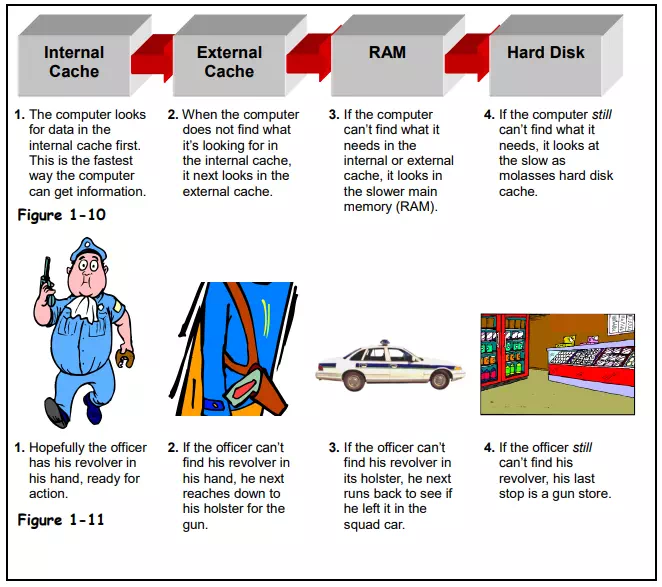
A memory cache increases a computer’s performance by storing the most recently used data. There are two types of cache:
· Internal Cache (also called primary or L1 cache)
When the computer needs data it first looks in the internal cache. The internal cache is inside the CPU and is the fastest possible way for the computer to get information. The internal cache can normally only contain a very small amount of information.
· External Cache (also called secondary or L2 cache)
If the computer doesn’t find the data in the internal cache, it then looks in the external cache. The external cache is slower than the internal cache, but much faster than the normal RAM memory. The external cache normally holds much more information than the internal cache, but still not as much as the main memory (RAM).