
- Table of Contents
- Why this is trending right now
- What is a “shadow fleet” (and why it grew so fast)
- Why drones change the rules for shipping
- What recent tanker attacks reveal about the new risk
- Pattern A: Chokepoints magnify everything
- Pattern B: The Black Sea is no longer “bounded risk”
- Pattern C: Shadow fleet characteristics can increase vulnerability
- The ripple effects: costs, routes, and supply chains
- 1) Route shifts: “Suez vs Cape” becomes a strategic choice
- 2) Higher freight rates (even for cargo that never goes near the conflict)
- 3) War-risk insurance premiums reprice fast
- 4) Supply chain reliability becomes the hidden cost
- Insurance and compliance: where risk meets regulation
- What regulators are tightening
- What that means for operators and charterers
- Risk areas and advisories matter more than ever
- Who is most exposed: owners, charterers, cargo, ports
- What shipping companies can do (practical, legal risk steps)
- 1) Treat routing as a risk portfolio
- 2) Strengthen compliance and documentation
- 3) Review insurance details—not just price
- 4) Crew readiness and welfare
- 5) Contract clauses that match the new reality
- What governments and regulators are likely to do next
- 1) More vessel listings and targeted sanctions
- 2) Stronger enforcement cooperation
- 3) Port-state controls and inspections
- 4) Environmental preparedness
- Outlook: the next 12–24 months for global shipping
- Key Takeaways
- FAQs
- 1) What exactly is a “shadow fleet”?
- 2) Are drone attacks on tankers new?
- 3) Why do chokepoints matter so much?
- 4) Does rerouting around Africa always make sense?
- 5) How do war-risk premiums work?
- 6) Are shadow fleet tankers more dangerous?
- 7) What should cargo owners do right now?
- 8) Can sanctions enforcement reduce attacks?
- 9) What’s the single biggest change shipping leaders should make?
- 10) Will the industry return fully to the Red Sea/Suez routes?
- References & further reading
From the Red Sea to the Black Sea, unmanned weapons are turning oil tankers into high-impact targets—and “shadow fleets” into floating flashpoints.
Table of Contents
- Why this is trending right now
- What is a “shadow fleet” (and why it grew so fast)
- Why drones change the rules for shipping
- What recent tanker attacks reveal about the new risk
- The ripple effects: costs, routes, and supply chains
- Insurance and compliance: where risk meets regulation
- Who is most exposed: owners, charterers, cargo, ports
- What shipping companies can do (practical, legal risk steps)
- What governments and regulators are likely to do next
- Outlook: the next 12–24 months for global shipping
- Key Takeaways
- FAQs
- References & further reading
Why this is trending right now
Two forces are converging in a way the maritime world can’t ignore:
- Unmanned attacks are escalating: Drones and unmanned surface vehicles can strike tankers far from shore, with low cost and high psychological impact.
- Sanctions have reshaped oil shipping: “Shadow fleets” (also called dark fleets) move sanctioned or high-risk oil by obscuring ownership, origin, and routing—often with older ships and weaker safety oversight.
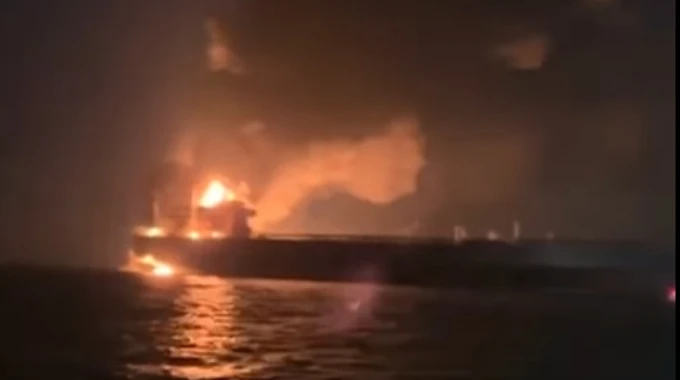
The trend spiked again after reports that a Russia-bound tanker in the Black Sea was hit in an unmanned-vehicle/drone attack and diverted for assistance—another reminder that risk is no longer theoretical, and that even routine voyages can turn into headline events.
Note: This story is evolving. Always check official security advisories and your insurer’s latest guidance before routing cargo.
What is a “shadow fleet” (and why it grew so fast)
A shadow fleet is not one company or one country’s navy. It’s a loose ecosystem of vessels—often older tankers—used to transport oil (and sometimes other commodities) in ways that make the cargo’s origin, ownership, or destination harder to verify.
How shadow fleets work (typical tactics)
- AIS gaps or manipulation: Ships may switch off the Automatic Identification System (AIS) or transmit confusing data, making tracking harder.
- Ship-to-ship (STS) transfers: Oil is moved between vessels at sea, complicating provenance and paperwork.
- Rapid re-flagging and shell ownership: Ownership structures can be layered across jurisdictions; flags may change frequently.
- Opaque insurance and classification: Some vessels operate with limited or unclear coverage—raising safety and environmental concerns.
Why shadow fleets expanded after 2022
Sanctions and price-cap regimes changed the economics of shipping. When major buyers, insurers, and service providers tightened compliance, an alternative market formed: vessels willing to carry sanctioned or high-risk cargo at higher margins—often by cutting transparency. Governments have responded with expanding vessel listings, port access restrictions, and service bans aimed at making shadow fleet operations more costly and less viable.
Why drones change the rules for shipping
For decades, the biggest threats to commercial shipping were relatively predictable: storms, mechanical failures, piracy hotspots, and occasional state conflicts. Drones changed that in three ways:
1) Lower barrier, wider reach
Drones are cheaper than missiles, easier to deploy, and can be used by state forces or non-state actors. That widens the set of parties capable of threatening shipping lanes.
2) Ambiguity becomes a feature
With unmanned systems, attribution can be slow, contested, or politically sensitive. Even when suspicion is strong, uncertainty can linger—yet insurers and operators still have to price the risk immediately.
3) Asymmetric impact
A single successful strike doesn’t just damage a vessel. It can:
- trigger rerouting by dozens of carriers,
- raise war-risk premiums overnight,
- delay cargo and disrupt refinery schedules,
- raise freight rates globally,
- create environmental hazards if fuel or crude spills.
What recent tanker attacks reveal about the new risk
Three patterns show up repeatedly in modern maritime attacks:
Pattern A: Chokepoints magnify everything
When threat levels rise in choke corridors—like the Bab el-Mandeb/Red Sea route to the Suez Canal—shipping doesn’t just “get riskier.” It becomes economically distorted. Carriers may reroute around the Cape of Good Hope, adding time and fuel burn.
Pattern B: The Black Sea is no longer “bounded risk”
Black Sea shipping is crucial for grain and oil product flows. Recent incidents and reported drone strikes highlight that risks can surge quickly, affecting not only Russia- or Ukraine-linked cargo but also neutral flags transiting nearby.
Pattern C: Shadow fleet characteristics can increase vulnerability
Shadow fleet operations—by design—reduce transparency. That may help evade sanctions, but it can also:
- complicate emergency response coordination,
- reduce access to premium insurance markets,
- increase scrutiny at ports,
- raise the cost of chartering and financing.
The ripple effects: costs, routes, and supply chains
When a tanker is attacked, the consequences don’t stay at sea. They move through four channels: routes, rates, risk premiums, and reliability.
1) Route shifts: “Suez vs Cape” becomes a strategic choice
Red Sea insecurity pushed many carriers to take longer routes around Africa. That adds sailing days, increases fuel consumption, and knocks schedules out of sync. Even when the security picture improves, shipping’s return to Suez can be cautious and gradual because networks, port calls, and container positioning need time to normalize.
2) Higher freight rates (even for cargo that never goes near the conflict)
Shipping is a global capacity pool. If a major artery becomes less usable, capacity is reallocated—and prices can rise elsewhere too. Think of it like highway closures: congestion spreads.
3) War-risk insurance premiums reprice fast
Insurers and brokers monitor incidents and threat intelligence closely. A cluster of attacks can raise additional war-risk premiums, especially for certain flags, ownership profiles, or destinations.
4) Supply chain reliability becomes the hidden cost
For manufacturers, the biggest pain often isn’t the higher freight bill—it’s unpredictability. When arrival windows widen, companies increase buffer inventory, shift production schedules, or pay for expedited alternatives.
Insurance and compliance: where risk meets regulation
Shipping risk is no longer just about the sea state and the engine room. It’s about paperwork, counterparties, and sanctions exposure. That’s because the shadow fleet exists largely due to sanctions—and attacks are now interacting with that sanctions-driven ecosystem.
What regulators are tightening
- Vessel listings and service bans: Some governments and blocs list specific ships and restrict port access or maritime services.
- Price-cap enforcement: Advisories outline “best practices” for due diligence and documentation in maritime oil trade.
- Financial scrutiny: Payments, financing, and insurance must align with sanctions and price-cap rules.
What that means for operators and charterers
If you’re a shipowner, manager, or charterer, the key is to treat compliance as part of safety. Why?
- A ship with questionable documentation may struggle to obtain top-tier coverage.
- Ports may delay or deny entry if ownership or cargo provenance is unclear.
- After an incident, claims handling can become complex if compliance gaps exist.
Risk areas and advisories matter more than ever
Maritime authorities and industry bodies regularly publish regional advisories, risk-area lists, and guidance. These can influence routing decisions, crew contracts, and insurance requirements.
Who is most exposed: owners, charterers, cargo, ports
Shipowners & managers
Owners face physical risk (damage, pollution), legal risk (sanctions compliance), and commercial risk (loss of charter demand if their fleet is seen as high exposure).
Charterers & cargo owners
Charterers can inherit reputational and compliance exposure. Cargo owners face delay risk, force majeure disputes, and price volatility—especially for time-sensitive energy deliveries.
Ports, coastal states, and rescue services
When a tanker is hit near territorial waters, local authorities may need to coordinate rescue, salvage, and pollution response—sometimes under political tension.
Seafarers
Seafarer safety sits at the center of this story. Industry groups and international bodies have repeatedly warned that attacks on merchant vessels place crews in unacceptable danger.
What shipping companies can do (practical, legal risk steps)
This is not legal advice. But across major incidents, the same “boring basics” keep showing up as the difference between resilience and chaos.
1) Treat routing as a risk portfolio
- Run scenario plans: Suez open/closed, Black Sea escalation, insurance reprice.
- Pre-negotiate alternative berths and bunker options.
2) Strengthen compliance and documentation
- Document cargo origin and ownership chains clearly.
- Use sanctions-screening and maritime risk tools for counterparties.
- Align practices with oil-trade advisories and insurer requirements.
3) Review insurance details—not just price
- Confirm war-risk coverage triggers and exclusions.
- Confirm “listed area” requirements and notice periods.
- Stress-test claims handling procedures for crisis scenarios.
4) Crew readiness and welfare
- Ensure updated security briefings and drills.
- Provide mental health support after transits through high-risk regions.
- Communicate transparently about routing decisions and risk levels.
5) Contract clauses that match the new reality
- Clarify deviation, delay, and rerouting clauses in charterparties.
- Update force majeure language to reflect regional security disruptions.
- Define who pays for additional war-risk premiums and security costs.
What governments and regulators are likely to do next
As attacks and sanctions intersect, policy responses tend to cluster into four buckets:
1) More vessel listings and targeted sanctions
Expect continued focus on specific ships, owners, and service networks that enable sanctions circumvention—especially when linked to safety or environmental concerns.
2) Stronger enforcement cooperation
Information-sharing among customs, maritime authorities, and financial regulators is likely to deepen, supported by satellite tracking and analytics.
3) Port-state controls and inspections
Ports can tighten inspections for high-risk vessels—especially older ships with unclear insurance, questionable class status, or suspicious routing patterns.
4) Environmental preparedness
Attacks on tankers raise spill risks. Coastal states may invest more in response capability, salvage coordination, and contingency planning.
Outlook: the next 12–24 months for global shipping
Here’s what to watch as 2026 unfolds:
- Drone technology diffusion: Better range, autonomy, and swarming tactics can raise baseline risk in contested seas.
- “De-risking” of trade lanes: Carriers may permanently redesign schedules to avoid certain corridors during high tension periods.
- Compliance becomes competitive advantage: Transparent documentation and robust insurance will matter more to charterers and financiers.
- Shadow fleet exposure may concentrate: As sanctions and enforcement intensify, the riskiest trades could move to an even narrower subset of vessels.
- Green targets meet geopolitical reality: Longer routes increase emissions; disruption can complicate decarbonization plans.
The big shift is psychological: shipping used to assume that “war risk” was exceptional and region-specific. Now, unmanned attacks and sanction-linked networks make the risk feel more portable—able to move where politics moves.
Key Takeaways
- Drone and unmanned attacks increase the probability of sudden disruption—and make attribution slower.
- Shadow fleets grew in response to sanctions, using opacity that can also worsen safety and claims handling after incidents.
- War-risk premiums and routing can reprice rapidly, impacting global freight rates beyond the conflict region.
- Compliance is operational resilience: documentation, due diligence, and credible insurance matter more than ever.
- Expect more regulation and enforcement: vessel listings, service bans, and port-state scrutiny are likely to expand.
FAQs
1) What exactly is a “shadow fleet”?
A “shadow fleet” refers to vessels (often older tankers) used to move sanctioned or high-risk oil while obscuring ownership, origin, routing, or insurance status—commonly via opaque corporate structures, STS transfers, or reduced AIS transparency.
2) Are drone attacks on tankers new?
The concept isn’t new, but the scale and frequency have increased in recent years. Cheaper hardware, improved navigation, and evolving tactics have made drones a more common tool in maritime conflict.
3) Why do chokepoints matter so much?
Because a chokepoint concentrates global trade into a narrow corridor. When risk rises there, thousands of voyages must choose between higher danger or longer routes—raising costs for the entire network.
4) Does rerouting around Africa always make sense?
Not always. It reduces exposure to certain threats but increases transit time, fuel burn, emissions, and schedule instability. The “right” choice depends on threat levels, cargo urgency, and insurance terms.
5) How do war-risk premiums work?
War-risk insurance typically adds an extra premium for transits through designated high-risk areas and can be repriced quickly after incidents. Terms differ by insurer and policy wording.
6) Are shadow fleet tankers more dangerous?
They can be higher risk because some are older and operate with reduced transparency. That can complicate oversight, maintenance assurance, and liability clarity—especially after an accident or attack.
7) What should cargo owners do right now?
Ask carriers and forwarders for routing options, check contract clauses for deviation and delays, confirm cargo insurance coverage for alternate routes, and plan buffer inventory where needed.
8) Can sanctions enforcement reduce attacks?
Sanctions primarily target revenue and logistics. They may reduce shadow fleet activity over time, but the drivers of attacks can be political or military. The two dynamics intersect, but one doesn’t automatically solve the other.
9) What’s the single biggest change shipping leaders should make?
Integrate security and compliance into one risk framework. In the current environment, what looks like “paperwork” can decide whether a voyage is insurable, financeable, and operationally resilient.
10) Will the industry return fully to the Red Sea/Suez routes?
It may, but returns tend to be gradual after major disruptions because carriers must rebalance schedules, ports, and equipment—and because security confidence takes time to rebuild.
References & further reading
Here are reputable sources you can cite and link for deeper context (mix of official advisories, industry bodies, and reporting):
- Reuters — Russia-bound tanker hit by drone in the Black Sea (Jan 2026)
- Lloyd’s List — Russia-bound tanker reportedly attacked in Black Sea
- International Maritime Organization (IMO) — Red Sea incidents hub
- UNCTAD — Impact to global trade of disruption of shipping routes (Feb 2024 PDF)
- Reuters — Return to Suez expected to be gradual (Dec 2025)
- Council of the EU — Sanctions on shadow fleet vessels (Dec 2025 PDF)
- Price Cap Coalition (OFAC) — Updated maritime oil advisory (Oct 2024 PDF)
- UK Government (OFSI) — Maritime Services Ban & Oil Price Cap guidance
- U.S. Maritime Administration — Advisory on Red Sea/Bab el-Mandeb threats
- International Chamber of Shipping — Statement on Red Sea ship attacks
- WSC + BIMCO + ICS — Joint statement on Red Sea attacks
- S&P Global — War risk premiums and shifting security dynamics
- J.P. Morgan — Red Sea shipping disruption and supply chain impacts
- European Parliament Research Service — Russia’s “shadow fleet” brief (Nov 2024 PDF)
- UNCTAD — Review of Maritime Transport 2025 (PDF)
- NorthStandard — Red Sea security threat to shipping (insurer guidance)
- The Swedish Club — “Listed Areas” (war-risk areas PDF)
- ITF/IBF — Designated maritime risk areas (PDF)