- Key Takeaways
- Table of Contents
- 1) What is Somnath Swabhiman Parv 2026?
- 2) Why is it being marked now?
- 3) A quick timeline: 1026 → 1951 → 2026
- 4) Why Somnath matters to millions
- A) Spiritual centrality
- B) The “cycle of rebuilding” as identity
- C) National memory and modern heritage
- 5) What’s planned during the Parv?
- A) Continuous Om/Omkar chanting
- B) Shaurya Yatra (ceremonial procession)
- C) Drone show and large public programming
- D) Saints and wider participation
- 6) History vs memory: what scholars debate
- 7) The politics around Somnath: why it trends
- 8) Heritage economy: tourism, jobs, and infrastructure
- 9) How to visit Somnath responsibly (practical tips)
- A) Plan for crowds
- B) Respect the site’s rules
- C) Separate “event spectacle” from “temple experience”
- D) Explore nearby heritage thoughtfully
- FAQs
- 1) What is Somnath Swabhiman Parv?
- 2) When is Somnath Swabhiman Parv 2026 being held?
- 3) Why does it mention “1,000 years since the first attack”?
- 4) Why does it mention “75 years since revival”?
- 5) Is Somnath one of the 12 Jyotirlingas?
- 6) Are there special rituals during the Parv?
- 7) Why is Somnath always part of political debates?
- 8) How can readers avoid “one-sided” interpretations of Somnath’s history?
- 9) Is this commemoration about blaming present-day communities?
- 10) Where can I check official updates before visiting?
- References & further reading (external links)
Updated for trending news: This explainer reflects official announcements and reported programme highlights available at the time of publishing. If you’re planning a visit, verify timings with the official temple and local administration.
Key Takeaways
- What’s happening: Somnath Swabhiman Parv is being observed in early January 2026, with a mix of spiritual, cultural, and commemorative events.
- Why 2026 matters: It aligns two milestones—1,000 years since the 1026 raid and 75 years since the temple’s reopening in 1951.
- What the framing signals: The event is presented as resilience and continuity rather than only remembrance of destruction.
- What to watch: How heritage, faith, tourism, and politics intersect—especially around national identity narratives.
- How to read it wisely: Separate commemoration (what the event aims to do) from history (what scholars debate about sources and memory).
1) What is Somnath Swabhiman Parv 2026?
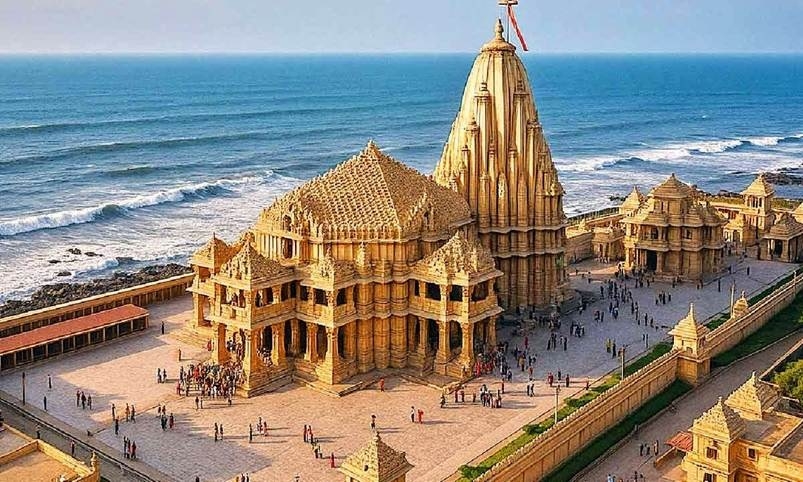
Somnath Swabhiman Parv 2026 is a nationally framed commemoration hosted around the Somnath Temple at Prabhas Patan near Veraval, Gujarat—one of the most prominent pilgrimage sites dedicated to Lord Shiva and widely revered as a Jyotirlinga. In public messaging, “Swabhiman Parv” translates to a celebration of self-respect, dignity, and civilisational pride.
Unlike a purely religious festival, this observance is positioned as a broader cultural moment—connecting:
- faith (rituals, chanting, darshan),
- heritage (the temple as a symbol of continuity),
- public history (how the story is told and retold), and
- nationhood (how societies mark turning points and anniversaries).
Official communication around the Parv repeatedly emphasizes that the focus is not meant to be a grievance-only remembrance. The framing is: “not a remembrance of destruction, but a tribute to resilience.” That framing choice matters—and it’s one reason this story is trending.
If you’re new to Somnath, start here:
- Official temple portal: Somnath.org (Shree Somnath Trust)
- Gujarat Tourism overview: Somnath Temple (Gujarat Tourism)
2) Why is it being marked now?
In plain terms: 2026 is a rare “double-anniversary” year.
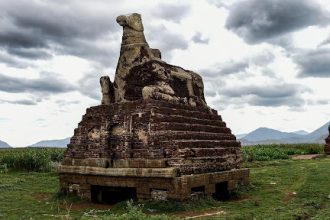
- 1,000 years since 1026: Many narratives place the first major recorded raid on Somnath by Mahmud of Ghazni around January 1026.
- 75 years since 1951: The present temple was formally reopened to devotees on 11 May 1951 in the presence of then President Dr. Rajendra Prasad, after the post-Independence reconstruction efforts. That makes 2026 the 75th year of the reopened shrine.
Anniversaries do something powerful: they turn a long story into a date you can gather around. Governments, institutions, and communities often use such milestones to renew identity, boost civic participation, and—very practically—create a calendar moment for tourism and public programming.
That’s the “why now” in one sentence: because the math aligns and the meaning is politically and culturally useful in the present.
Why the “now” feels especially loud in 2026
Even beyond anniversaries, this moment is being amplified because India is currently in an era where:
- heritage narratives are a major part of public discourse,
- temples are increasingly discussed as both spiritual sites and “civilisational symbols,”
- and large events are designed to be high-visibility (think drone shows, national coverage, and social media campaigns).
This doesn’t automatically make the commemoration “good” or “bad.” It simply means the event sits at a crossroads: where memory, faith, media, and politics meet.
3) A quick timeline: 1026 → 1951 → 2026
| Year | What happened | Why it matters today |
|---|---|---|
| 1026 | A major raid associated with Mahmud of Ghazni enters Somnath in early January 1026 in many historical narratives. | Becomes the anchor date for “1,000 years” framing and the wider public memory story. |
| 1947–51 | Post-Independence reconstruction gathers momentum; leaders and trustees drive the rebuilding effort. | Turns Somnath into a modern symbol of revival and national morale in the early Republic. |
| 11 May 1951 | The restored temple is formally opened to devotees, with President Dr. Rajendra Prasad present. | Creates a second anchor date—making 2026 the 75th year milestone. |
| 8–11 Jan 2026 | Somnath Swabhiman Parv is observed with chanting, commemorations, and large public events. | A “double-anniversary” moment that renews Somnath’s place in national conversation. |
4) Why Somnath matters to millions
Somnath isn’t just “a temple that was attacked.” It is—first and foremost—one of India’s most significant living pilgrimage sites. For devotees, it is part of a sacred geography mapped through the twelve Jyotirlingas. For visitors, it is an architectural and coastal landmark with an established ecosystem of rituals, darshan schedules, and pilgrim facilities.
Three layers of meaning make Somnath uniquely powerful:
A) Spiritual centrality
Many devotional traditions place Somnath at the “beginning” of the Jyotirlinga listing (as in the popular stotra sequence), which reinforces the idea of Somnath as a foundational sacred point—especially within west-coast pilgrimage circuits.
B) The “cycle of rebuilding” as identity
Somnath’s modern symbolism comes from the repeated public claim: the shrine has risen again and again. That narrative—whether told through devotion, folklore, trusteeship histories, or state messaging—functions as a story of endurance.
C) National memory and modern heritage
In independent India, Somnath became a template for how a newly formed nation could narrate its past while projecting confidence into the future: restore what was lost, preserve what remains, and make heritage accessible.
For practical information (timings, darshan, facilities), the official temple portal is the best starting point:
Somnath Darshan (official).
5) What’s planned during the Parv?
In the public programme highlights reported by official releases and major coverage, the Parv blends devotion with spectacle and ceremonial commemoration. Key elements include:
A) Continuous Om/Omkar chanting
A major highlight is 72 hours of continuous chanting within/around the temple premises—designed to express spiritual continuity and collective participation.
B) Shaurya Yatra (ceremonial procession)
There is a Shaurya Yatra described as a procession to honour those who defended the temple over centuries—framed as remembrance of sacrifice and inspiration for cultural consciousness.
C) Drone show and large public programming
Modern “heritage events” often include visual storytelling elements. In this case, a drone show has been mentioned as part of the programme highlights—reflecting the contemporary style of commemorations meant for national broadcast and social media.
D) Saints and wider participation
Official notes mention participation by saints and devotees from across the country, which also signals an attempt to make the event feel “pan-Indian,” not only regional.
Important: Programmes can change due to crowd management, weather, security, or ceremonial requirements. If you plan to attend, monitor updates through official channels and reputable news sources.
6) History vs memory: what scholars debate
Somnath’s story is one of the most discussed examples of how history becomes public memory. That matters because big commemorations often rely on a simplified storyline:
“A sacred site is attacked → it is destroyed → it is rebuilt → it becomes a symbol.”
That storyline is emotionally powerful. But historians often ask deeper questions:
- Which sources say what? (Turko-Persian chronicles, inscriptions, local records, later retellings)
- What was politically typical in medieval conquest? (temple desecration as statecraft, selective targeting, symbolism)
- How did colonial-era and nationalist-era writing reshape the narrative?
A balanced way to think about it
You can hold two ideas at once:
- Somnath is a real place of living devotion that has experienced rupture and restoration across centuries.
- The way Somnath is narrated changes over time—depending on who tells the story and why.
For readers who want to explore this “many voices” approach, Romila Thapar’s work is often cited in discussions of Somnath’s historiography:
Somanatha: The Many Voices of a History (Penguin Random House India).
For a broader framework on temple desecration as a historical and political issue (beyond a single site), see discussions around Richard M. Eaton’s scholarship and commentary:
The Diplomat interview/article on Eaton’s work
and an accessible PDF version often circulated for academic reading:
Eaton (PDF) – Temple desecration & Indo-Muslim states.
Why this section matters for 2026: When an anniversary becomes headline news, the risk is that the past becomes a tool for present-day hostility. A healthier approach is: commemorate without weaponising, and learn without flattening complexity.
7) The politics around Somnath: why it trends
Somnath has long existed in the public sphere as more than a religious site—it is also a symbol used in debates about:
- what the Indian state should preserve and promote,
- how secularism is interpreted in practice,
- and how cultural identity is expressed through public events.
That’s why Somnath-related headlines frequently include political commentary—especially around post-Independence reconstruction debates and the roles of leaders involved. Recent coverage has again spotlighted those older arguments, which keeps the event in the “trending news” category rather than only “religion & travel.”
If you want to understand how the Parv is being reported in mainstream coverage, compare multiple viewpoints and formats (official release + public broadcaster + major newspapers). That triangulation reduces bias.
8) Heritage economy: tourism, jobs, and infrastructure
There is also a practical reason the Somnath story gets amplified during a big commemoration: heritage sites drive local economies.
Large pilgrim inflows influence:
- local hotels and homestays,
- food and transport services,
- temple employment and allied services,
- and wider “destination branding” for the district.
Official notes around the Parv have mentioned Somnath’s large annual devotee footfall, and also highlighted employment-related facts linked to temple administration. These details matter because they frame Somnath not only as “past and memory,” but as a living institution with a present-day economic footprint.
If you’re visiting as a traveller (not only a pilgrim), Gujarat Tourism’s trip planning pages can help:
Trip planner: Somnath Temple (Gujarat Tourism).
9) How to visit Somnath responsibly (practical tips)
A) Plan for crowds
During major commemorations, expect security checks, restricted zones, queue systems, and occasional changes in darshan windows. If you can, consider visiting on a non-peak day or at off-peak hours.
B) Respect the site’s rules
Dress modestly, follow photography guidelines, and avoid disruptive content creation. A respectful visit protects the spiritual atmosphere for everyone.
C) Separate “event spectacle” from “temple experience”
If you’re attending for the Parv, you’ll see the public-event layer. But many visitors come for a quieter darshan. Try to keep both spaces intact: celebration outside, stillness inside.
D) Explore nearby heritage thoughtfully
The Somnath region is often visited along with other sites in the Prabhas Patan/Veraval belt. Build a route that doesn’t overstrain local resources—and be mindful about waste and plastics near the coast.
FAQs
1) What is Somnath Swabhiman Parv?
It is a nationally framed commemoration and cultural-spiritual observance at Somnath, highlighting civilisational continuity, resilience, and public remembrance tied to Somnath’s long history.
2) When is Somnath Swabhiman Parv 2026 being held?
It is being observed in early January 2026 (reported as 8–11 January in official and media coverage). Always confirm local timings if travelling.
3) Why does it mention “1,000 years since the first attack”?
Because many public narratives anchor a major 1026 raid on Somnath in early January 1026. The year 2026 marks 1,000 years from that date.
4) Why does it mention “75 years since revival”?
The modern reconstructed temple was formally reopened to devotees on 11 May 1951. In 2026, that completes 75 years.
5) Is Somnath one of the 12 Jyotirlingas?
Yes—Somnath is widely revered as a Jyotirlinga shrine of Shiva, and is frequently listed prominently in devotional traditions.
6) Are there special rituals during the Parv?
Coverage and official notes mention extended chanting (including multi-hour/continuous Omkar chanting) and ceremonial processions. Final details depend on administration and crowd plans.
7) Why is Somnath always part of political debates?
Because Somnath functions as a symbol in debates about national identity, heritage preservation, secularism, and how independent India narrates its past.
8) How can readers avoid “one-sided” interpretations of Somnath’s history?
Read multiple types of sources: (1) official releases and trust materials, (2) reputable journalism, and (3) scholarly historiography that examines how narratives are constructed.
9) Is this commemoration about blaming present-day communities?
It shouldn’t be. A healthy commemoration focuses on resilience, learning, and preservation—without turning history into hostility. That’s essential for social harmony.
10) Where can I check official updates before visiting?
Use the official temple website and Gujarat Tourism pages, and verify with trusted news outlets for crowd/traffic advisories.
References & further reading (external links)
- Press Information Bureau: Somnath Swabhiman Parv (background & milestones): PIB release
- PIB: PM visit schedule and programme highlights (Shaurya Yatra, chanting, drone show): PIB release
- PIB (Home Ministry): statement framing the observance: PIB release
- DD News explainer coverage: DD News
- Economic Times coverage: Economic Times
- India Today coverage: India Today
- Times of India (feature): TOI – 1,000 years of faith
- Times of India (programme highlights): TOI – festival details
- Times of India (political debate angle): TOI – political debate
- Official temple site (trust): Somnath.org
- Somnath darshan & visitor info (official): Somnath Darshan
- Gujarat Tourism official page: Gujarat Tourism – Somnath
- Romila Thapar book page (historiography): Penguin Random House India
- Archive.org listing (bibliographic context): Archive.org – Somanatha
- Richard Eaton discussion (context on temple desecration debates): The Diplomat
- Eaton (PDF – commonly used in academic reading lists): Eaton PDF
- Britannica bio (background on Mahmud of Ghazna): Britannica
Reader note: Somnath’s history is emotionally significant to many. If we want commemorations like this to strengthen society, the healthiest path is to honor devotion and resilience while refusing to turn the past into present-day hostility.