A spark plug is an electrical device that fits into the cylinder head of some internal combustion engines and ignites compressed aerosol gasoline by means of an electric spark. Spark plugs have an insulated center electrode which is connected by a heavily insulated wire to an ignition coil or magneto circuit on the outside, forming, with a grounded terminal on the base of the plug, a spark gap inside the cylinder.
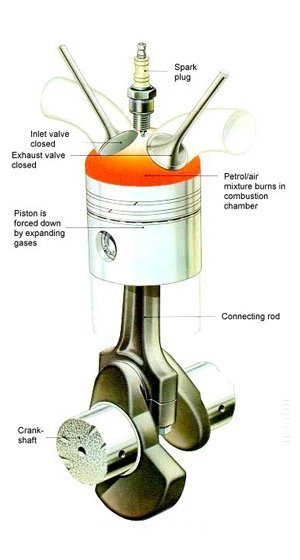
To ignite the air/fuel mixture. Electrical energy is transmitted through the spark plug, jumping the gap in the plugs firing end if the voltage supplied to the plug is high enough. This electrical spark ignites the gasoline/air mixture in the combustion chamber. To remove heat from the combustion chamber. Spark plugs cannot create heat, they can only remove heat. The temperature of the end of the plug’s firing end must be kept low enough to prevent pre-ignition, but high enough to prevent fouling. The spark plug works as a heat exchanger by pulling unwanted thermal energy from the combustion chamber and transferring heat to the engines cooling system. The heat range of a spark plug is defined as its ability dissipate heat from the tip.