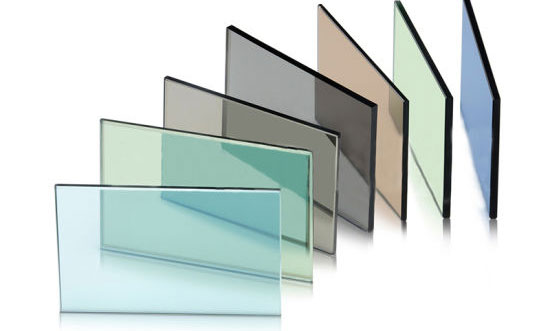

The glass may be broadly classified as:
1. Soda-lime glass
2. Potash lime glass
3. Potash lead glass
4. Common glass and
5. Special glasses.
1. Soda Lime Glass: It is mainly a mixture of sodium silicate and calcium silicate. It is fusible at low temperature. In the fusion condition it can be blown or welded easily. It is colourless. It is used as window panes and for the laboratory tubes and apparatus.
2. Potash Lime Glass: It is mainly a mixture of potassium silicate and calcium silicate. It is also known as hard glass. It fuses at high temperature. It is used in the manufacture of glass articles which have to withstand high temperatures.
3. Potash Lead Glass: It is mainly a mixture of potassium silicate and lead silicate. It possesses bright lustre and great refractive power. It is used in the manufacture of artificial gems, electric bulbs, lenses, prisms etc.
4. Common Glass: It is mainly a mixture of sodium silicate, calcium silicate and iron silicate. It is brown, green or yellow in colour. It is mainly used in the manufacture of medicine bottles.
5. Special Glasses: Properties of glasses can be suitably altered by changing basic ingredients and adding few more ingredients. It has now emerged as versatile material to meet many special requirement in engineering. The following is the list of some of the special glasses:
(a) Fibre glass
(b) Foam glass
(c) Bullet proof glass
(d) Structural glass
(e) Glass black
(f) Wired glass
(g) Ultraviolet ray glass
(h) Perforated glass.